*DONATE HERE IF YOU WISH TO HELP FUND THIS PROJECT: http://ko-fi.com/bibliocultist*
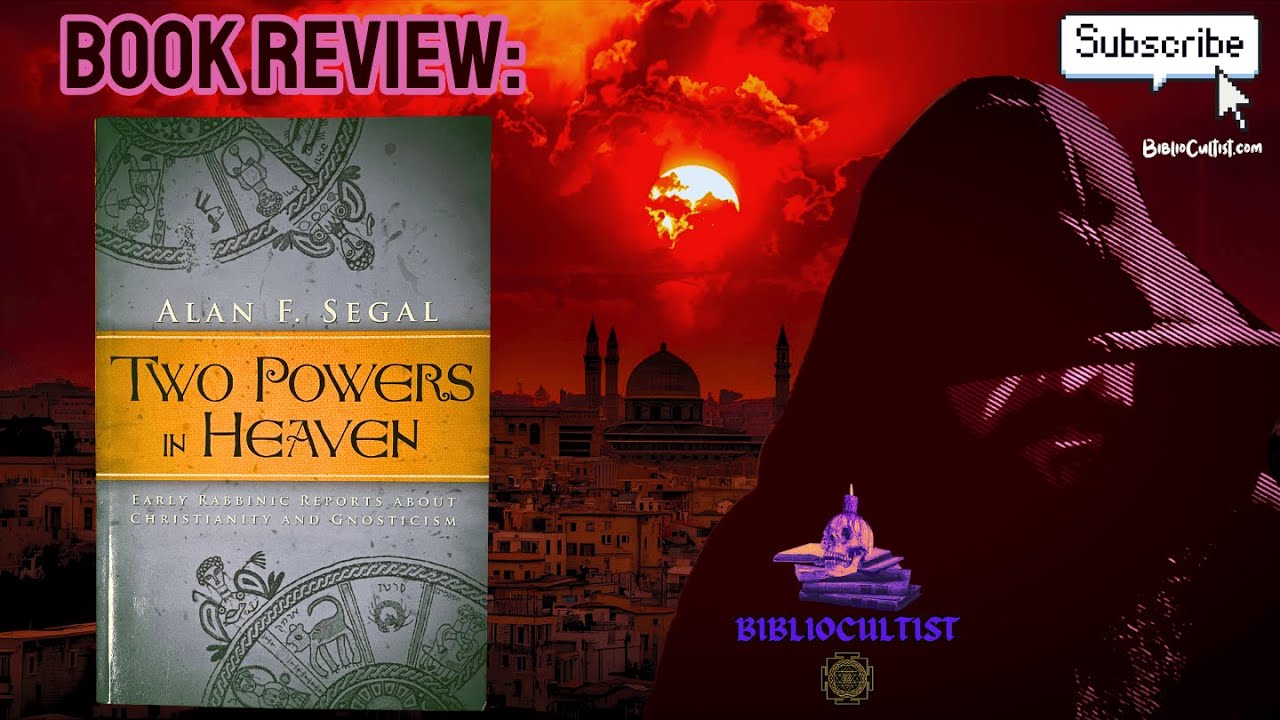
In this #bookreview we descend into the forbidden corridors of early Jewish thought with Alan F. Segal’s groundbreaking work, Two Powers in Heaven—a book that cracks open the hidden diversity of Second Temple Judaism. Far from the monolithic faith often imagined, ancient Judaism teemed with mystical visions, angelic mediators, and debates over whether God’s presence could manifest in more than one divine form. Segal reveals how rabbinic orthodoxy emerged not as a timeless tradition, but as a reaction—against Gnosticism, early Christianity, and even its own mystical past.
all music and content copyright BiblioCultist.com
#TwoPowersInHeaven #AlanSegal #SecondTempleJudaism #JewishMysticism #BiblioCultist #EarlyChristianity #RabbinicJudaism #Merkabah #Theology #ReligiousHistory #BookReview #HoodedReviewer #Logos #booktok #ForbiddenKnowledge #AncientTexts #BookTube #biblio #cultist #bibliocultist
*SHOW NOTES*
1. Alan F. Segal (1945–2011) was a prominent American scholar of religion, specializing in early Judaism, Christian origins, and the Jewish roots of rabbinic thought. A professor at Barnard College, Columbia University, Segal combined expertise in rabbinic literature, Hellenistic philosophy, and sociology of religion to explore the complex boundary between Judaism and early Christianity.
2. El Segundo Templo de Jerusalén (construido en el siglo VI a.C. tras el exilio babilónico y destruido por los romanos en el 70 d.C.) fue el centro religioso, político y cultural del judaísmo antiguo durante más de cinco siglos. Lejos de ser una religión monolítica, el judaísmo del Segundo Templo estaba compuesto por una rica diversidad de sectas y corrientes teológicas: los fariseos (enfocados en la ley oral y la resurrección), los saduceos (aristocracia sacerdotal que rechazaba la tradición oral y la vida después de la muerte), los esenios , los zelotes, y diversos movimientos mesiánicos, incluyendo los primeros seguidores de Jesús.
3. The Merkabah mystics (c. 1st–10th centuries CE) were early Jewish visionaries who sought direct, ecstatic encounters with the divine through meditative ascents to the heavenly throne-chariot (Merkabah) described in Ezekiel 1. Using hymns, chants, and strict ritual purity, they aimed to journey through seven celestial palaces (hekalot) to glimpse God’s glory—without dying from the experience. Though esoteric and tightly guarded, their texts (like Hekhalot Rabbati and 3 Enoch) laid crucial groundwork for the later Kabbalah (12th century onward).
4. Terms like "Unitarianism" or even "monotheism"—as rigid theological categories that deny any form of divine multiplicity—are modern constructs that did not exist in the time of Jesus or in Second Temple Judaism. Back then, the debate wasn’t about whether there was one God (that was widely assumed), but rather how God’s presence and activity manifested in the world—through intermediary figures such as the Shekhinah (divine presence), Wisdom (Hokhmah), the Word (Memra/Logos), or exalted angels. These discussions reflect what scholars call "binitarianism" or "moderate dualism": the idea that while there is only one God, His glory, throne, or agent could appear in a distinct mode without violating divine unity.
5. Philo of Alexandria (c. 20 BCE – c. 50 CE), also known as Philo “the Jew”, was a Hellenistic Jewish philosopher who sought to harmonize Greek philosophy—especially Platonism and Stoicism—with the Hebrew Scriptures. Living in the cosmopolitan city of Alexandria, Egypt, he wrote extensively in Greek, interpreting the Torah through allegory and reason, and introducing concepts like the Logos (the Divine Word) as an intermediary between the transcendent God and the material world.
6. The Septuagint (LXX)—the Greek translation of the Hebrew Bible, produced in Alexandria between the 3rd and 2nd centuries BCE—already used the term "Logos" (Word) in theological contexts long before Philo. For example, in passages like Isaiah 55:11 and Psalm 33:6 (LXX), God’s creative and revelatory power is described as acting through His “Logos,” portraying the divine Word as an active, dynamic extension of God’s will in the world.
7. While often presented as the direct continuation of ancient Israelite religion, Rabbinic Judaism is in fact a post–Second Temple development that emerged in the 1st–2nd centuries CE, fundamentally reshaped by the destruction of the Temple in 70 CE and the rise of early Christianity. The religion of ancient Israel was centered on sacrificial worship, priesthood, and the Temple—not synagogues, prayer, or rabbinic interpretation. With the Temple gone and competing messianic movements (especially Christianity) gaining ground, the Pharisaic tradition evolved into Rabbinic Judaism, codified in the Mishnah and Talmud, which redefined Jewish practice around Torah study, halakha (law), and communal prayer.

Информация по комментариям в разработке