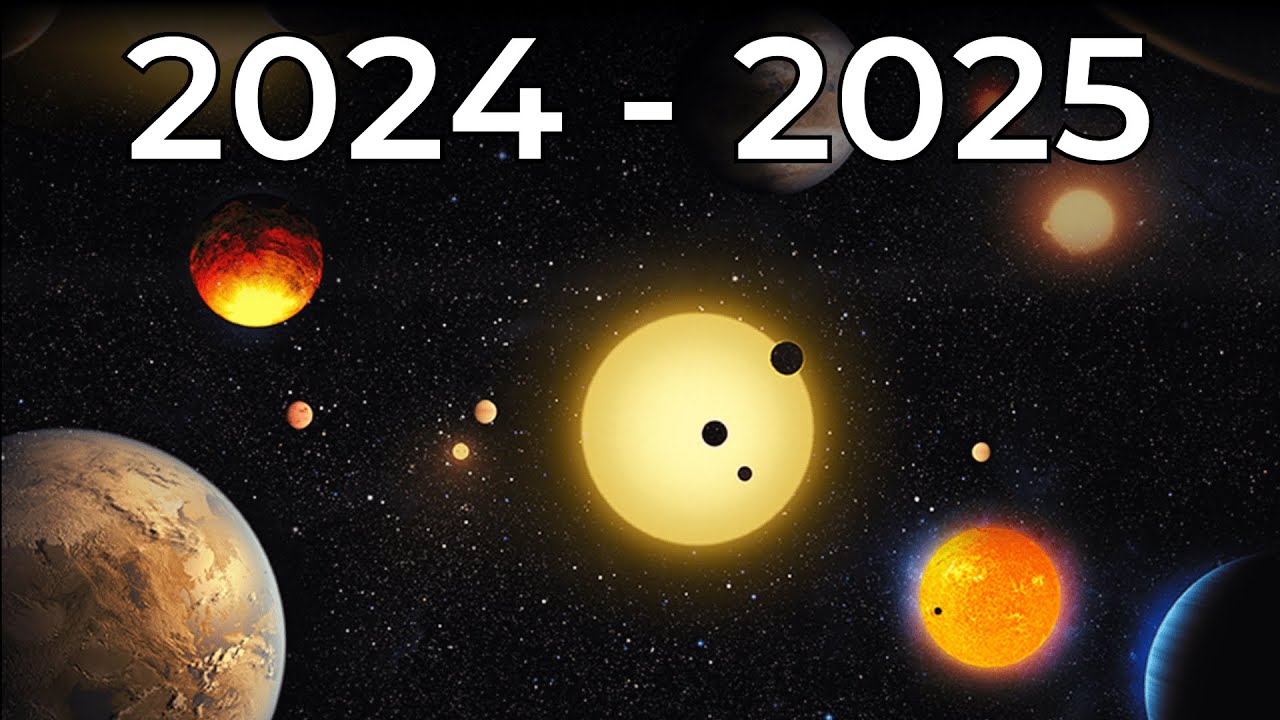
In the past twelve months alone, astronomers have confirmed the existence of more than three hundred new worlds orbiting distant stars, places that, until recently, didn’t exist in human knowledge at all. These are not theoretical predictions or mathematical possibilities — they're confirmed planets with measured sizes and orbital periods, worlds that have joined the ever-growing catalog of places beyond our solar system.
The pace of discovery has reached a level that would have seemed miraculous just a generation ago, when finding a single planet around another star was cause for global celebration.
In this slow, calming science-for-sleep documentary, we explore the newest exoplanets discovered in 2024 and 2025, revealed by humanity’s most powerful space telescopes.
This video is designed to help you fall asleep, relax, study, or rest while drifting through the latest discoveries from modern astronomy. Told gently and without urgency, it’s a peaceful journey through alien worlds that were unknown until very recently.
✨ In this calm cosmic journey, we explore:
• Newly discovered planets from 2024–2025
• How astronomers confirm worlds light-years away
• Why many of these planets were invisible until now
• Ocean worlds, super-Earths, lava planets, and gas giants
• Planets found in habitable zones around distant stars
• Why red dwarf systems remain key targets
• How improved precision reveals smaller, cooler worlds
• What these discoveries tell us about how common planets are
Everything is explained slowly, clearly, and gently, making this ideal for bedtime listening.
🛰️ How These New Worlds Were Found
Modern discoveries come from observatories like the James Webb Space Telescope, which studies exoplanet atmospheres in detail, searching for water vapor, carbon dioxide, methane, and other chemical clues.
Missions like TESS continue to scan nearby stars for tiny dips in brightness — revealing new planets almost weekly.
And the legacy of the Kepler Space Telescope still shapes how we interpret these discoveries today.
Together, these missions show us that planet discovery is no longer rare — it’s constant.
🌙 A peaceful reflection on discovery
Most of these worlds will never be visited.
Many will never be seen directly.
Yet their existence quietly reshapes our understanding of the universe.
This video invites you to slow down and rest while imagining planets that formed around distant suns — worlds with skies, horizons, and nights unlike anything on Earth.
🛌 Perfect for:
• Falling asleep to science and space documentaries
• Astronomy lovers who enjoy calm explanations
• Background listening while studying or resting
• Late-night curiosity without stimulation
• Fans of exoplanets and cosmic discovery
🌌 Why this video stands out
✔️ Focuses on the newest real discoveries
✔️ Covers JWST, TESS, and Kepler methods together
✔️ Calm, sleep-friendly narration
✔️ Designed for long-form nighttime listening
✔️ Blends up-to-date science with relaxation
Even now, as you rest, more worlds are waiting to be found.
🌠 Subscribe to The Drowsy Astronaut
If you enjoy science for sleep, astronomy for sleep, and calm journeys through space discovery, subscribe to The Drowsy Astronaut for more relaxing documentaries designed to help you unwind and drift gently into sleep.
🔍 Keywords:
new planet discoveries 2024, new exoplanets 2025, JWST planet discoveries, TESS new planets, Kepler legacy discoveries, astronomy for sleep, science for sleep, space for sleep, fall asleep to science, relaxing space documentary, newest exoplanets explained, planets discovered while sleeping, calm science narration, universe explained slowly, cosmic discovery for sleep, The Drowsy Astronaut
📌 Hashtags
#newplanets #scienceforsleep #astronomyforsleep #spaceforsleep
#jwst #tess #kepler #exoplanets
#fallasleeptoscience #thedrowsyastronaut #universe #cosmos

Информация по комментариям в разработке