(18 Sep 2025)
ASSOCIATED PRESS
London, UK – 18 September 2025
1. Wide of interior of glass house at Royal Botanic Gardens, Kew, flower beds decorated with ‘waste’ textiles from charity shops
2. Various of waste textiles
3. Tilt up to textile coloured using dyes derived from plants
4. Close of textile coloured using dyes derived from plants
5. Tilt up of flower beds
6. Pull focus from flower to waste textiles
7. Various low angle shots of Rebecca Harfield, Visitor Programmes Manager, Kew Gardens, looking at plants
8. Close of waste textiles
9. SOUNDBITE (English) Rebecca Harfield, Visitor Programmes Manager, Kew Gardens:
"The fashion industry, unfortunately, is not the most sustainable and is a fairly large contributor to global warming. But what we don't want is people feeling doom and gloom. This festival is about actually a message of hope. It's about getting people to think a little bit about what they're wearing, where it comes from, and also empowering them with little changes that they can make at home that actually if everybody does that, we can all actually make quite a substantial difference."
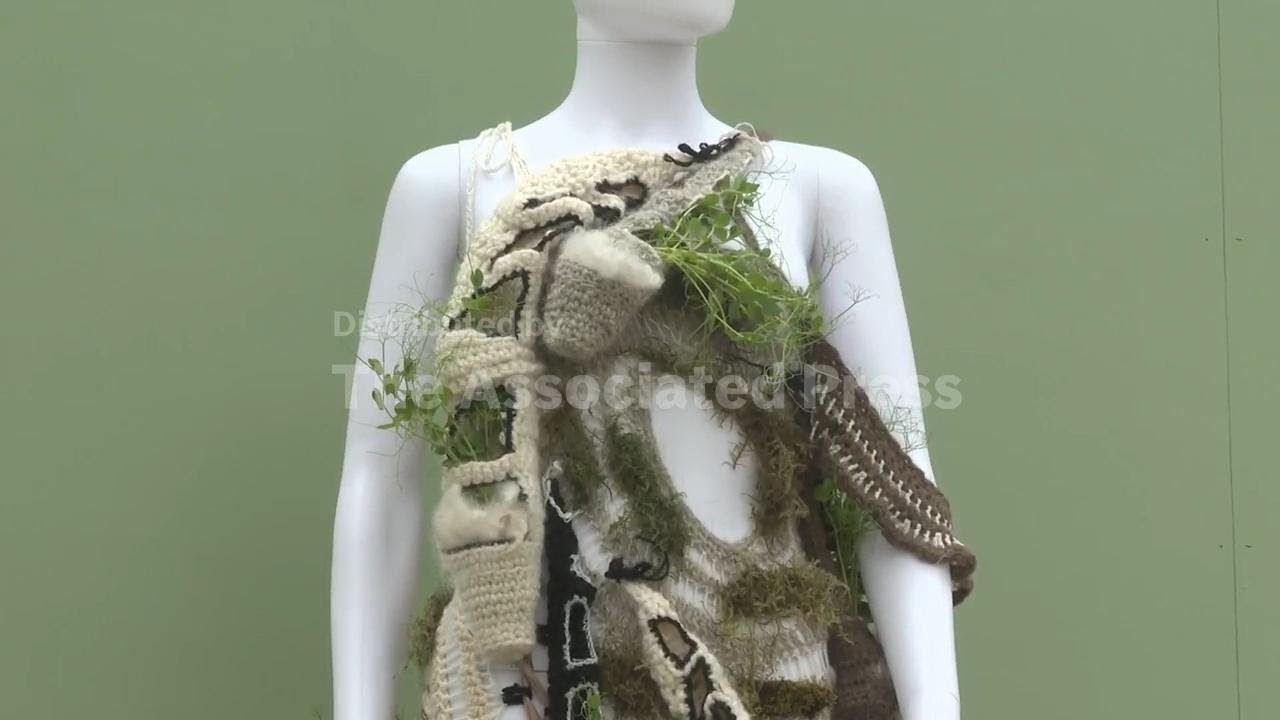
10. Various of clothing designed by Beth Williams, made from compostable material such as pineapple, lotus stem and Secall, a seaweed-eucalyptus blend
11. Pull focus from plant stem to mushroom growing on clothing
12. Various of designs by Eirinn Hayhow, clothing made using plant-stuffed biomaterial shells, infused with foraged herbs
13. Close of flower on outfit
14. SOUNDBITE (English) Rebecca Harfield, Visitor Programmes Manager, Kew Gardens:
"Honestly, it's totally changed my mindset. I try really hard not to buy new now. I think that that's one of the things that has really stuck with me. And if you do buy new, because you know, not everything you might want second-hand, things like looking at organic cotton actually makes quite a substantial difference in the impact it has on the planet and keeping items for as long as possible, really looking after them. It's really trying to combat that sort of fast fashion, disposable clothing."
15. Various of hanging art installation ‘Between Earth and Sky’ by Nnenna Okore
16. Various of Okore climbing stairs and looking at her artwork
17. SOUNDBITE (English) Nnenna Okore, environmentalist artist:
"I chose to use textiles and fabrics and fibre like jute material and cheesecloth and cotton. These are naturally-sourced fibres that I had sourced ethically from around the world. And I also used natural dyes because being that this work is placed within a garden, it makes sense to ensure that they are safe and non-toxic to the biodiversity within the gardenscape. So a lot of my materials are natural, plant-based, and biodegradable."
18. Various of artwork seen through the greenery in Kew’s Temperate House
19. SOUNDBITE (English) Nnenna Okore, environmentalist artist:
"How am I walking the walk, not just talking the talk? I want to be able to contribute to it in some meaningful way. And I know that many artists may not have this as an underpinning issue in their work, but for me, it's really important because I want my work to be responsible toward the environment. I want it to think about its carbon footprint as I kind of work through things and I don't want my work to be creating more toxicity or harm."
20. Various of artwork
21. SOUNDBITE (English) Nnenna Okore, environmentalist artist:
22. Various of waste textiles decorating flower beds
23. Various of exterior of Temperate House
STORYLINE:
LEADIN:
Can we be fashionable while also protecting the planet?
STORYLINE:
Find out more about AP Archive: http://www.aparchive.com/HowWeWork
Twitter: / ap_archive
Facebook: / aparchives
Instagram: / apnews
You can license this story through AP Archive: http://www.aparchive.com/metadata/you...

Информация по комментариям в разработке