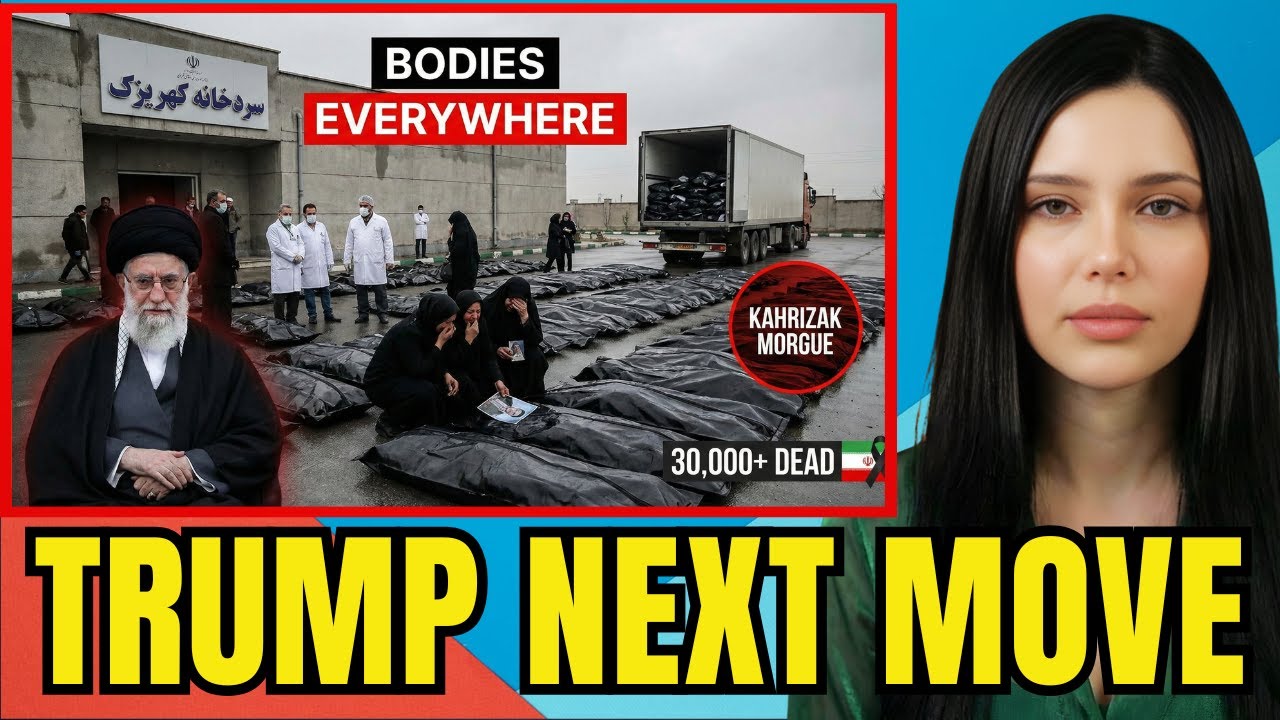
Iran's regime just killed thousands of protesters in the deadliest crackdown since 1979. Here's what the USS Abraham Lincoln carrier strike group arriving in the Middle East really means...
🌍 IN THIS VIDEO:
The January 8-9 massacre: How 30,000 Iranians died in 48 hours
Trump's "help is on its way" promise and what actually happened
USS Abraham Lincoln carrier strike group deployment to the Middle East
Iran's strategic collapse and the economic crisis driving protests
What comes next: Military strikes, regime change, or prolonged standoff?
In late December 2025, protests erupted across Iran over economic collapse and government repression. What started as shopkeepers closing their stores in Tehran's Grand Bazaar became the largest uprising since the Islamic Revolution in 1979. The regime's response was unprecedented brutality.
Between January 8-9, 2026, estimates suggest up to 30,000 protesters were killed in just 48 hours. Security forces used live ammunition, raided hospitals, set markets on fire with people inside, and arrested over 26,000 civilians. Supreme Leader Ayatollah Ali Khamenei acknowledged "thousands" dead but blamed the United States and Israel. The internet was shut down to hide the massacres from the world.
President Donald Trump promised Iranian protesters that "help is on its way" and threatened military intervention if the killing continued. On January 26, 2026, the USS Abraham Lincoln carrier strike group arrived in the Middle East within striking distance of Iran. The group includes F/A-18 Super Hornets, F-35C stealth fighters, cruise missiles, and thousands of sailors ready for combat operations.
This analysis uses verified information from Reuters, AP, BBC, the United Nations, Time Magazine, Britannica, official US government statements, and human rights organizations. We examine what really happened during Iran's bloodiest crackdown in modern history, why Trump's carrier strike group is positioning near Iran, and what might happen next in this rapidly evolving crisis.
The implications extend far beyond Iran. This is about economic warfare, information control, military deterrence, and the future of authoritarian regimes facing popular uprisings in the age of satellite internet and global media. Understanding Iran's crisis means understanding how modern conflict works.
⚠️ GEOPOLITICAL & NEWS ANALYSIS DISCLAIMER:
This video is for educational, informational, and news commentary purposes only. The content represents analysis and commentary on geopolitical events based on publicly available information from credible sources. This should not be considered professional military, political, legal, or strategic advice.
Views and analysis expressed are those of the creator based on available evidence and do not represent any government, military, international organization, or political entity. We are not military strategists, intelligence analysts, or policy advisors. This is independent analysis for educational discussion.
All information is derived from open-source intelligence (OSINT), verified news reports from credible sources (Reuters, AP, BBC, Time Magazine, United Nations, official government statements), and publicly available expert analysis. Geopolitical situations are fluid and rapidly evolving. Information presented was accurate at time of creation but may change.
This analysis does not advocate for any military action, political position, or conflict. We strive for objective, evidence-based analysis that considers multiple perspectives. We are not responsible for any decisions or actions taken based on this content. Viewers should conduct independent research and form their own informed opinions.
We support accurate journalism, verified information, peaceful diplomatic solutions, and respect for international law and human rights.

Информация по комментариям в разработке