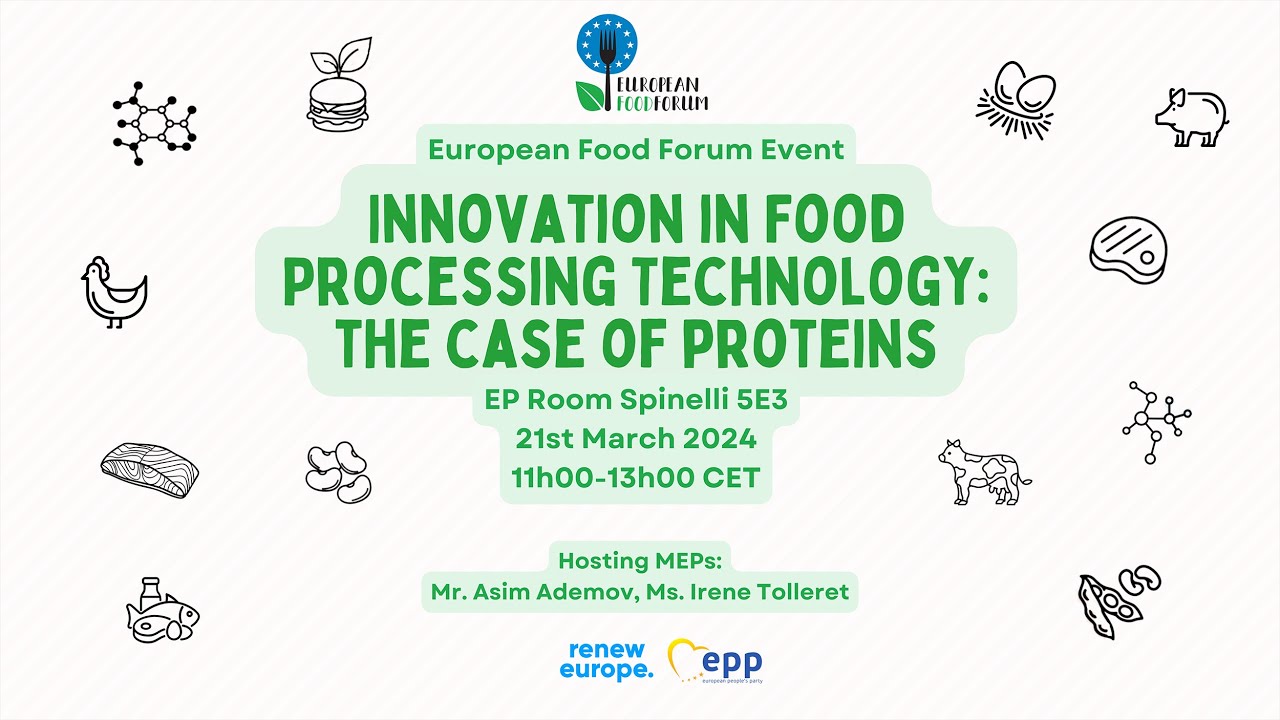
The European Food Forum is delighted to present a ground-breaking event centred on "Innovation in food processing technology: the case of proteins." Our focus is on exploring the journey from agricultural practices to pioneering food innovative solutions, all aimed at ensuring food security, sustainable and diversified food and EU autonomy.
This event is a pivotal moment for farmers, industry leaders, policymakers, scientists, consumers and stakeholders alike to converge and delve deep into the transformative landscape of protein diversification. With a spotlight on innovation, attendees will embark on a journey through the latest advancements in food processing technology, specifically on the dynamic realm of protein production, utilization and consumption.
As global and EU protein demand continues to rise, it becomes evident that the EU needs to diversify its food supply chains, especially in light of recent global disruptions such as the COVID-19 pandemic and geopolitical events like the Russian invasion of Ukraine. Hence, a comprehensive EU protein strategy is imperative to enhance EU protein production across short-, medium-, and long-term horizons.
On 19 October 2023, the European Parliament (EP) adopted the European Protein Strategy resolution (EP, 2023), urging the European Commission (EC) to take swift action to boost protein production within the European Union (EU) on five pillars:
1. Vision for increased EU protein production: Recognizing protein production as a crucial aspect of the EU food system and promoting sustainable development of all potential protein sources to reduce dependency on a limited number of suppliers.
2. Better conditions for protein production in the EU: Placing farmers at the core of the protein strategy by ensuring access to sustainable inputs like feed additives, quality plant materials, fertilizers, and maintaining healthy soils.
3. Development of plant-based and alternative proteins for food and feed: Promoting the plant-based protein sector also via fermentation techniques to benefit European farmers, soil quality, biodiversity, climate, and human health, while ensuring fair competition among different protein sources and enhancing research and development in alternative proteins.
4. A holistic approach is needed to improve coordination and collaboration among stakeholders across the food supply chain. This will help meet the market-driven demand for innovative food products and proteins and bridge the existing gaps between farmers, processors, and retailers. Developing the EU protein autonomy will ease the shift towards a sustainable EU food system.
5. Concrete policy actions: Proposing legislative measures and policy initiatives, such as regulations on feed additives and novel foods, directives on waste management, renewable energy, efficient and circular use of raw material and genetic techniques, alongside incentives for R&D in food ingredients diversification to meet new dietary needs, protein-rich crop production and research funding to promote market uptake of plant-based proteins for food and feed in the EU.
Through rigorous exploration and expert analysis, participants will dissect strategies aimed at reducing dependency on imports, bolstering domestic protein production, and fortifying the EU's protein sector against future challenges.
The European Food Forum event on "Innovation in food processing technology: the case of proteins" will navigate through a myriad of topics, ranging from alternative protein sources such as plant-based, fermentation-based, insect-based, and cultured proteins, to novel processing methods designed to extract, refine, and integrate these proteins into a diverse array of food products and consumers behaviour and demands. Additionally, our discussions will span regulatory frameworks, investment opportunities, and collaborative initiatives essential for propelling innovation and fostering a resilient sustainable protein ecosystem within the EU.

Информация по комментариям в разработке