Click for more info and reviews of this Go Power RV Power Converter:
https://www.etrailer.com/RV-Power-Con...
Check out some similar RV Power Converter options:
https://www.etrailer.com/dept-pg-RV_P...
https://www.etrailer.com
Don’t forget to subscribe!
/ etrailertv
Full transcript: https://www.etrailer.com/tv-review-go...
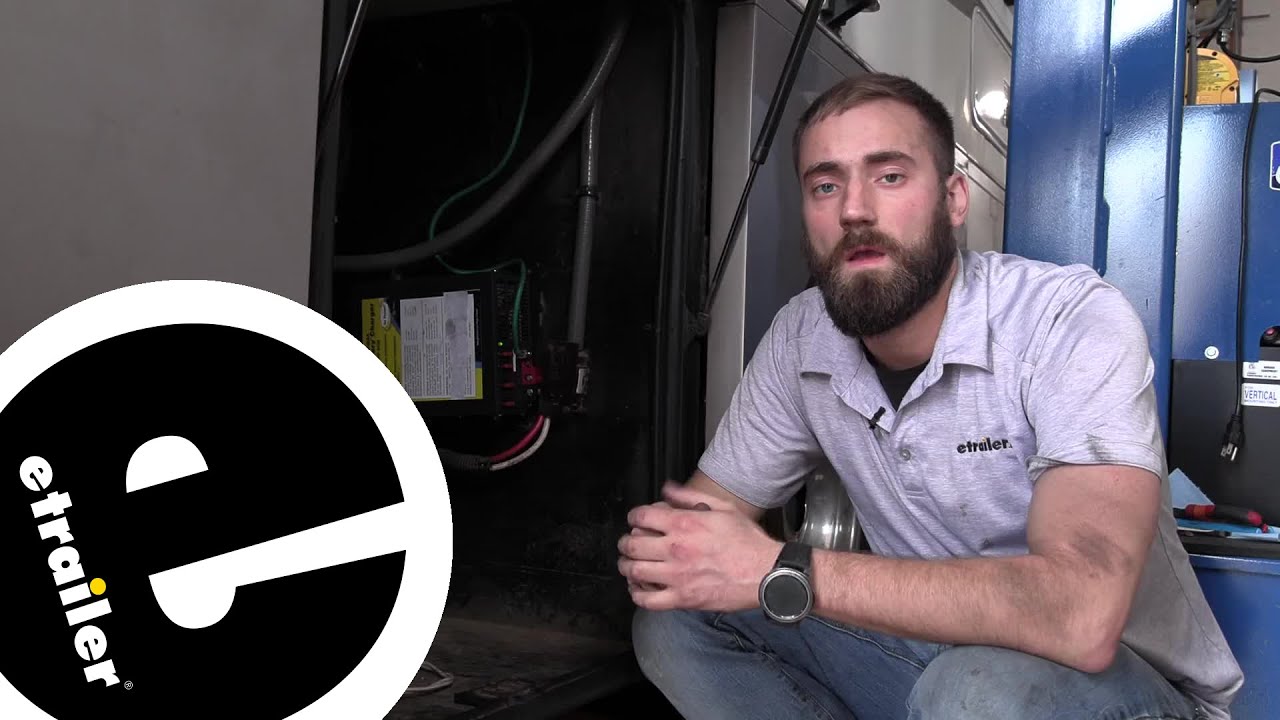
Hey guys, Kevin here at etrailer. And today we'll be taking a look at the Go Power RV Converter and Smart Battery Charger. A converter charger is going to convert the AC current that comes from your shore power line or from your generator. And then it's gonna convert that down to DC power so that you can charge your batteries while you're at the campsite or at your house, and then also run those DC appliances without draining the battery all the way down. If you look at the side of your converter, you're gonna see that there's these little fuses in here and there's these little screws next to it. If you ever have to replace any of these, you're gonna need to make sure that you loosen up those screws.
That'll allow you to pop out the fuse, put the new one in, and then you'll wanna re-tighten those screws, but you don't want to overtighten them. And what these fuses are, are your reverse battery polarity protection. So that's gonna protect you in the event that you hook up the battery incorrectly. It's not gonna send back an issue to the converter and blow it out. It'll instead blow out that fuse and gonna be good to go as soon as you replace it.
It's also gonna have a brownout input protection and over-current protection, and then also an over-temperature protection. So in the event that it overheats, it will cut off the power to this. So basically, if your fan ever went out for whatever reason or if the temperature was just too hot in whatever box you put it in, wherever you we're actually able to install it, that's just basically gonna protect your unit overall. This converter charger is gonna have four different charge modes to make sure that your battery's properly being charged at each level that it's at. The main one is gonna be your bulk, and that's gonna be your full load.
It's basically gonna handle the bulk of the charging, which is why it's called the bulk. That's gonna get your capacity of your battery up to about 80 to 90%. Once it hits that 80 to 90%, it's gonna switch over to absorption mode, which is gonna ensure that it's actually gonna get a full charge up to 100%. And there's also going to be a float mode, which is going to just maintain that charge and replace it from the normal battery discharge that's gonna happen. And then there's also equalization mode.
And this is gonna be really good for when you're storing your RV. It's gonna help prevent stratification and sulfate buildup. Sulfate buildup is what you'll see typically on batteries. You'll see all those crystals start to form on the terminals. And what this does is it's gonna send a specific voltage to help prevent that. And then for the stratification, that's typically gonna be acid buildup on the bottom of the battery. So sending a specific charge just to combat that is going to help keep your battery in working order. So the placement of your converter charger is gonna be pretty important. You don't wanna put it next to your batteries, and you don't wanna put it next to anything that can be flammable. Now, this isn't going to arc or make any sparks or anything like that like some other inverters or converters can do, but it's still just best to keep it nice and safe. Keep it in a nice waterproof area. You don't want any water getting in there 'cause this is all electronics. So with ours today, it's the perfect placement for it 'cause of all the other electronics in this sealed compartment. As far as the installation goes, this can be very simple or it can be pretty challenging. If you're swapping up to a higher amperage converter, you are gonna need to make sure that you are also swapping up your wire gauge. 'Cause if the gauge isn't enough, it's not gonna properly support that voltage that goes through there and you can end up burning the wire out, ruining your breaker, running your converter and your charger, and also just causing electrical fire. So you're gonna wanna make sure that you check all of your components. Make sure that your circuit breakers, your wiring, everything is up to the standards listed in the instruction manual for your converter. Now that we've gone over some of the specifics of our converter charger, let's go ahead and show you how we installed it. Starting off our installation, there are a few things that you're gonna need to look at before you go ahead and just swap out your old converter with a new one. So with our one today, it's gonna have a 100 amp converter. And on this one, it's goi

Информация по комментариям в разработке