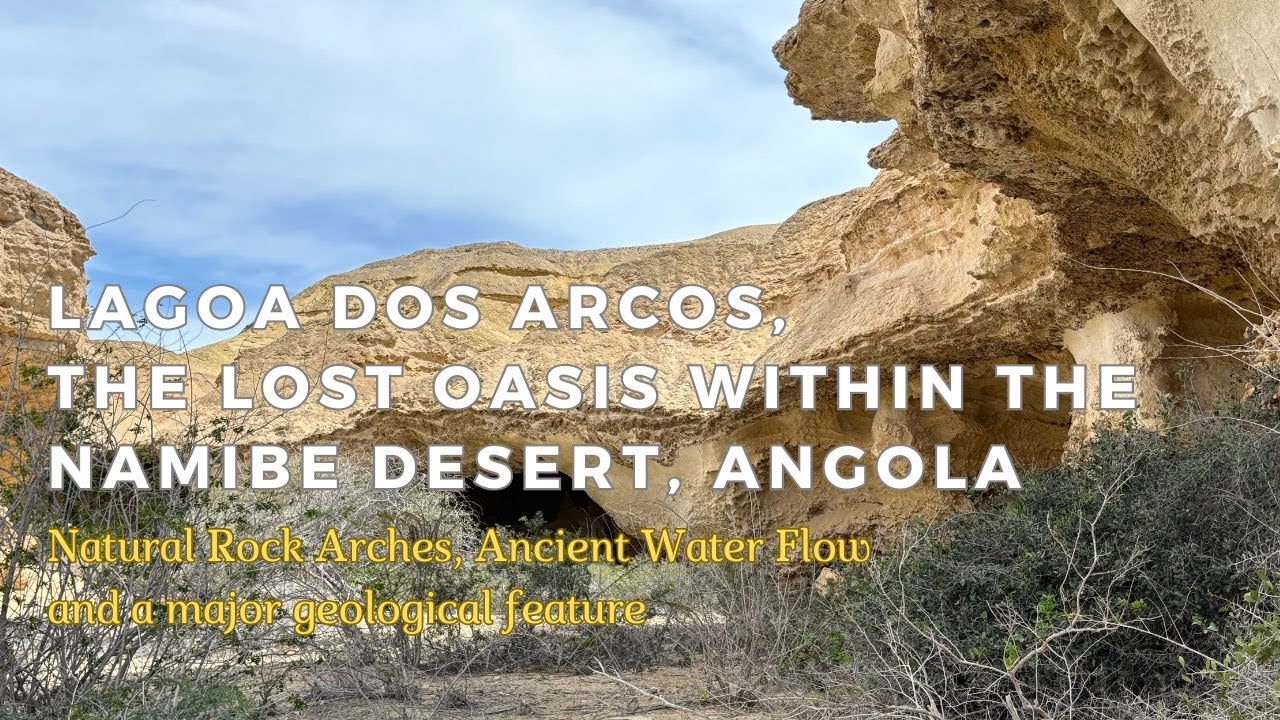
The Lost Oasis in Namibe, Angola, is commonly known as Lake Arco or Lagoa dos Arcos. This freshwater oasis is renowned for its striking natural sandstone arches and dramatic desert scenery. It lies in the Namibe Province, between the towns of Namibe and Tômbua, near the village of Camilunga, along the Curoca River.
Lagoa dos Arcos is an ephemeral freshwater oasis nestled within the arid landscapes of the Namibe Desert — one of the oldest and driest deserts in the world. What makes this site extraordinary is the presence of natural sandstone arches that rise dramatically from the desert floor. These geological formations give the lake its name — "Arcos" meaning "arches" in Portuguese.
The lagoon forms part of a seasonal wetland system along the Curoca River, which occasionally floods during rare rainfalls. The water, when present, collects in shallow basins framed by red and ochre rock formations, creating a surreal contrast between desert and life.
Though largely untouched by mass tourism, Lagoa dos Arcos has been known to local communities for generations. It holds cultural value for the Mucubal people and other indigenous semi-nomadic groups who have historically traversed the region. The area may have served as a temporary refuge or water point during seasonal migrations.
The oasis is often referred to as a "Lost Oasis" due to its isolated location and the sense of discovery it offers travelers.
Despite being in a hyper-arid zone, the oasis supports a fragile but fascinating ecosystem:
• Birdlife: Flamingos, herons, and other migratory birds occasionally stop at the lagoon when water is present.
• Flora: Unique desert-adapted plants such as Welwitschia mirabilis, a living fossil endemic to the Namib Desert, can be found in the surrounding terrain.
• Fauna: Small reptiles and insects have adapted to the extreme conditions.
Lagoa dos Arcos is one of the oldest deserts on Earth, estimated to be over 55 million years old. This hyper-arid zone features stark landscapes shaped by wind erosion, minimal rainfall, and extreme temperatures.
The terrain surrounding the oasis is primarily composed of ancient sedimentary rocks, particularly sandstone, shaped over millennia by natural forces. This desert region is a natural laboratory for understanding geological time, arid climate evolution, and desertification processes.
The defining feature of Lagoa dos Arcos is its natural rock arches (arcos), carved from soft sandstone through a process called differential erosion.
Over thousands of years, wind, thermal stress, and occasional flash floods have hollowed out parts of the rock, leaving behind majestic arches and pillars.
These formations resemble those found in places like Arches National Park in Utah, USA, but with a distinct Angolan desert character. The colors of the rock — rich reds, oranges, and yellows — change subtly throughout the day as the sun moves across the sky, offering dramatic lighting for photographers and geologists alike.
The word "Lagoa" refers to a temporary or seasonal water body. In this case, Lagoa dos Arcos is fed occasionally by the Curoca River, which runs underground for much of the year but may surface briefly during the rare rains.
When water is present, the lagoon forms a shallow, reflective pool between the arches. It collects rainwater and underground seepage, creating a micro-ecosystem in an otherwise parched environment. The presence of this water — even for short periods — sustains birdlife and scattered vegetation.
The erosional patterns in the rock — smoothed bases, grooves, and sediment layering — hint at a time when surface water was more abundant.
The region may have once hosted more frequent seasonal rivers during earlier Holocene climatic periods, suggesting long-term climate shifts in southwestern Angola.
Namibe Province lies along Angola’s Great Escarpment, a major geological feature separating the coastal plain from the interior plateau. This steep drop in elevation influences climate, erosion patterns, and water runoff — all of which play a role in the formation and maintenance of features like Lagoa dos Arcos.

Информация по комментариям в разработке