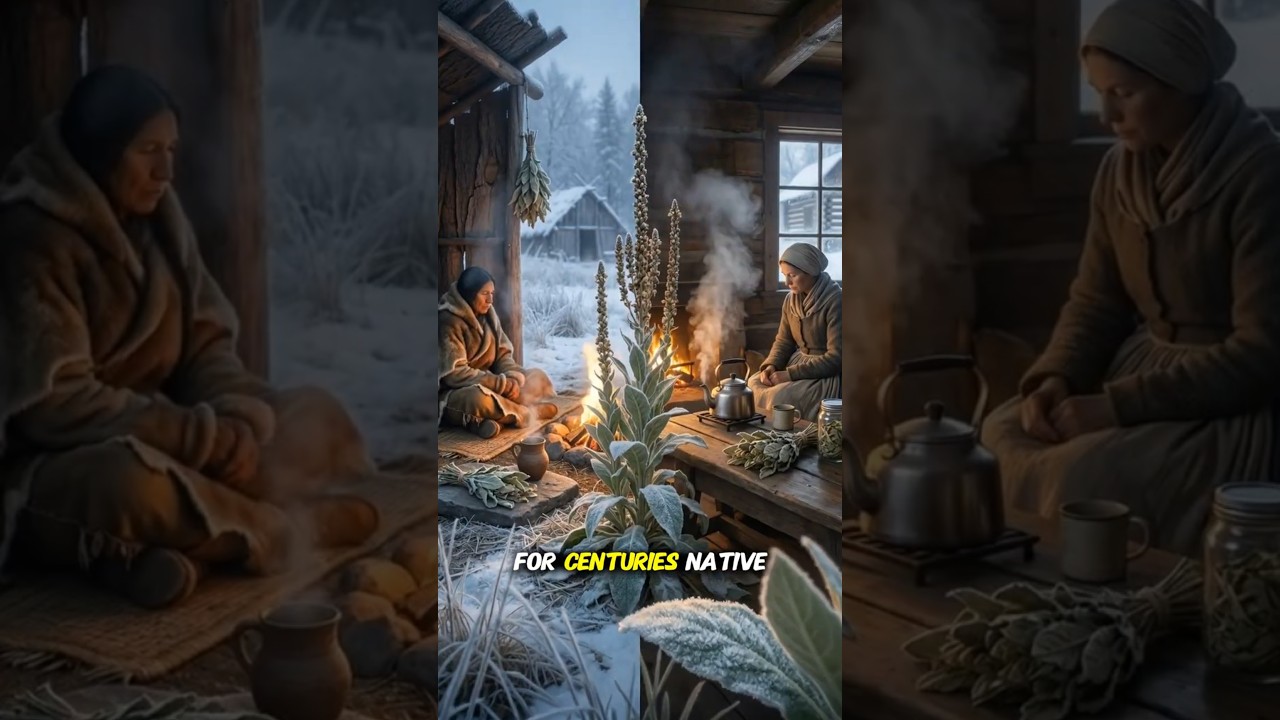
🌿 Have you ever noticed that towering, fuzzy plant growing along the side of the road or in overgrown fields? You might speed right past it, but for early pioneers facing brutal winters, this "weed" was an absolute survival staple!
Discover the fascinating botanical history of Mullein (Verbascum thapsus), famously known as the "Velvet Leaf." Before modern convenience, homesteaders and traditional foragers relied heavily on this specific wild plant to endure harsh, freezing months.
In this video, we’re breaking down the botanical science hiding inside these massive leaves. 🔬 The secret lies in two natural plant compounds: saponins (which act as a botanical detergent) and mucilage (a thick, soothing gel-like substance). Learn how early settlers would harvest, dry, and steep these wild edibles into steaming teas to combat the elements.
Whether you're into bushcraft, historical survival skills, or just want to get better at wild plant identification, nature always has a story to tell.
👇 Hit SUBSCRIBE to All Into Nature for more wildcrafting history, fascinating botany, and hidden nature secrets! 🌲🍃
#foraging #mullein #bushcraft #survivalplants #wildcrafting #botany #naturefacts #plantidentification
⚠️ HEALTH & FORAGING DISCLAIMER: The content provided on All Into Nature is strictly for educational, historical, and entertainment purposes only. It is NOT intended as medical advice, diagnosis, or treatment. Never consume, brew, or apply wild plants without 100% positive identification from a local expert, as many plants have deadly and toxic look-alikes. Always consult with a qualified healthcare professional or doctor before exploring traditional botanical practices, foraging, or using wild vegetation, especially if you are pregnant, nursing, or taking medication. Nature is fascinating, but it commands respect—explore safely and responsibly!
📚 Scientific & Botanical Citation:
Turker, A. U., & Camper, N. D. (2002). Biological activity of common mullein, a medicinal plant. Journal of Ethnopharmacology, 82(2-3), 117-125.
Read the study here: https://pubmed.ncbi.nlm.nih.gov/12241...
















Информация по комментариям в разработке