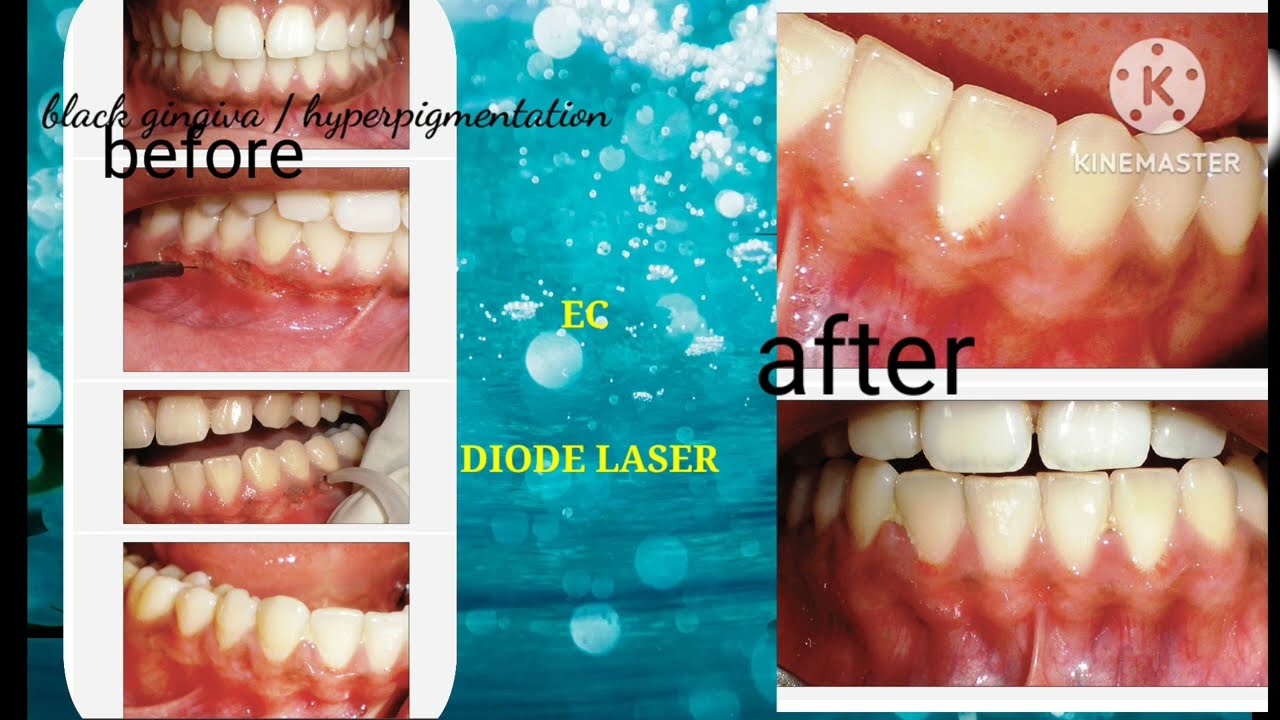
#gingivectomy
#crownlentheningprocedure
Application of Diode Laser
ref intecopen
लेजर ने ओएमएफ सर्जरी के अभ्यास में एक अभिन्न भूमिका निभाई है। मौखिक और मैक्सिलोफेशियल सर्जनों द्वारा की जाने वाली कई प्रक्रियाओं के लिए लेज़र और तेजी से देखभाल का मानक बनता जा रहा है। इस संक्रमण का कारण इस तथ्य के कारण है कि स्केलपेल की तुलना में लेजर का उपयोग करके कई प्रक्रियाओं को अधिक कुशलता से और कम रुग्णता के साथ निष्पादित किया जा सकता है,
लाभ (Advantages)
ओएमएफ सर्जरी में लेजर के इस्तेमाल के कई useफायदे हैं। लेजर सर्जरी के फायदों में शामिल हैं: हेमोस्टेसिस और उत्कृष्ट क्षेत्र दृश्यता, सटीक, बेहतर संक्रमण नियंत्रण
, यांत्रिक ऊतक आघात की कमी, पोस्टऑपरेटिव दर्द और एडिमा में कमी, कम निशान और ऊतक सिकुड़न, माइक्रोसर्जिकल क्षमताएं, ऑपरेशन के स्थल पर कम उपकरण, एन के कारण सड़न
Laser types
Carbon dioxide (CO2 ) lasers continue to be a major instrument for soft tissue surgery for excellent affinity to water-based tissues. The wavelength of 10,600nm is readily absorbed by water thus, it will not penetrate far into tissues (0.1-0.23mm) without repeated or prolonged use making it ideal for superficial lesions and resurfacing of the skin. It is also used for removal of the sialoliths.
Ho:YAG lasers
ER:Yag
alexanderite
argon
Nd:YAG lasers (1064nm) are used for hair removal, in addition for removal of tattoos and pigmented lesions if q-switched.
Esthetic and plastic indications
Lasers have been used for . Superficial vascular and pigmented lesions are most commonly treated with use of argon laser. Nd:YAG laser is used for treatment of deep vascular lesions and tumors
Electrocautery, also known as thermal cautery, refers to a process in which a direct or alternating current is passed through a resistant metal wire electrode, generating heat. The heated electrode is then applied to living tissue to achieve hemostasis or varying degrees of tissue destruction.Electrocautery can be used in various minor surgical procedures in dermatology, ophthalmology, otolaryngology, plastic surgery, and urology.
In electrocautery, ref medscape
Electrocautery, also known as thermal cautery, refers to a process in which a direct or alternating current is passed through a resistant metal wire electrode, generating heat. The heated electrode is then applied to living tissue to achieve hemostasis or varying degrees of tissue destruction.
the current does not pass through the patient; thus, the procedure can be safely used in patients with implanted electrical devices such as cardiac pacemakers, implantable cardioverter-defibrillators, and deep-brain stimulators.
SECTIONS
Background
Electrocautery, also known as thermal cautery, refers to a process in which a direct or alternating current is passed through a resistant metal wire electrode, generating heat. The heated electrode is then applied to living tissue to achieve hemostasis or varying degrees of tissue destruction.Electrocautery can be used in various minor surgical procedures in dermatology, ophthalmology, otolaryngology, plastic surgery, and urology.
In electrocautery, the current does not pass through the patient; thus, the procedure can be safely used in patients with implanted electrical devices such as cardiac pacemakers, implantable cardioverter-defibrillators, and deep-brain stimulators.
In contrast, electrosurgery is a group of commonly used procedures that utilize the passage of high-frequency. Different forms of electrosurgery include electrocoagulation, electrofulguration, electrodesiccation, and electrosection. Electrosurgery produces electromagnetic interference, which can interfere with implanted medical device
Electrosurgery is not a synonym for electrocautery but is often erroneously referred to as electrocautery in practice and literature.
Indications
Electrocautery is a safe and effective method of hemostasis during cutaneous surgery.It is also useful in the treatment of various small benign skin lesions, although only lesions that do not require histological review should be treated with electrocautery.
Electrocautery shares many indications with electrosurgery and is of particular importance in patients who have implanted electrical devices in whom external electromagnetic interference should be avoided. Furthermore, unlike electrosurgical instruments, electrocautery devices maintain function in a wet field.
Low temperatures can be used for superficial tissue destruction in the treatment of superficial and relatively avascular lesions, including the following:
Seborrheic keratoses
Small angiomas
Vitiligo
disclaimer NO ABSOLUTE CONTRAINDICATION .this information only for education purpose .no promotion of any product invovled.
#Painless dental surgery #Bloodless surgery #Painless dental treatment #crown lengthening #Kale masudo ko kaise saaf karen #gingivectomy #Kale masudo ko pink kaise kare #Drswatipandeyortho / drswatipandey99
https://instagram.com/drswatipandey9?...
Facebook.
page LUXMI SWATI DENTALcare

Информация по комментариям в разработке