#MuseumLove #AncientCivilization #CulturalHeritage #MuseumFromHome
The Nanjing Museum is located at the southern foot of Purple Mountain, on the north side inside Zhongshan Gate in Nanjing. Covering an area of over 70,000 square meters, it is China’s first large-scale comprehensive museum built with state investment. It has been recognized as a “National First-Class Museum,” a “National Museum jointly administered by the central and local governments,” and a “National Model Base for Patriotic Education.”
The Nanjing Museum currently houses over 430,000 pieces (or sets) of cultural relics, spanning from the Paleolithic Age to modern times. Its collections include both nationally significant artifacts and those with distinct characteristics of Jiangsu region. They comprise imperial heirlooms, archaeological discoveries, as well as items acquired through public collections and donations. Each is a treasured masterpiece from different dynasties, making the museum a vast treasury of Chinese cultural and artistic heritage.
Its collections encompass a wide range of categories—bronzes, jades, ceramics, gold and silver ware, bamboo, wood, ivory and horn carvings, lacquerware, silk and embroidery, calligraphy and paintings, seals, stone inscriptions, and sculptures—each forming its own historical series that serves as a direct witness to the millennia-long development of Chinese civilization.
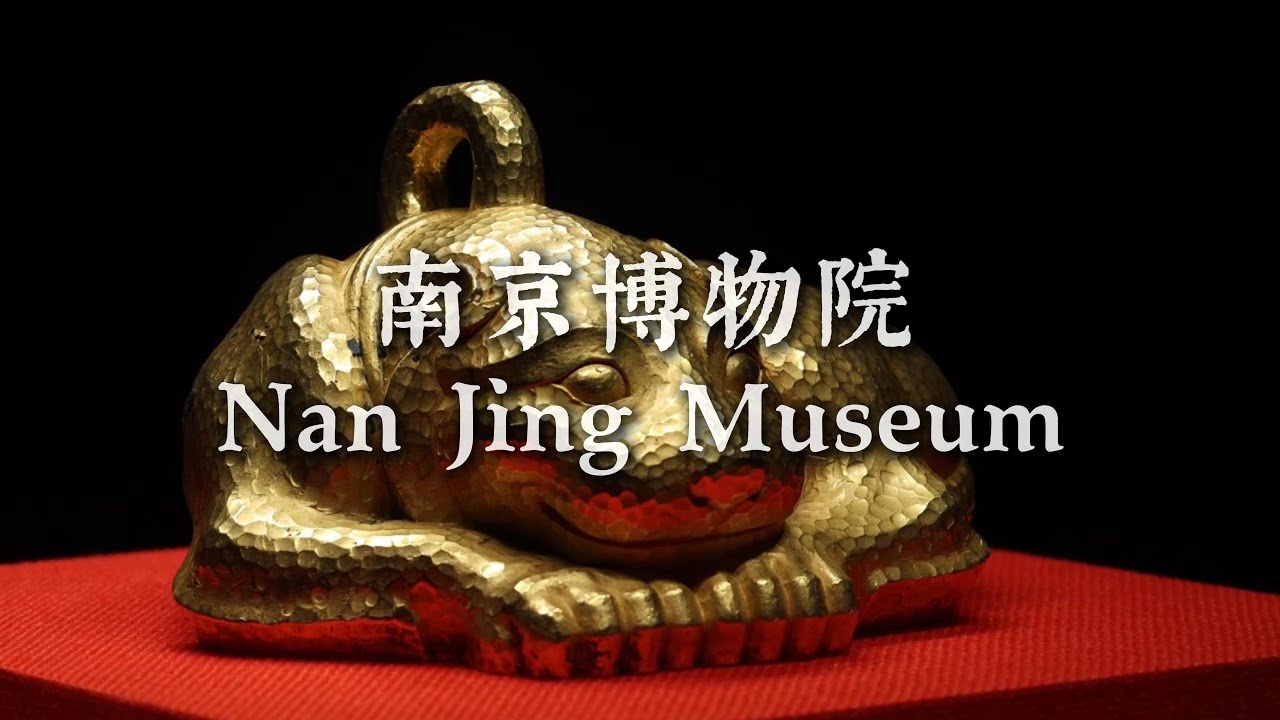
Among the museum’s national treasures are: the Neolithic jade bead ornament*; the Warring States *bronze kettle inlaid with gold and silver and Ying yuan gold coins; the Western Han *golden beast*; the Eastern Han *Seal of the King of Guangling*, *bronze ox-shaped lamp inlaid with silver*, and *gilded bronze inkstone box with mythical beasts*; the Western Jin *celadon zun with divine beast motif*; the Southern Dynasties *brick relief of the Seven Sages of the Bamboo Grove and Rong Qiqi*; and the Ming Dynasty *underglaze red meiping vase with “Three Friends of Winter” motif*.
In addition, the museum boasts a rich and distinctive collection of calligraphy and paintings, featuring works by masters from the *Eight Eccentrics of Yangzhou*, the *Wu School*, the *Jinling School*, as well as artists such as Fu Baoshi and Chen Zhifo.

Информация по комментариям в разработке