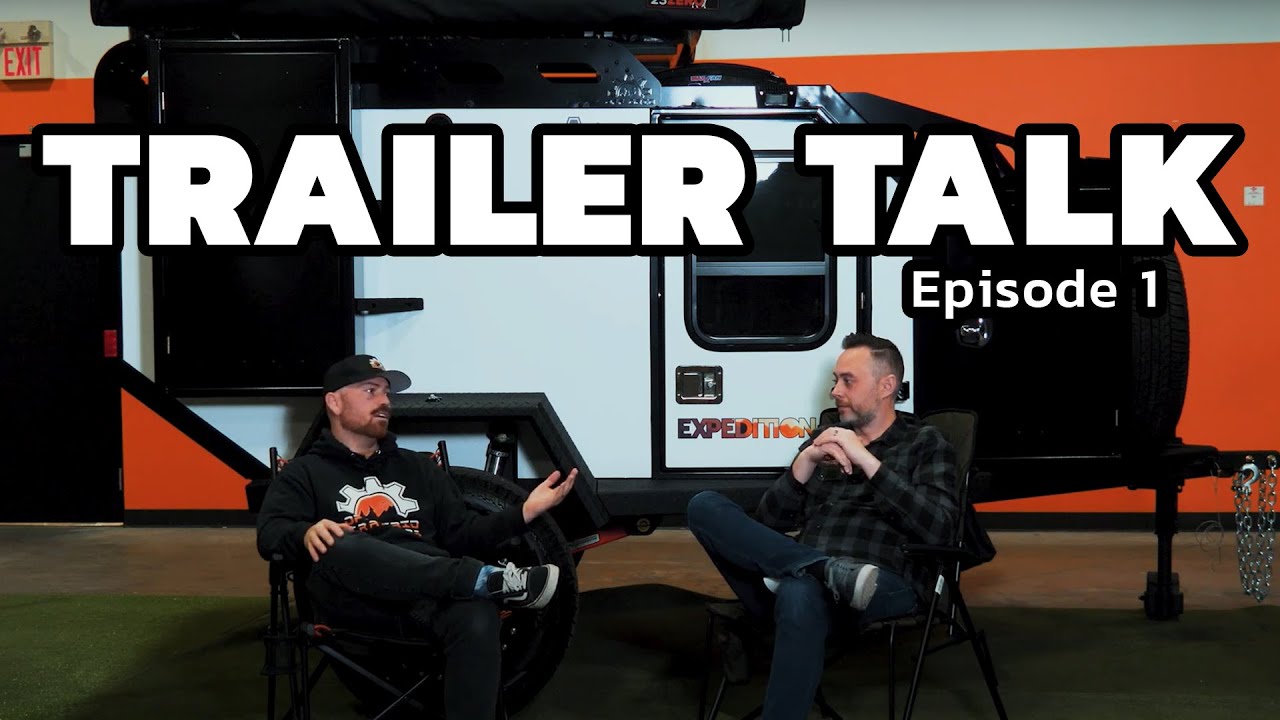
Welcome to Episode 1 of Trailer Talk, where we sit down and talk about overland camping trailers. Let us know in the comments what topics you would like to see us cover in future episodes.
We wanted to talk about why you should consider an All-Metal Camping Trailer if you are looking for an off-road capable overland camper.
What are the main reasons someone considers an Off Grid Trailer over the other options out there?
The short answer here is quality.
One of the most important factors of quality in our off Grid Trailers is the material we use to manufacture them. Off Grid Trailers is one of the only truly all-metal trailers on the market. That means no wood, no fiberglass shells, all aluminum, and steel.
Why is aluminum better than fiberglass or wooden construction?
There are 3 important factors we like to consider when looking at off-road trailer construction; durability, weight, and environmental impact. Aluminum is much more durable than both Fiberglass and Wood. Wood is a naturally occurring substrate, that is prone to decay and rot when attacked by the elements. If you plan to use your off-road capable overland teardrop on the rough terrain of an off-road trail, you will have to prepare for some bending, flexing, and potentially cracking, especially at the seams where pieces of wood join together. If any cracking, flexing, or bending occurs or if the manufacturer just missed some sealant, any inclement weather (rain or snow), or water crossings are sure to let moisture in to begin decaying your camper trailer from the inside out. With moisture comes mold and mildew which can build up inside your walls and under your mattress before you are aware leaving you with long-term health effects. Aluminum on the other hand is mold and mildew resistant and cannot rot. Fiberglass will begin to deteriorate from repeated UV exposure to sunlight, which is not ideal when talking about an overland camping trailer that is used primarily in the summer months through intense sun exposure, including in the desert. Fiberglass also tends to crack when put through intense stress, which is common practice when driving off-road through technical and rough terrain. A well-built all-metal trailer is almost indestructible, we have seen customers roll their trailers over on tough and technical trails, recover them and continue to camp that night. I am not sure a wood or fiberglass trailer would have held up the same.
Another important factor to consider is weight. Weight comes into play, especially in the Overlanding industry when it comes to determining how much gear you can bring along. When selecting an overland trailer, you will have to look at the GVWR, tow capacity and max tongue weight limits of your tow vehicle and choose a trailer accordingly. By building with aluminum rather than fiberglass or wood, we are able to build our trailers lighter, so you can pack more gear into them. So, by using aluminum, we can build a lighter, stronger trailer.
Since we use our trailers to explore nature, it is important to consider the environmental impact that choosing a construction material will have on the world around us. Aluminum is known as the green metal, as it is extremely sustainable to manufacture, indefinitely recyclable, and will last a long time. Wood, on the other hand, contributes to the deforestation of the natural landscapes we want to explore, and fiberglass operations can create toxic pollutants, including styrene and other volatile organic compounds that can lead to the creation of smog and other negative environmental effects.
Learn more: https://offgridtrailers.com/aluminum-...
#AllMetalCampingTrailer #AllMetalTrailer #MetalOverlandTrailer #overlandtrailer #campingtrailer #offroadtrailer #offroadcampingtrailer #4x4Trailer #OverlandTrailerBuild #BestOverlandTrailer #OverlandRig #AdventureTrailer

Информация по комментариям в разработке