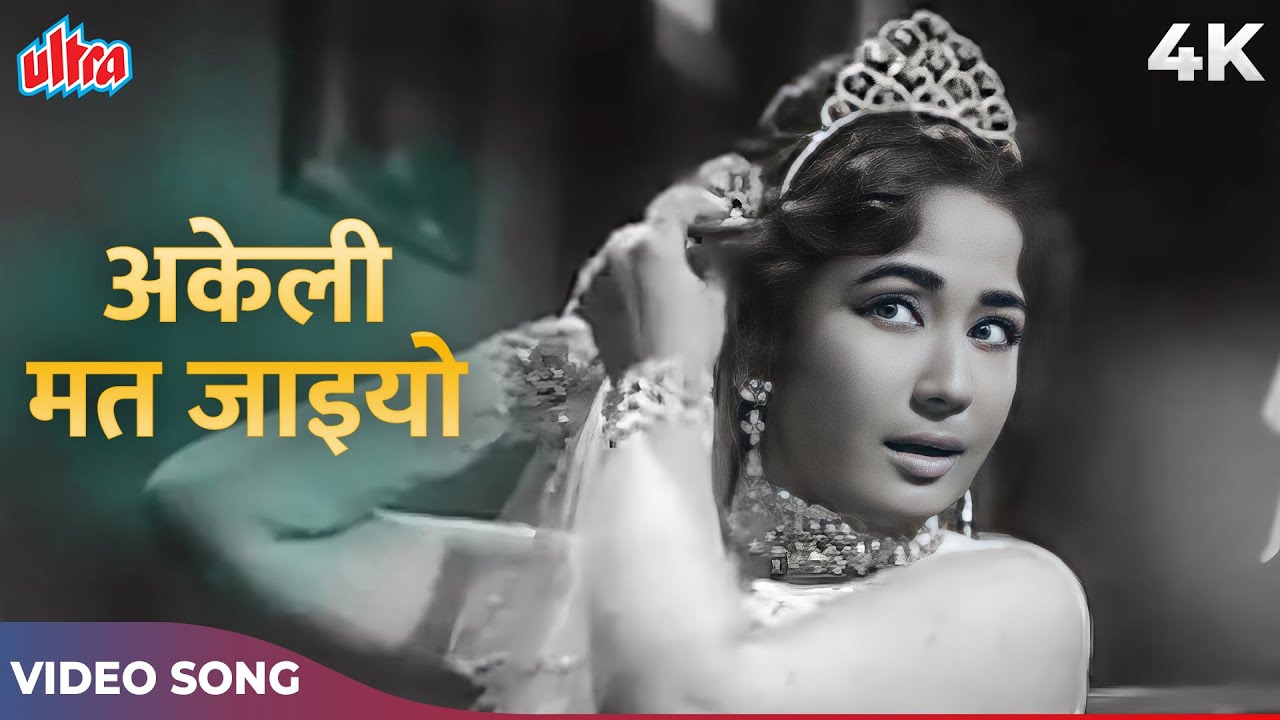
00:00 अकेली मत जइयो जमुना के तीर
03:00 सुन्दर स्वरुप
06:10 लागी मोरी बिंदिया
Rajiv Patke lists as many as 20 bhairavi recordings in the78 RPMs released by Hirabadi Barodekar.
It is well documented that if it was left to her legendary father Abdul Karim Khan, Champutai (Champakali), as Hirabai was known would have been kept away from music.
The following is based on the research by Suresh Chandvankar among others:
Her mother Tarabai Mane wanted Hirabai to be a doctor, but she would listen to the ‘taaliim’ that her father gave to her brother Abdul Rahman (later Sureshbabu Mane) and other disciples, and then practice on her own privately.
We have to thank Tarabai that she had the good sense to Hence she invite Abdul Wahid Khan (cousin of Karim Khan) to take charge of her children's education in music, after she separated from her husband and changed the names of her children – Sureshbabu Mane (Abdul Rahman), Hirabai Barodekar (Champakali alias Champutai), Kamlabai Barodekar (Gulab), Saraswati Mane [Rane] (Sakina, Chotutai) and Krishnarao Mane (Abdul Hamid alias Papa).
With Tarabai's initiative, Hirabai cut her first gramophone record in February 1923 (P 5687) which contained ragas Pilu and Khamaj.
Two more records were cut in the same session and the label reads as Miss Hirabai. During 1923-26, she cut over 20 songs on ten 78-rpm records in black label P series.
After her marriage with Manikchand Gandhi of Solapur in 1924, the subsequent records carried a label indicating the artist's name as Mrs. Hirabai Barodekar.
In 1926, she recorded two songs from the Marathi drama Patwardhan. No further records were issued for the next ten years.
Her first public concert was held in 1921 in the annual gathering of the Gandharva Mahavidyalaya in Mumbai under a special invitation from Vishnu Digambar Paluskar. Soon, like her father, she began to give ticketed programs, which were well received. During 1929-33, along with her brother and sisters, she sang and acted in several drama produced by her own company.
In 1934, she acted in a talkie Suvarna Mandir produced by Menaka Pictures. Later she also played roles in films such as Pratibha (1937), Sant Janabai (1938), Municipality (1941), and a documentary film called Lalat (1947), which was produced by Nav Jhankar Films, Bombay. Very few songs from these films recorded on gramophone records are available today. Film reels and strips have already disappeared.
The famous अकेली मत जइयो जमुना के तीर is from Lalat.
Prabha Atre uses that as the title of a very moving appreciation of her guru:
//
One day a friend of my father insisted that I should take lessons from Hirabai’s elder brother Sureshbabu Mane. I was filled with excitement, for it meant that I would be near Hirabai and her music. Before Sureshbabu would accept me as a disciple, he wanted to hear me sing. I went to Hirabai’s residence on Prabhat Road on the appointed day. Sureshbabu, Hirabai, and their younger sister Kamalabai were all present to hear my singing. I trembled with joy when Sureshbabu said they all approved and he would teach me. This was my first meeting with Hirabai.
The second time we met was during the Gauri-Ganapati festival, when Hirabai used to arrange a whole-night concert at her place. The concert began at sunset and continued past midnight. Hirabai sat down to sing at the very end. She leaned slightly against her Tanpura but her frame remained perfectly still. Her left hand moved slightly, suggesting the move-ments of her phrases. Her eyes had a calm, gentle, and compassionate expression.
Delicately pronouncing the words “Akeli mat jaiyyo Radhe, Jamuna ke teer...”, she sang a Bhairavi Thumri. Her shining notes radiated through the atmosphere. After her performance, a peculiar silence and stillness embraced the listeners. Under the spell of her music, no one noticed when she stood up and left. The artist whose performance kept one entranced once again turned into a warm, hospitable hostess.
On my way back home after the concert, I was deeply moved. I walked haltingly down the wet road surrounded by dozing trees, a misty sky, and an intermittent September drizzle. In this atmosphere, Hirabai’s notes seemed to manifest the blooming of flowers which swayed along the roadside. At every Gauri-Ganapati festival, my mind races back to Hirabai’s home and I relive that wet September night full of her moist notes...
The moist of the cool September night when Hirabai left this world will always fill my heart and wet my eyes as I recall “‘Akeli mat jaiyyo Radhe Jamuna ke teer...”
//
More Bhairavis by Hirabadi Barodekar:
Thumri: रतियाँ किधर गँवायी रे • Hirabai Barodekar | Bhairavi | ratiyaan ki...
Bhajan: भजो मधुर हरि नाम
• Hirabai Barodekar | Bhairavi | भजो मधुर हर...
Hirabai Barodekar Playlist: • Hirabai Barodekar
Bhairavi Playlist: • Bhairavi









Информация по комментариям в разработке