In the vast deserts of the Sahel, where borders stretch across endless sand and security challenges evolve every day, a recent operation in Niger revealed just how complex the fight against insurgent networks has become.
This story begins in the remote Diffa region, an area that has long stood on the frontline of regional instability. Hidden desert routes, cross-border smuggling paths, and isolated communities create an environment where armed groups can move supplies with alarming efficiency. But during a recent mission known as Operation Nalewa Dolé, Niger’s security forces uncovered something far more significant than a routine weapons shipment.
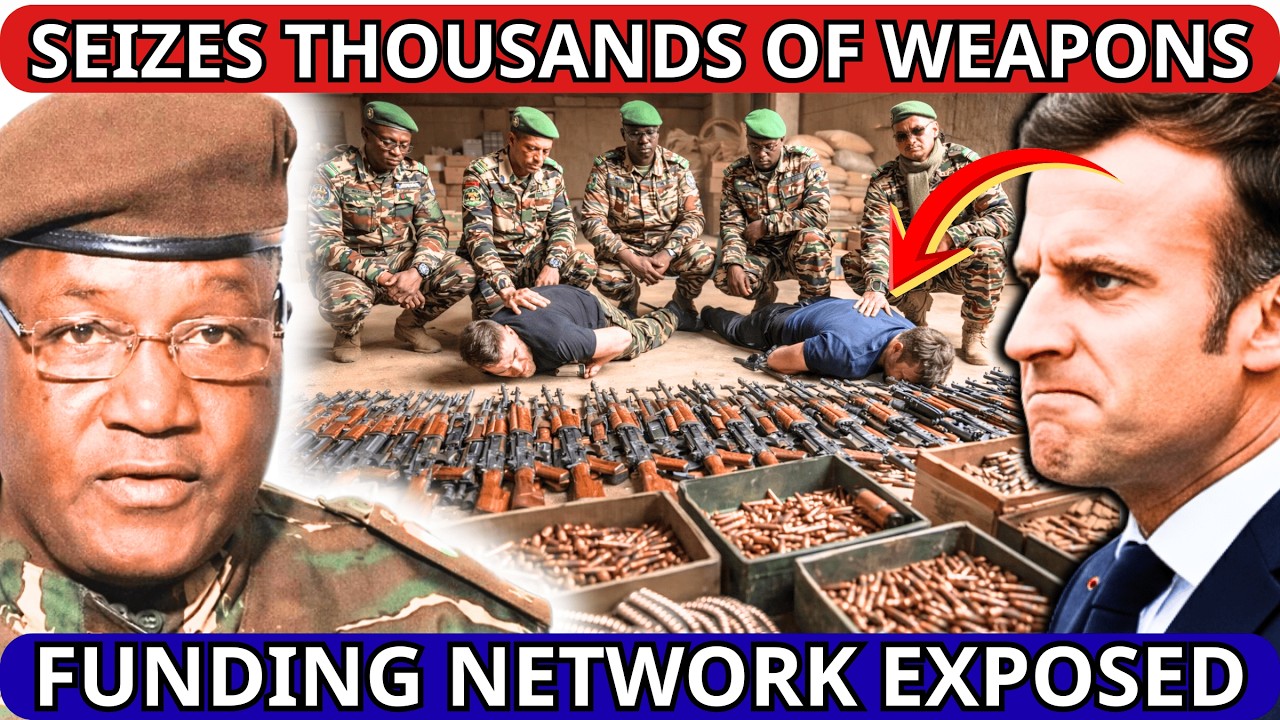
What started as intelligence about suspicious movements across the desert quickly escalated into one of the most important security operations in the region this year. Acting on field reports, soldiers intercepted a convoy suspected of transporting weapons toward armed groups operating near Lake Chad. When the vehicles were searched, the scale of the discovery shocked even experienced officers.
More than forty seven thousand rounds of ammunition were seized, along with assault rifles, communication equipment, satellite devices, and vehicles used to transport the cargo across the desert. The seizure revealed not just a shipment, but an entire logistical network designed to sustain violence across the Sahel.
At the same time, another dramatic event was unfolding. Armed fighters attempted to attack a military position protecting the Agadem oil zone, one of the most strategic energy sites in the country. The attack was quickly repelled, but the equipment left behind by the retreating fighters provided investigators with crucial clues about how weapons were moving through the region.
For security forces, the lesson was clear. Stopping attacks is only part of the challenge. Breaking the supply chains that feed insurgent groups is just as important.
This is where the strategy behind Operation Nalewa Dolé becomes especially significant. Rather than focusing only on fighters in the field, the operation targeted the infrastructure behind the violence — the transport routes, communication systems, financing, and networks that keep armed groups operational.
Across the Sahel, countries are rethinking how they approach security. The rise of regional cooperation frameworks and new political dynamics has changed how governments view sovereignty and defense partnerships. Discussions about Pan-Africanism, regional cooperation, and new geopolitical alignments are increasingly shaping the debate about security across the continent.
Countries such as BURKINA FASO, Mali, and Niger have strengthened coordination through regional initiatives and security alliances. At the same time, international observers continue to watch developments closely as these nations redefine their strategic relationships with global partners including FRANCE and emerging blocs such as BRICS.
For many analysts following AFRICA NEWS and regional developments, these operations highlight a broader transformation in how Sahel nations are confronting insurgency. Intelligence sharing, regional defense cooperation, and coordinated military operations are becoming central pillars of this evolving strategy.
Institutions like the AFRICAN UNION continue to play a role in shaping conversations about stability, sovereignty, and long-term solutions to conflict across the continent.
In recent months, the leadership of figures such as ibrahim traore in neighboring BURKINA FASO and discussions surrounding leaders like ibrahim traoré have also drawn international attention to the shifting political landscape in West Africa.
Yet beyond the politics and geopolitics, the events in Diffa carry a very practical message.
Every intercepted shipment means fewer weapons reaching militant groups. Every disrupted supply route weakens the ability of insurgent networks to launch attacks on communities, infrastructure, and security forces.
Operation Nalewa Dolé demonstrated that even in one of the most challenging environments on Earth, intelligence, coordination, and decisive action can disrupt the systems that sustain armed violence.
And in the shifting landscape of the Sahel, breaking those hidden networks may prove to be one of the most important steps toward lasting stability.
#IbrahimTraore
#AFRICANEWS
#IbrahimTraoré
#PanAfricanism
#AFRICANUNION
#BURKINAFASO
#AfricanDiasporaNewsChannel














Информация по комментариям в разработке