#IndigenousHeritageMonth
What Does Anthony Wayne, The French And Indian War, 1837 26th State, North & South Civil War, Michigan First 1838 State Prison, Factories Industry, Manufactured Production Goods, The Purple Gang, Nankin Mills Rivers To Railroads, Detroit Wayne County Court House, Postmaster, Tobacco Farms, Morgue, Cemetery, Stagecoaches, Human Trafficking, Have To Do With Eloise Keeper’s Residence?🤯
How Wayne County Michigan Got It’s Name?🤔
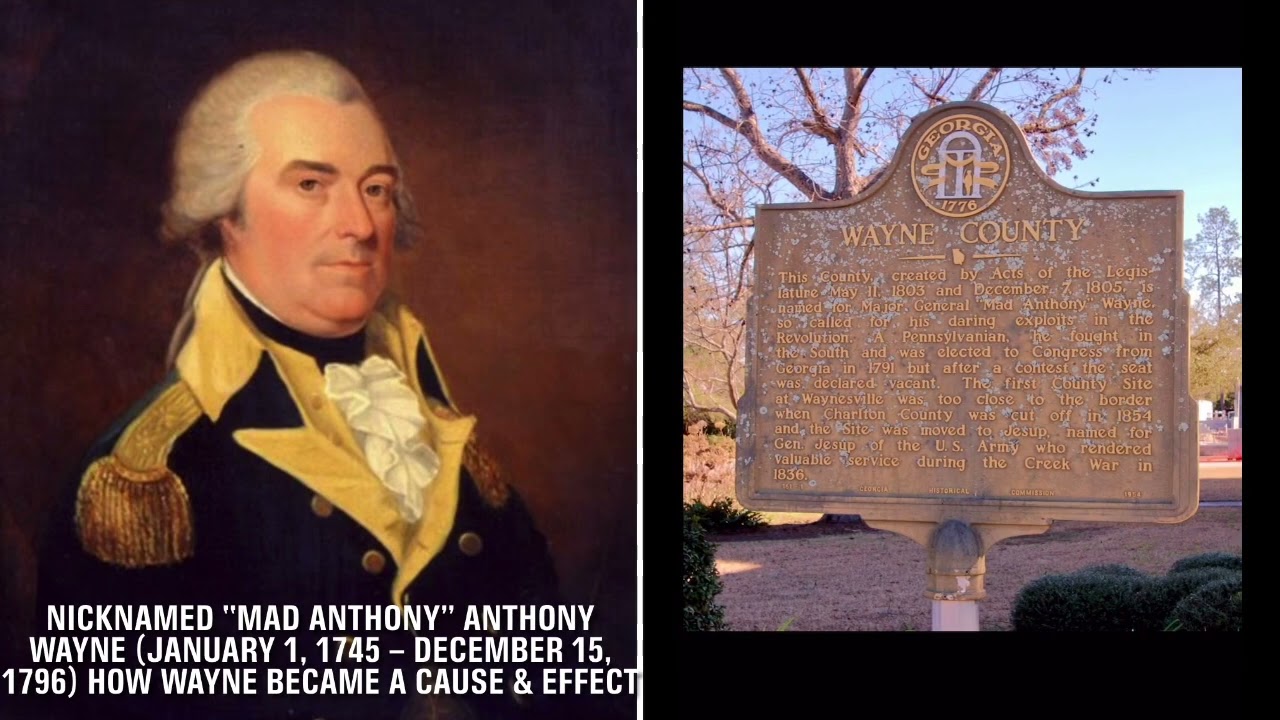
Anthony Wayne (January 1, 1745 – December 15, 1796) on his family's 500 acre Waynesborough estate. During his upbringing, Wayne clashed with his father's desires that he become a farmer. As a child, his father served as a captain during the French and Indian War, leaving an impression on Wayne who would mimic stories of battles at the time. He was educated as a surveyor at his uncle's private academy in Philadelphia and at the College of Philadelphia for two years. In 1765, Benjamin Franklin sent him and some associates to work for a year surveying land granted in Nova Scotia, via #Canada where he surveyed 100,000 acres. He assisted with starting a settlement the following year at The Township of Monckton & was involved with preparing the infrastructure to last through winters. He married Mary Penrose in 1766, and they had two children. Their daughter, Margretta, was born in 1770, & their son, Isaac Wayne, was born in 1772. Wayne had romantic relationships with other women throughout his life, including Mary Vining, a wealthy woman in Delaware, eventually causing his wife becoming estranged from him. He later became a U.S. representative from Pennsylvania. Wayne was an avid reader & often quoted Caesar and Shakespeare at length while serving in the military. In 1767, he returned to work in his father's tannery while continuing work as a surveyor. At the time, Wayne owned a 40-year-old male slave named Toby, who was registered in Chester County as a "slave for life." He would eventually take over the family farm & tannery business in Chester County. As discontent with England grew within the colonies, He stepped into the political limelight as the elected chairman of the Chester County Committee of Safety before then being elected into the Pennsylvania Provincial Assembly. In 1775, Wayne was nominated to the Pennsylvania Committee of Safety beside John Dickinson, Benjamin Franklin, and Robert Morris. Following Great Britain's enactment of the Intolerable Acts, Wayne began to oppose the British and by October 1775, his chairman position for the Chester County Committee of Safety was replaced by a Quaker as citizens described him as a "radical" against the British, an accusation Wayne denied. was an American soldier, officer, statesman and one of the Founding Fathers of the United States. He adopted a military career at the outset of the American Revolutionary War, where his military exploits and fiery personality quickly earned him a promotion to brigadier general and the nickname "Mad Anthony". He later served as the Senior Officer of the Army on the Ohio Country frontier and led the Legion of the United States. Wayne was born in Chester County, Pennsylvania, and worked as a tanner & surveyor after attending the College of Philadelphia. He was elected to the Pennsylvania General Assembly and helped raise a Pennsylvania militia unit in 1775. During the Revolutionary War, he served in the Invasion of Quebec, the Philadelphia campaign, & the Yorktown campaign. Although his reputation suffered after defeat in the Battle of Paoli, he won wide praise for his leadership in the 1779 Battle of Stony Point where he was awarded the Congressional Gold Medal. After being promoted to major general in 1783, he retired from the Continental Army soon after. Anthony Wayne was a member of the Society of the Cincinnati of the state of Georgia. In 1780, he was elected to the American Philosophical Society. After the war, Wayne held a brief career in congress & private business. Following St. Clair's defeat, Wayne was recalled by President Washington from civilian life to command of U.S. forces in the Northwest Indian War, where he defeated the British-backed Northwestern Confederacy, an alliance of several Native American tribes. Leading up to the war, Wayne oversaw a major change & reorganization of the entire United States Army. Following the 1794 Battle of Fallen Timbers, he later negotiated the Treaty of Greenville which ended the war and their alliance with the British. Wayne's legacy is controversial. In recent years, his legacy is contested, due to his ownership of slaves, as well as his use of tactics under George Washington's policies against Native Americans during the Northwest Indian War. Wayne was one of four children born to Isaac Wayne, who had immigrated to Easttown, Pennsylvania, from Ireland, & Elizabeth Iddings Wayne. He was part of a Protestant Anglo-Irish family; his grandfather was a veteran of the Battle of the Boyne, where he fought for the Williamite side.

Информация по комментариям в разработке