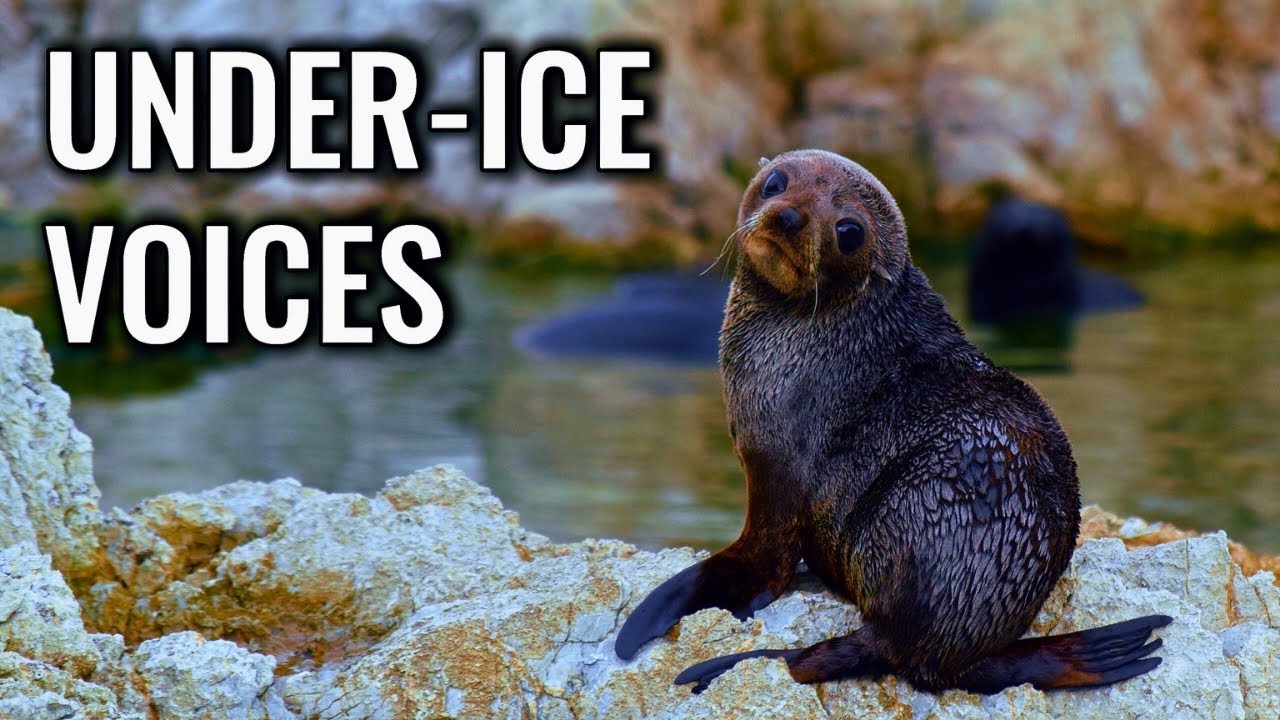
Under the Antarctic fast ice, daylight dissolves into blue shadow and the ocean becomes a cathedral of echoes. In that stillness, a note blooms—rising, warbling, cascading through the dark. This is Weddell seal vocalization, a soundscape so otherworldly that divers compare it to science fiction. Our film listens closely to an Antarctic seal song that seems to make the ice itself vibrate, revealing how a top predator communicates in a frozen world.
Why sing here? Physics favors voices under ice. Smooth ice ceilings reflect and guide sound, letting calls travel long distances with little loss. In this environment, under-ice animal sounds don’t just reach neighbors; they fill habitats. The result is a rich acoustic arena where mates, rivals, and pups can be contacted across large spaces. As we map this sound world, we show how marine mammal communication adapts to temperature, pressure, and silence—turning a harsh setting into a high-fidelity auditorium.
The repertoire is wide. Trills, chirps, whoops, and sweeping glissandos overlap with pulses that edge into ultrasound. Researchers have documented seal ultrasonic calls in Weddell seals, suggesting that portions of their songs may ride above human hearing where background noise is lower. Studies indicate these higher components could help cut through crackles from shifting ice and distant surf, while lower notes provide power for range. In practice, Weddell seal vocalization is a layered broadcast—part melody, part code.
Function remains a live question. Scientists still debate the exact mix of courtship, territorial display, and coordination beneath the ice. Evidence suggests certain motifs appear during mating season or near breathing holes, hinting at roles in spacing and pair formation. Our sequences juxtapose call types with behavior: close-ups of a singer hovering mid-water; silhouettes cruising along the underside of ice; and aerials of pressure ridges above an active colony. Each scene links an Antarctic seal song to what the animal is doing in that moment.
If this blend of polar fieldwork and sound design resonates with you, subscribe for more science-first storytelling and share the episode with a friend who loves the ocean.
How do we see sound? We pair hydrophone recordings with on-screen spectrograms to decode under-ice animal sounds tone by tone. You’ll watch frequency ramps paint visual signatures—a rising whistle, a descending moan, a burst of clicks—while captions explain which features likely carry the message. We also zoom out to show how marine mammal communication works across scales: an individual near a hole, a cluster of singers trading phrases, a bay-wide chorus refracted by ice topography.
The environment shapes every note. Breathing holes and cracks act like stages, focusing sound and congregation. Calm, cold water reduces absorption, and the ice sheet dampens wind chop, lowering ambient noise. Against this backdrop, seal ultrasonic calls can slip between lower-frequency rumbles from ice movement, giving singers a clear channel. At the same time, calls must remain energetically affordable. Evidence suggests that individuals alternate long, sustained elements with shorter bursts, balancing impact with oxygen budgets in a place where every dive is timed.
We also consider the audience. Pups learn the acoustic “accent” of their colony, while adults appear to recognize neighbors by call structure. Scientists still debate how much individuality is encoded in each Antarctic seal song and how context alters delivery. But across studies, a pattern emerges: complexity carries information. The more varied the sequence, the more ways a listener can extract identity, motivation, and distance—crucial in a landscape where sightlines are short and the ceiling is ice.
Finally, we listen for the ecosystem. Under-ice animal sounds include more than seals: cracking brash ice, distant wave booms at the floe edge, and faint clicks from other species create a shifting backdrop. Within that mix, Weddell seal vocalization stands out as the dominant melodic thread—part beacon, part boundary marker. When multiple singers overlap, you’ll hear braided voices form chords that drift and resolve, a reminder that marine mammal communication can be as textured as any human ensemble.
Our goal is clarity without mystery lost. We distinguish what’s known from what’s emerging, using plain language to explain tools—hydrophones, time-synchronized cameras, and spectral analysis—while letting the songs lead the story. In the quiet world beneath the ice, questions remain open, and that’s the wonder: an Antarctic seal song invites us to keep listening.
Watch more episodes at: / @animalinsight360
For business inquiries: [email protected]
#AnimalInsight360 #Wildlife #WeddellSeal #Antarctica #UnderwaterAcoustics #MarineMammals #AnimalCommunication

Информация по комментариям в разработке