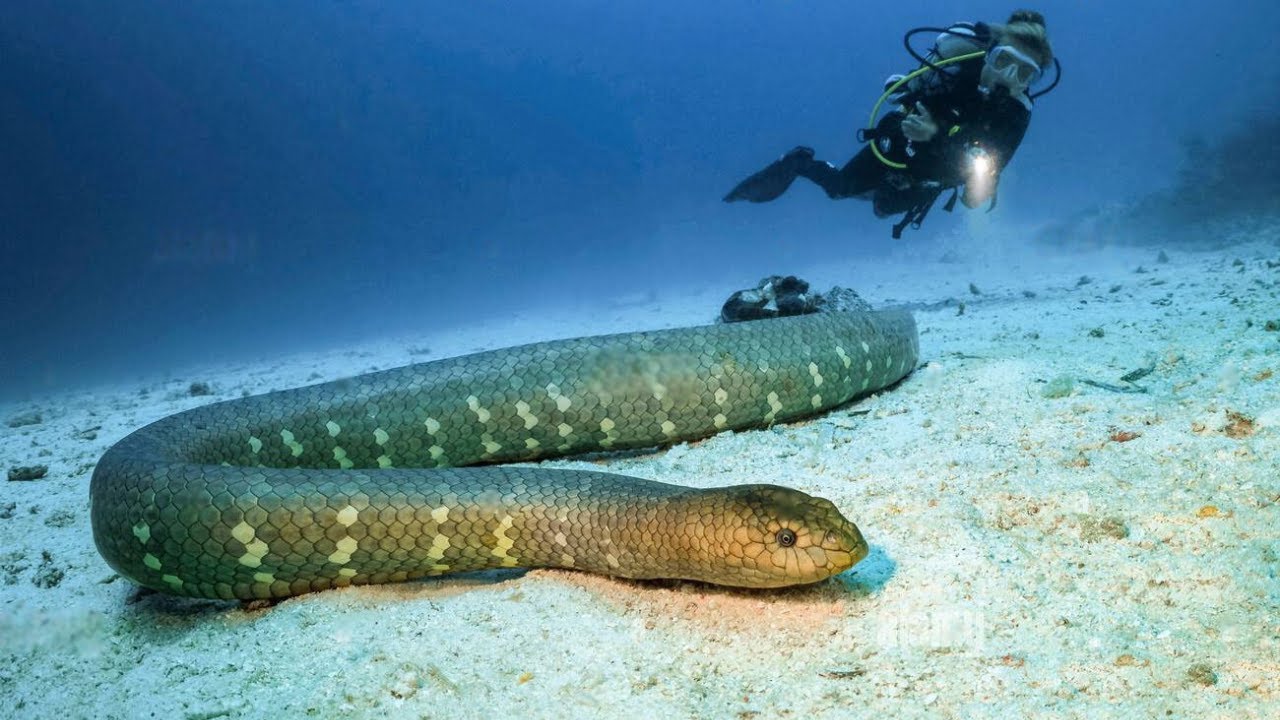
Olive Sea Snake Pictures (Aipysurus laevis)
#underwater #scuba #scubadiving #seasnakes #australia #venomous #snakes
,,,,,,,,,,,,,,,,,,,,,,,,,,,,,,,,,,,,,,,,,,,,,,,,,,,,,,,,,,,,,,,,,,,,,,,,,,,,,,,,,,,,,,,,
The Olive Sea Snake (Aipysurus laevis) is a species of venomous sea snake found in the tropical waters of the Indian and Pacific Oceans, particularly around Australia and Southeast Asia. Here are some facts about the Olive Sea Snake:
Appearance: As its name suggests, the Olive Sea Snake typically has an olive-green coloration, although it can vary from greenish-brown to nearly black. They have a sleek, elongated body with paddle-like tails for swimming.
Habitat: Olive Sea Snakes inhabit shallow coastal waters, coral reefs, and lagoons, usually staying within depths of about 3 to 30 meters (10 to 100 feet). They are highly adapted for life in the ocean and are rarely found on land.
Venom: Like all sea snakes, the Olive Sea Snake is venomous. However, they are generally not aggressive and bites on humans are extremely rare. Their venom is potent and primarily used for subduing prey such as fish and eels.
Behavior: Olive Sea Snakes are highly adapted to their marine environment. They are excellent swimmers, propelled by their muscular bodies and paddle-like tails. They are also capable of remaining submerged for extended periods, sometimes for up to two hours, before needing to surface for air.
Diet: Their diet mainly consists of small fish and eels, which they hunt by swimming through coral reefs and other underwater structures. They are known to possess specialized adaptations for hunting in these environments, such as highly flexible jaws that allow them to consume prey larger than their own head.
Reproduction: Olive Sea Snakes are ovoviviparous, meaning they give birth to live young. Females typically give birth to a small number of offspring, usually between 2 to 7, after a gestation period of several months.
Conservation: While not currently considered endangered, Olive Sea Snakes face threats from habitat destruction, pollution, and incidental capture in fishing gear. Additionally, they are sometimes targeted for their skins and meat, although international regulations restrict trade in these species.
Overall, Olive Sea Snakes play an important role in marine ecosystems and are fascinating creatures adapted to life in the ocean's depths.

Информация по комментариям в разработке