Kya IVF me Ectopic Pregnancy Ho sakti Hai? | Hererotpic, Ectopic Pregnancy in IVF, Reason, Treatment
Hello viewers,
Today's topic revolves around the question, "Can IVF cause ectopic pregnancies?"
IVF is a complex and emotional journey for patients. It often leads to feelings of sadness and disappointment due to the possibility of ectopic pregnancies, which can result in the expenditure of precious financial resources.
Patients may struggle to come to terms with the fact that their IVF treatment did not yield the desired outcome. They may wonder how the embryo, intended for the uterus, ended up in the fallopian tube, leading to an ectopic pregnancy.
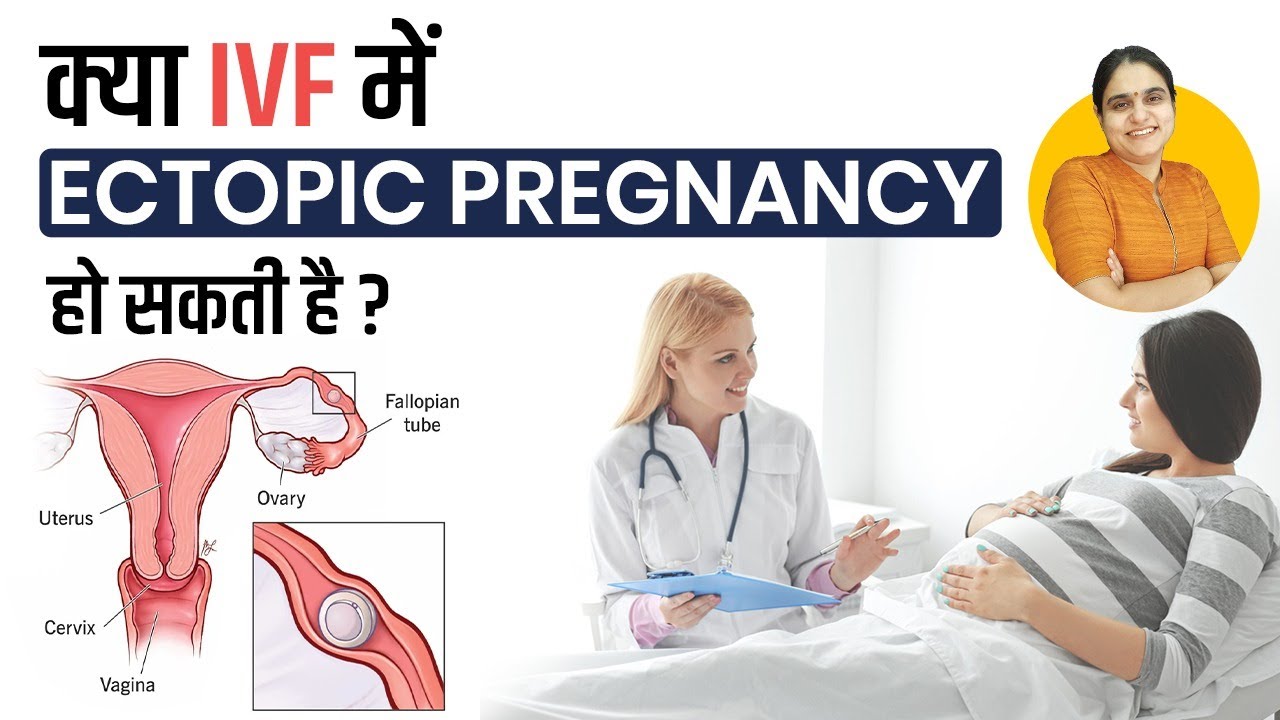
Ectopic pregnancies in the context of IVF can take different forms. For instance, if multiple embryos are transferred, it can result in a condition called heterotopic pregnancy. In heterotopic pregnancies, one embryo implants in the uterus while another implants in the fallopian tube.
The occurrence of ectopic pregnancies in IVF is relatively low, with an incidence rate of around 1%. This rate is comparable to the general population, where ectopic pregnancies are also observed at a rate of 1-2%. Therefore, the incidence of ectopic pregnancies in IVF is similar to that in the general population.
Now, how does ectopic pregnancy happen in the context of IVF? When an embryo is transferred during IVF, it is not placed in the uterus alone. It is accompanied by a medium that allows the embryo to be properly positioned. This medium enables the embryo to swim and move around. While swimming, the embryo may encounter adhesions in the fallopian tube and get stuck. If it cannot navigate out of the tube, it may implant there, leading to an ectopic pregnancy.
There are numerous theories and assumptions as to why this happens. However, one positive aspect of ectopic pregnancies in IVF is that they are usually detected before they become life-threatening. Since IVF patients undergo regular monitoring and receive results around two weeks after the procedure, the chance of ectopic pregnancies reaching a critical stage is minimal. Patients are provided with instructions to promptly seek medical attention if they experience any abdominal pain or other issues. As a result, ectopic pregnancies in IVF are typically identified early, allowing for timely intervention.
In approximately 99% of cases, ectopic pregnancies resulting from IVF can be managed medically. IVF doctors may feel a sense of responsibility and empathy toward their patients, as they understand the emotional and financial investment involved. Therefore, surgical intervention is often avoided in favor of medical management. This approach involves using medications to address the ectopic pregnancy.
When an ectopic pregnancy occurs, and it involves a single embryo located in the fallopian tube instead of the uterus, it is relatively straightforward to manage medically. However, in the case of heterotopic pregnancies, where one embryo is in the uterus and another in the tube, medical management becomes more challenging. Administering medication to address the ectopic pregnancy in the tube may potentially affect the normal pregnancy in the uterus. Consequently, surgical intervention is usually preferred for heterotopic pregnancies.
During surgery for heterotopic pregnancies, efforts are made to minimize damage to the uterus by reducing abdominal pressure. This approach helps preserve the uterine pregnancy while removing the tubal pregnancy. Fortunately, very few cases require immediate surgical intervention due to significant tubal pregnancy that is both difficult to detect and has the potential to rupture.
If an ectopic pregnancy occurs during IVF, appropriate management during that time can increase the chances of future successful pregnancies using frozen embryos. To reduce the likelihood of recurring ectopic pregnancies in IVF patients, certain precautions can be taken. These include minimizing the use of medium, aiming for a lower implantation position, and thereby reducing the probability of ectopic pregnancies.
It is worth noting that patients who have experienced natural ectopic pregnancies are also at a higher risk of ectopic pregnancies in IVF. In cases where a patient has a history of recurrent ectopic pregnancies, both fallopian tubes may be closed or removed, as they are a contributing factor.
Reach Us:
Star Fertility Hospital
265, Lajpat Nagar, Guru Nanak Mission Chowk,
Jalandhar, Punjab, 144001
Helpline: +91-9888658889
Website: https://drmandeepkaur.com
Facebook page: / drkaurmandeep
Google Map Link-
http://location.drmandeepkaur.com
Appointment: 0181-4674888
#ivfectopicpregnancy #ectopicinivf #ivfectopicpregnancy

Информация по комментариям в разработке