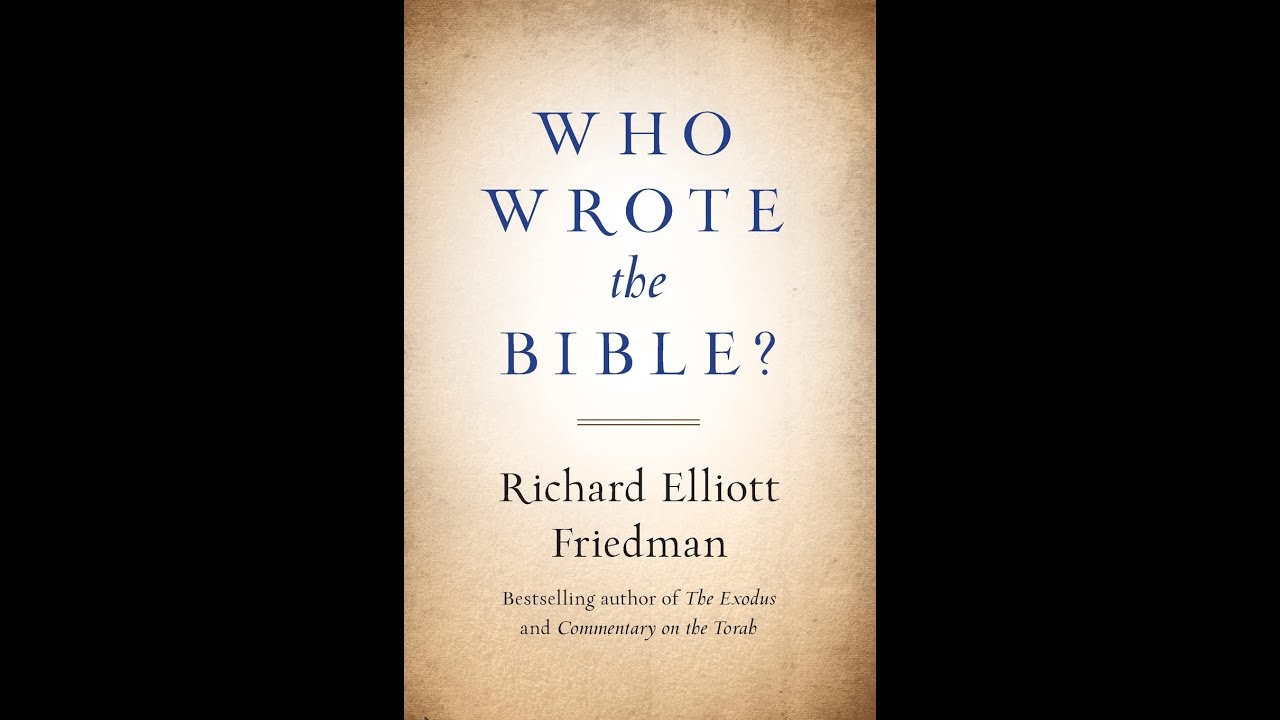
Richard Elliott Friedman's "Who Wrote the Bible?" is a seminal work that delves into the complex and enigmatic origins of the Hebrew Bible, shedding light on the identities and motivations of the authors behind this foundational text of Western civilization. Through meticulous scholarship and a compelling narrative style, Friedman unveils the intricate layers of authorship and editorial processes that shaped the Bible as we know it today.The central thesis of Friedman's book revolves around the idea that the Bible, particularly the first five books known as the Pentateuch or Torah, was not authored by a single individual, such as Moses, as tradition suggests. Instead, he argues that it is the product of multiple authors and editors who lived over several centuries. To support his argument, Friedman employs a method he calls "the documentary hypothesis," which involves dissecting the text of the Bible into different sources based on linguistic, stylistic, and thematic criteria.One of the key contributions of Friedman's analysis is his identification of four primary sources that underlie the Pentateuch: the Yahwist (J), the Elohist (E), the Priestly source (P), and the Deuteronomist (D). Each of these sources, according to Friedman, had its distinct theological perspectives, writing styles, and historical contexts. He skillfully navigates the text, pointing out inconsistencies, repetitions, and variations in the narrative that are indicative of multiple authorship.Friedman's argument about the authorship of the Bible is a departure from traditional beliefs, but he presents a compelling case. He contends that the Yahwist source (J) is the oldest, dating back to the 10th century BCE, while the Elohist source (E) is slightly later. The Priestly source (P) comes from the post-exilic period, and the Deuteronomist (D) is associated with the time of King Josiah's religious reforms in the 7th century BCE. By tracing the development of these sources, Friedman offers a historical framework for understanding how the Bible evolved over time.In addition to identifying the sources, Friedman explores their unique perspectives and theological emphases. For example, he highlights the Yahwist's anthropomorphic portrayal of God, emphasizing God's closeness to humanity and personal interactions with biblical figures. On the other hand, the Elohist source portrays God as more distant and communicates through dreams and visions. The Priestly source is preoccupied with matters of ritual and law, while the Deuteronomist emphasizes ethical and moral imperatives.Friedman's analysis goes beyond the identification of sources. He also discusses the motivations and historical contexts that might have driven the various authors and editors. For instance, he argues that the Deuteronomist (D) was likely motivated by the desire to centralize worship in Jerusalem, reflecting the political agenda of King Josiah. The Priestly source (P), he suggests, was concerned with preserving and codifying religious rituals during the Babylonian exile.Throughout the book, Friedman skillfully weaves together textual analysis, historical context, and archaeological evidence to build his case. He engages with the works of earlier scholars in the field, presenting a comprehensive review of the history of biblical criticism. Moreover, he takes care to address counterarguments and alternative theories, demonstrating the depth of his scholarship and commitment to a rigorous academic approach.One of the strengths of "Who Wrote the Bible?" is Friedman's ability to make complex scholarly material accessible to a general audience. He writes with clarity and conciseness, avoiding jargon and technical language. This accessibility has made the book a valuable resource not only for scholars but also for anyone interested in understanding the Bible's origins.In conclusion, Richard Elliott Friedman's "Who Wrote the Bible?" is a groundbreaking work that challenges traditional notions of biblical authorship and presents a compelling case for the multiple sources and complex editorial processes behind the Hebrew Bible. Through meticulous analysis and a clear narrative style, Friedman provides readers with a deeper understanding of the Bible's origins, shedding light on the diverse voices and theological perspectives that contributed to this enduring and influential text.

Информация по комментариям в разработке