#jan #dismas #zelenka #score #sheetmusic #zwv #20 #missa #ultima #ultimate
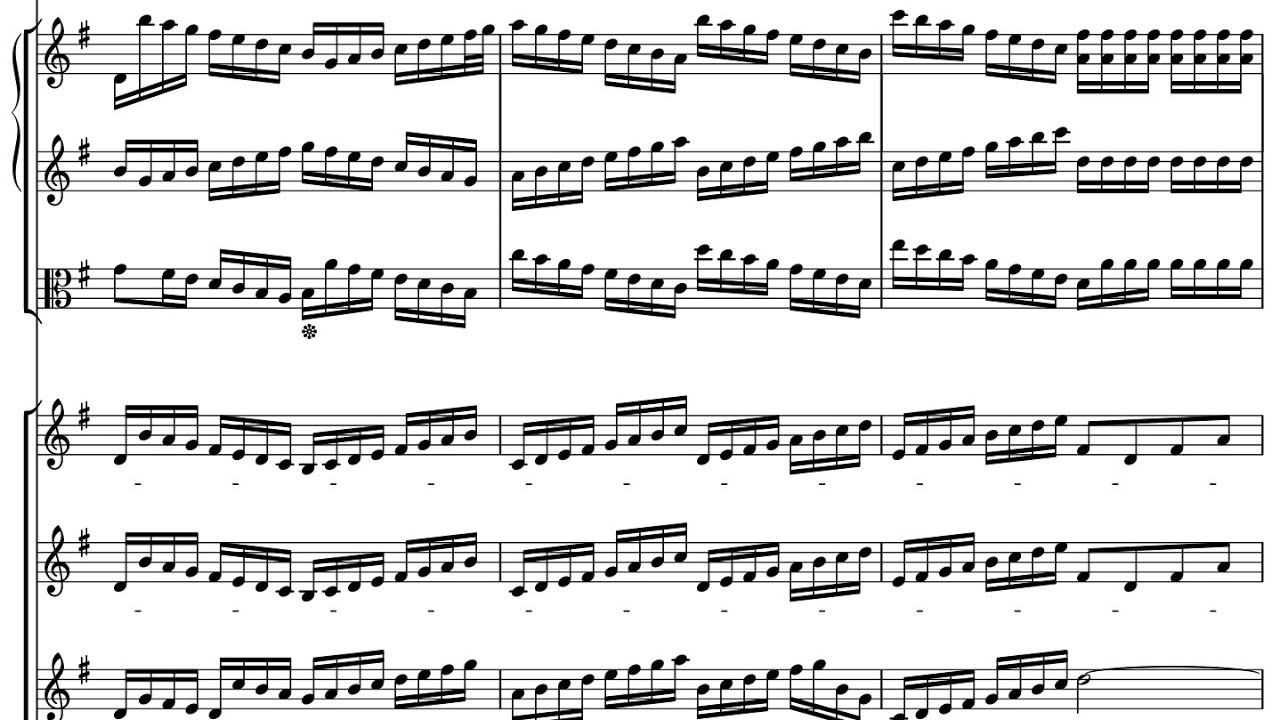
Score / sheet music of Jan Dismas Zelenka's second ultimate mass - the Missa Dei Filii, ZWV 20.
Towards the end of his life, Zelenka had projected a cycle of six Missa Ultimae but, as far as is known, he completed only three mentioned above. Z. 19 was composed in 1740, Z. 20 circa 1740-41 and Z. 21 3rd February, 1741.
Apart from these three masses and a fragment /Christe eleison, Z. 29/, there is no further evidence of Zelenka's "last masses", and so the consensus is that the missing masses, No. 3-5 were never composed. The chance of such works having been lost in Dresden, especially during the fateful bombing in WW2 is extremely small; almost every work listed in Zelenka's court "Inventarium rerum Musicarum Variorum Authorum Ecclesia Servientium" is there today. Zelenka scholar Thomas Kohlase speculates that a phrase in the full title of the sixth mass /et forte omnium ultima/ = and perhaps the last of all/, can be understood as an expression of Zelenka's fear that this might be the last to be completed.
The three existing Missa Ultimae stand apart from the others masses in that they were never intended to serve any liturgical function at the Dresden court. The title for /Z. 21/ for instance, /Omnium Sanctorum/, signifies a dedication to all saints, yet the work was not appointed for the Feast Day of All Saints.
Interestingly, for these three Missa Ultimarum of Zelenka, his ultimate works, they are all scored for four part SATB chorus + soloists, two oboes, strings and basso continuo - foregoing the trumpets, horns and timpani employed in many of his earlier masses, nonetheless, the Missa Ultimarum are grand in design and structure, and rich in musical thought, variety and virtuosity. Zelenka scholar Wolfgang Horn views the Missa Ultimae as "a summing up of a life filled with disappointments and later burdened with illness, observing in his mature late works a personal sound that is deepened and spiritualized in these three masses".
It is precisely this self-expression in the late works that sets Zelenka apart from his contemporaries, even Johann Sebastian Bach him self, that moves away from the conventional to the heights of ecstasy or to the depths of contrition and quiet sadness...
I: Kyrie I (Chorus) - 00:00
II: Christe eleison (Soprano) - 1:31
III: Kyrie II (Chorus) - 6:31
IV: Gloria (Chorus) - 7:54
V: Qui tollis (Soprano, Tenor, Bass) - 17:31
VI: Qui sedes (Chorus) - 27:25
VII: Quoniam I (Chorus) - 29:28
VIII: Quoniam II (Alto) - 29:53
IX: Cum sancto spiritu I (Chorus) - 35:17
X: Cum sancto spiritu II (Chorus, Fugue) - 35:44
Performer(s): • Missa dei Filii, ZWV 20: Kyrie eleison (Coro)

Информация по комментариям в разработке