A special thanks to Dr. Kenneth Fuchs and Mr. Chris Lee, two brilliant composers who advised me as I composed this symphony!
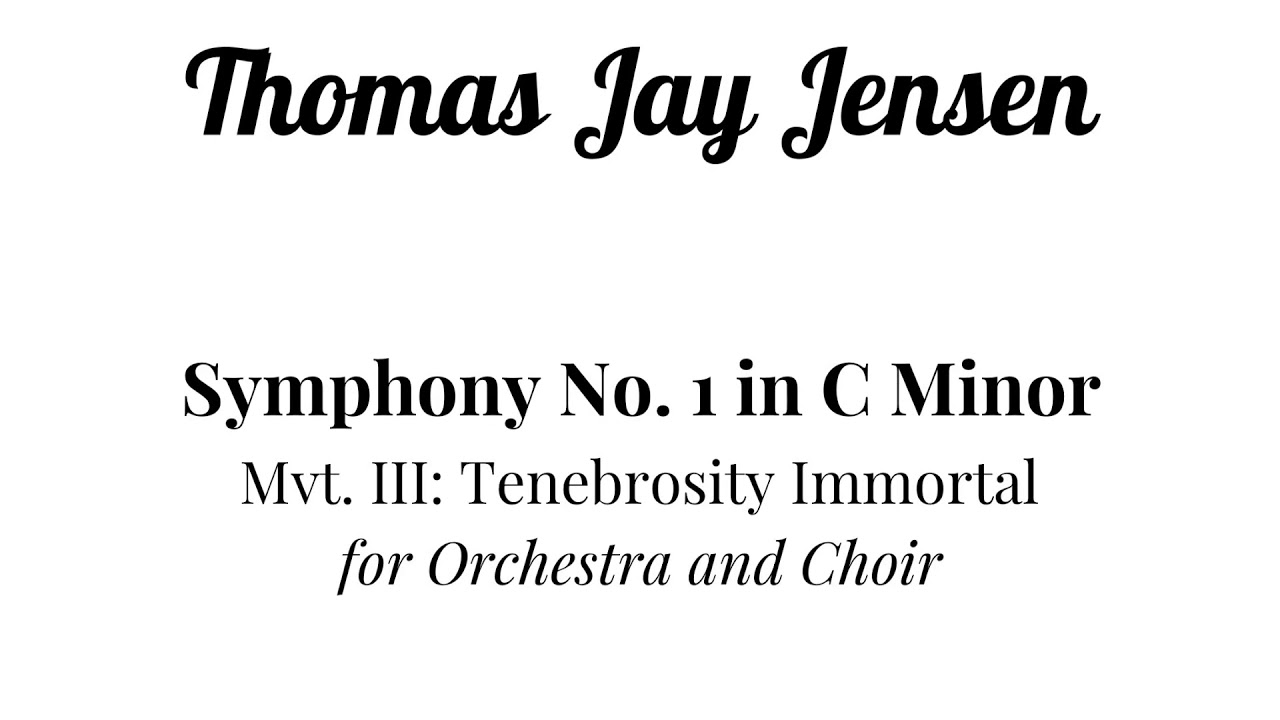
“Tenebrosity Immortal,” the Finale of this symphony, depicts life on
earth ceasing to exist due to human-caused climate change. Whereas movements I and II focus on the present, this work enacts what will inevitably happen if change is not brought to pass.
This menacing movement serves the purpose of a final reminder to
the world, and is a call to action. Grinding dissonances lead to a soaring cello solo early in the work, exemplifying that even at the end of times, there will still be beauty. The driving bassline is meant to emulate Dmitri Shostakovich yet again, but this time, the Prelude to his “Ballet Suite No. 4.” As Shostakovich’s life was surrounded by the national tragedy and unrest placed upon the citizens of Soviet Russia, the aura of his works foretold an ideal model for what dystopian, end of the world orchestral music should sound like.
The driving bass motion is then replaced by a trumpet duet, acting
as an emboldened herald of the end of the human race. Then, the low winds, now accompanied by pizzicato strings, are featured along with the subdued timbre of the euphonium gently soaring above, and extreme pedal tones in the bass trombone and tuba serving to shake the ground.
This act progressively speeds up, stewarding in the start to a series
of syncopated rhythmic unisons that are used to form a platform for a rhythmically diversified return of the hymn from Mvt. I. The strings are used to momentarily increase harshness, giving the moment a biting, anxiety-provoking drive. As more instruments join in, a hitpoint seems imminent, but is then subverted as most instruments cut out to begin another series of syncopated melodies.
After a few moments of more harmonized section playing, all
instruments stop to unveil a lone, soprano vocal soloist. This disorienting moment, as the movement ceases to follow the form of the other two movements of having a new motif mid-piece, favors more variations of the hymn from Mvt. I, signifying that no more new life will be created.
These variations do not last, though, as syncopated ideas proceed to
lead to a new destination: a militaristic march. This signifies a final stand from the human race to try and stop the inevitable - an effort started too late to suffice. This moment of struggle, followed by the realization of failure and imminent death, is shown by a reflective, yet hastily enacted, alto saxophone solo, accompanied by suspensions in the woodwinds and strings.
After this glimpse through the clouds into the light at the end of the
tunnel ceases, panic erupts. The realization that it’s too late hits with a fanfare of frenzy. Then proceeds a meter change into a polyrhythmic ¾ exploitation, which then delves into a waltz. These obscure moments are meant to juxtapose emotions of insanity and mental instability as humans come face to face with their own hubris. Most notably, a whimsical clarinet solo, sounding childish, paves the way for confusion. The jig-like fanfare of woodwinds and timpani that then follows, finalizing the inexplicable chaos, is quickly cut off by intense orchestral hit points, trading back and forth between a whimsical feeling of confusion and an intense comprehension of the dark reality unfolding.
A snare drum led multi-instrumental buildup leads to two climax
points. The first, like reaching the second tallest peak of a mountain, does not sufficiently portray the end of humanity, but the last, insufficient battle cry to be engulfed immediately after by a pulsing earthquake of sound, harkening back to the hymn of Mvt. I as one final fulmination of the end of mankind. This moment divulges quickly into the wind, almost without a trace.
The Finale of the symphony ends with a series of trading between
the strings and the woodwinds. The strings harmonically imitate the subtle cinematic ending ballad “Porch,” which was composed by Alan Silvestri for Avengers: Infinity War. In the same breeze-like fashion, the strings usher in one final statement: a woodwind trio, echoing the themes of the first and second movements as they enter. This trio, akin to the trio at the beginning of the symphony, brings the entire work to a cyclic, but questioning ending: why let it happen?
Tenebrosity Immortal
Lyrics by Thomas Jay Jensen
"There is no one else
It is down to us
There is now no time to drag our feet around
We’ve got to move, go to get out.
Now’s the chance, we’re past romance.
All is gone and no way to move on.
It’s all gone."
INSTRUMENTATION
3 Flutes
2 Oboes
3 Clarinets in Bb
Bass Clarinet
Alto Saxophone
2 Bassoons
3 Horns in F
3 Trumpets in Bb
2 Tenor Trombones
Bass Trombone
Euphonium
Tuba
Timpani
Marimba
Drum Set
SATB Choir: (minimum 10-10-10-10)
Strings: (minimum 7-7-5-5-5)







Информация по комментариям в разработке