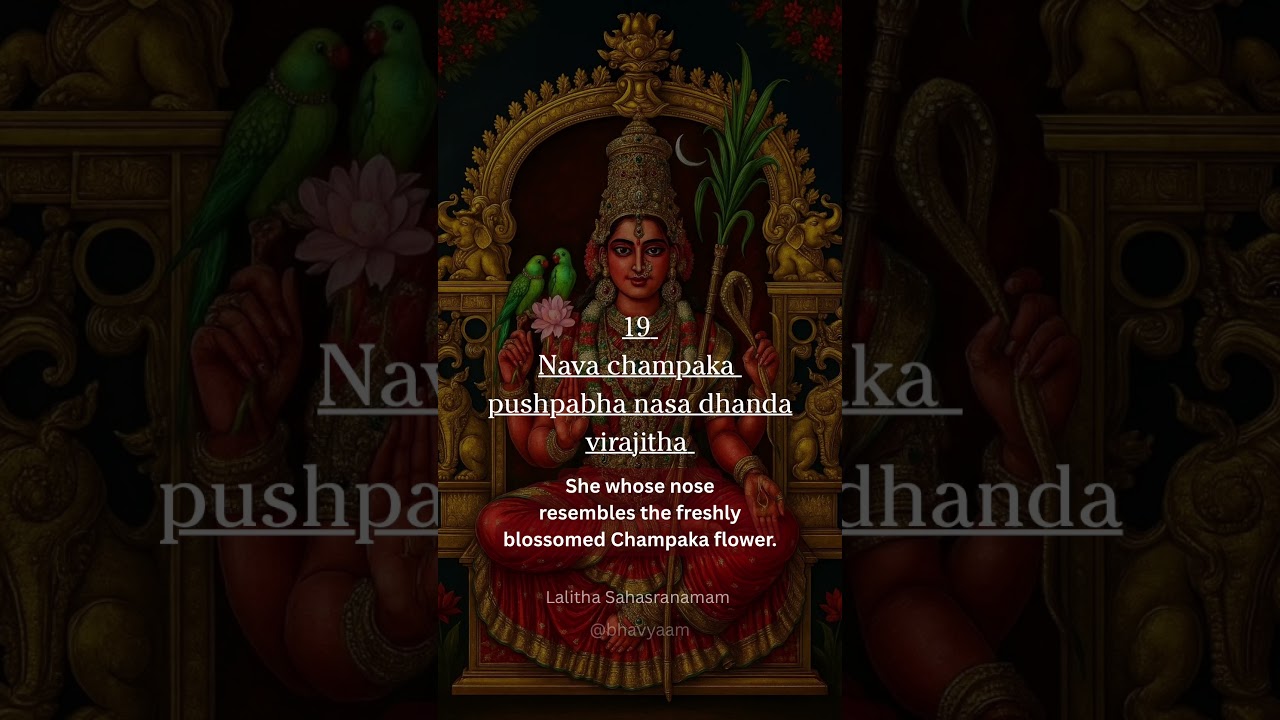
This sacred name from Lalitha Sahasranama describes the Divine Mother whose nose is compared to a freshly opened Champaka flower, symbolizing refined beauty, auspiciousness, and divine fragrance. The Champaka flower represents purity and sacred elegance, qualities that naturally emanate from her divine form.
She is glorified in revered stotras such as Lalitha Sahasranama, Lalitha Trishati, and Soundarya Lahari, and worshipped in renowned Devi temples including Sri Kamakshi Amman Temple (Kanchipuram), Meenakshi Amman Temple (Madurai), Tripura Sundari Temple (Tripura), Sringeri Sharada Peetham, Attukal Bhagavathy Temple (Kerala), and Kolhapur Mahalakshmi Temple. Her delicate beauty reminds devotees that divinity expresses itself through grace and subtle perfection.
[Lalitha Sahasranama, Lalitha Sahasranama meaning, Lalitha Sahasranama explanation, Sri Lalitha Tripura Sundari, Divine Mother, Adi Shakti, Champaka flower symbolism, Champaka nose of Goddess, divine beauty of Devi, Devi bhakti, Shakti upasana, Lalitha Trishati, Soundarya Lahari, Kamakshi Amman Temple Kanchipuram, Meenakshi Amman Temple Madurai, Tripura Sundari Temple Tripura, Sringeri Sharada Peetham, Attukal Bhagavathy Temple, Mahalakshmi Temple Kolhapur, Hindu spirituality, Sanatana Dharma, devotional shorts, bhakti shorts, spiritual shorts, Indian spirituality]
#LalithaSahasranama
#SriLalitha
#TripuraSundari
#AdiShakti
#DivineMother
#Champaka
#DivineBeauty
#SoundaryaLahari
#LalithaTrishati
#KamakshiAmman
#MeenakshiAmman
#AttukalBhagavathy
#ShaktiUpasana
#DeviBhakti
#SanatanaDharma
#BhaktiShorts
#SpiritualShorts
#YouTubeShorts
Информация по комментариям в разработке