What is Fekki.io
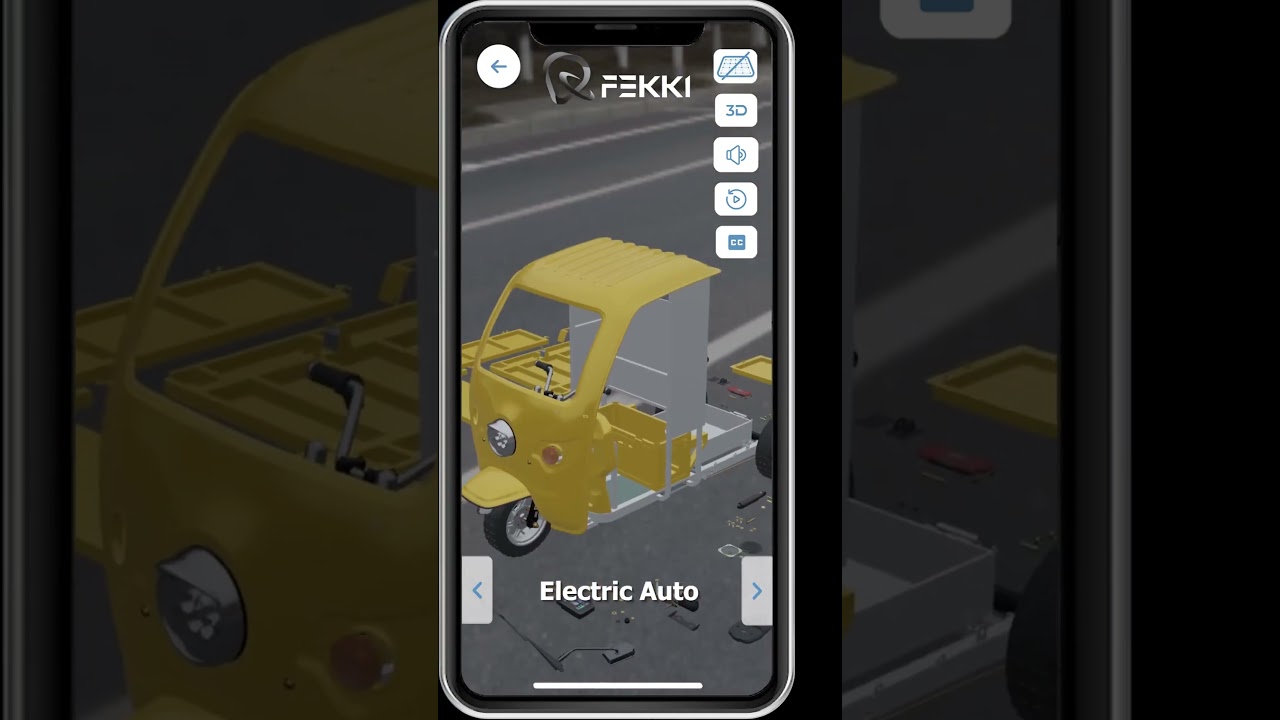
Fekki.io (often styled as FEKKI) is a tech startup/venture focused on transforming traditional instruction manuals into immersive, augmented reality (AR) enabled experiences.
Their goal is to help businesses and users with assembly, operations, troubleshooting, training, and other manual-based tasks by using AR to make instructions more intuitive, visual, and interactive.
What They Do / How It Works
AR Manuals: Fekki.io creates AR-enhanced user manuals. Rather than static text and diagrams, instructions can be overlaid in augmented reality, perhaps using a mobile device or AR glasses. This helps the user to see step-by-step how pieces fit together or how to perform operations in 3D.
Training & Troubleshooting: Apart from assembly, their AR manuals are useful for ongoing troubleshooting and for training purposes. For example, someone learning how to maintain or repair a machine could use Fekki’s AR overlays to guide them.
Operations / Use Cases: The offering likely spans across industrial, consumer, and possibly manufacturing sectors. Any product or piece of equipment that has a manual (assembly, installation, maintenance) is a potential candidate for their AR transformations.
Why It Matters / Their Value Proposition
Reduced error & time savings: Traditional manuals can be confusing; misinterpretation leads to mistakes, delays, returns, or damage. AR makes instructions more clear, reducing error rates and speeding up time to assemble or repair.
Better learning / retention: Visual, interactive guidance helps people understand and remember processes more easily than static text.
Customer satisfaction: A more intuitive user experience leads to happier customers, fewer support calls, fewer returns.
Competitive advantage: For companies selling complex products, offering AR manuals can be a point of differentiation.
Strengths
Cutting-edge tech: AR is still relatively novel in the user-manual domain; yet interest is growing, so being an early mover gives Fekki.io potential first-mover advantages.
Wide applicability: Many industries need manuals—electronics, appliances, furniture, industrial equipment—so there is a large addressable market.
User experience focus: Emphasis on interactiveness and immersion can produce real gains over “just better PDF/manual design.”
Challenges & Considerations
Technology adoption: Users must have suitable hardware (smartphones/tablets/AR glasses) and be willing to use them. Not every customer is tech-savvy or comfortable with AR.
Cost: Creating AR content is more expensive than writing/illustrating a PDF. Companies may be reluctant to invest unless ROI is clear.
Standardization / compatibility: Different devices, operating systems, screen sizes, AR platforms—making manual content work smoothly across all is nontrivial.
Updating & maintenance: If a product changes, manuals (and AR overlays) must be updated; maintaining AR content may require more ongoing work.
User safety & liability: If AR misleads or fails, could lead to misuse or damage.
Where Fekki.io Might Be Heading / Opportunities
Integration with IoT / Sensors: Imagine AR manuals that also respond to real-time sensor data from a machine and guide users through diagnostics.
Voice / gesture control: Hands-free AR guidance would be very useful in settings where users’ hands are occupied (e.g. maintenance).
Enterprise / B2B growth: Factories, field service companies, industrial repair services are heavy users of manuals. Could be a big revenue source.
Scalability & platformization: If they build a platform where clients can input their own CAD or 3D models and auto-generate AR guides, that could scale.
Partnerships: With hardware (AR glasses), with OEMs (original equipment manufacturers), possibly with standards bodies or associations that govern product manuals.
In summary, Fekki.io is an interesting company leveraging augmented reality to transform a traditionally static and often frustrating component of product ownership—manuals—into interactive, visual, and more user-friendly experiences. Their success will depend on execution, cost control, user adoption, and how well they can demonstrate ROI for their clients. If you want, I can find recent funding, product demos, or case studies for them to see how they’re doing in practice.

Информация по комментариям в разработке