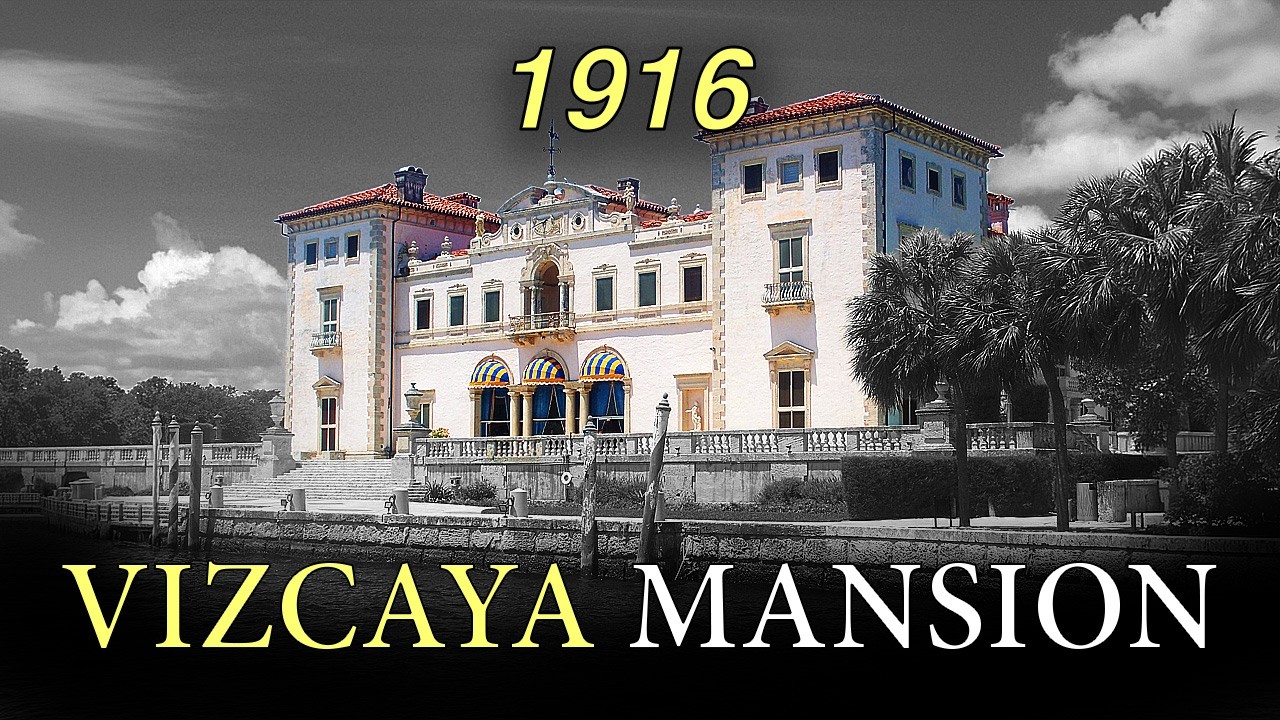
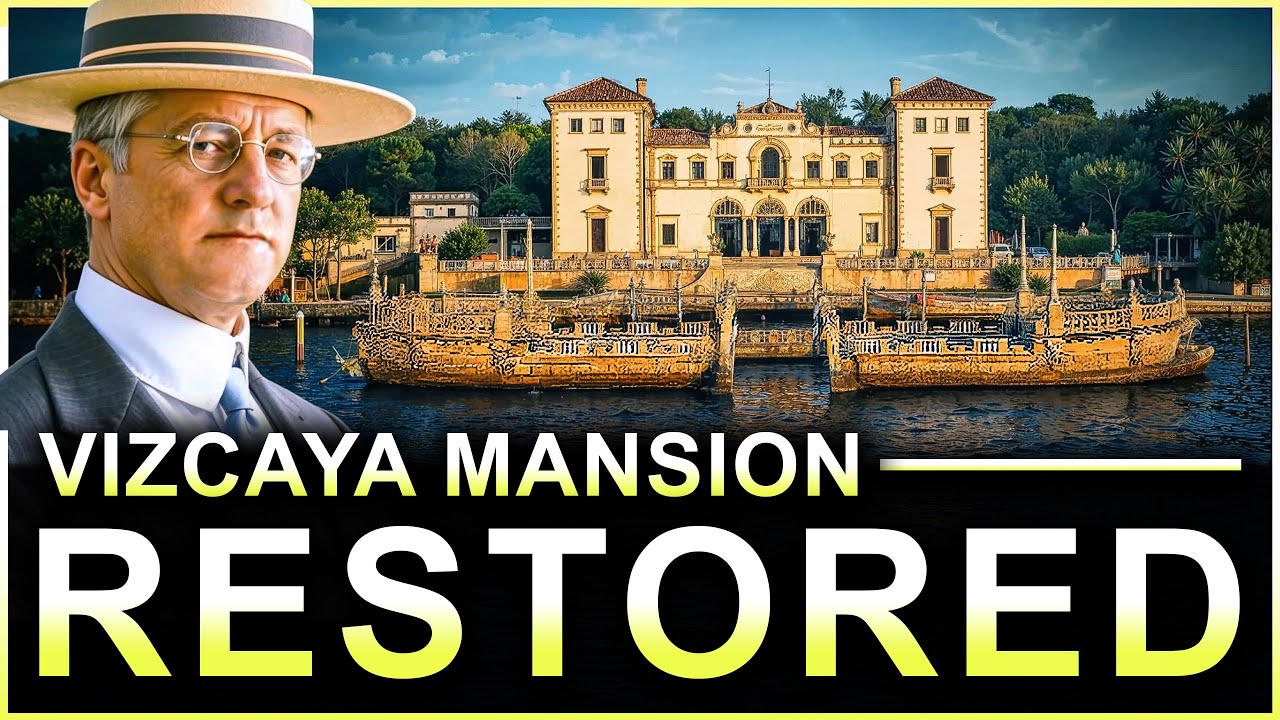
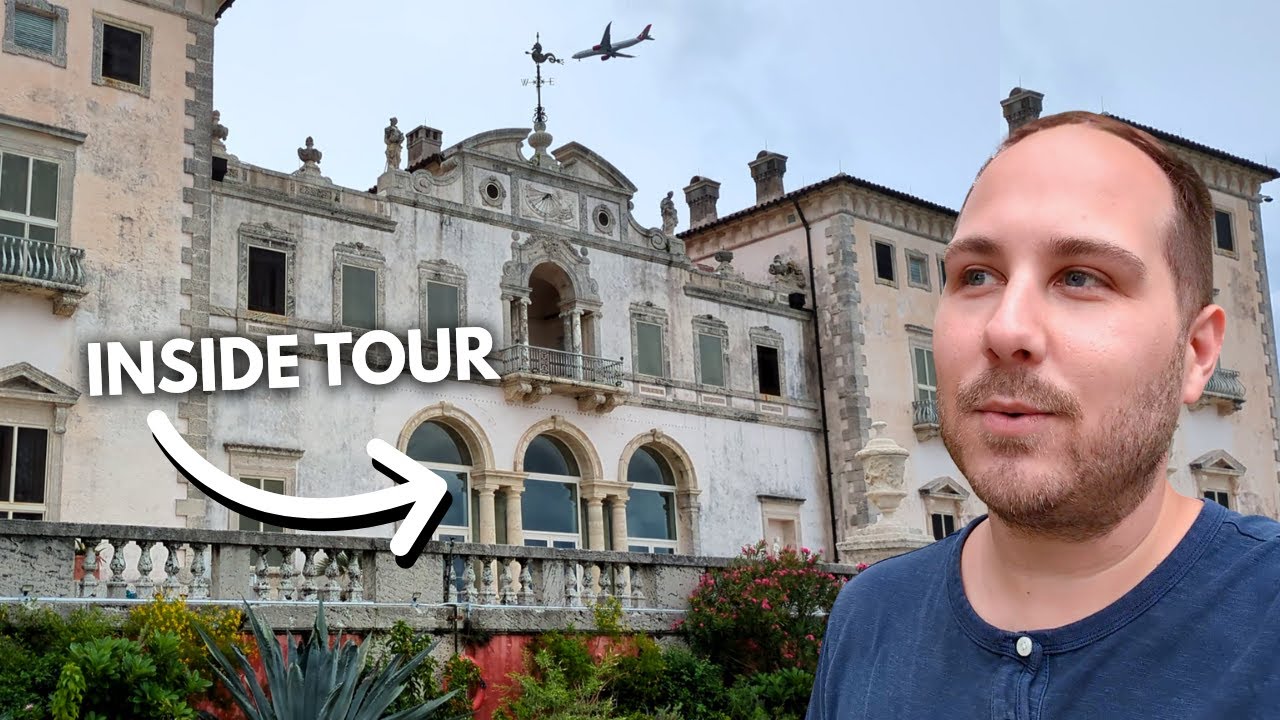
Vizcaya Museum and Gardens in Miami, Florida: a Mediterranean revival estate carved into the edge of Biscayne Bay. In the early twentieth century, industrial fortunes from the North flowed south for winter refuge, and agricultural industrialist James Deering built a residence that translated European aristocratic architecture into an American tropical landscape. Completed in 1916, its Italian Renaissance–inspired façade, baroque interiors, imported ceilings, and formal gardens became a declaration of cultivated wealth. European antiques, custom frescoes, and cutting-edge conveniences such as electricity, refrigeration, and a centralized vacuum system reinforced the message: this was refinement engineered with modern precision. Behind the arcades and sculpted terraces, a complex domestic operation sustained the illusion. Staff quarters, service corridors, mechanical rooms, and agricultural support buildings worked continuously to preserve the estate’s symmetry and spectacle. Imported materials required constant conservation in Florida’s humidity. Gardens demanded specialized care. The mansion projected effortless elegance, but it functioned through disciplined labor and sustained capital. As Miami evolved from frontier outpost to global city, the estate faced new pressures. Hurricanes, economic downturns, and shifting patterns of wealth threatened its long-term stability. After James Deering’s death in 1925, changing ownership structures and mounting maintenance costs made private preservation increasingly difficult. Rather than fade into subdivision or neglect, Vizcaya transitioned into public stewardship. Acquired by Miami-Dade County in the mid-twentieth century, it became a museum, securing its survival during a period when many grand American estates were demolished. Today, Vizcaya endures as both architectural fantasy and historical document. Its waterfront terraces frame the skyline of a modern metropolis, while its interiors preserve the ambitions of an era that sought to import Old World grandeur into a new American landscape. The estate stands as evidence that monumental homes require more than vision and construction; they demand institutional support, adaptive purpose, and ongoing investment. The record of its architects, artisans, gardeners, and conservators reveals a simple truth: great houses survive only when preservation becomes a shared responsibility rather than a private indulgence.
Copyright & Fair Use Disclaimer
• This video is a non-commercial, educational history documentary created for commentary, criticism, and research.
• Some archival photos and footage are used under the principles of Fair Use (Section 107, U.S. Copyright Act) for purposes such as criticism, comment, news reporting, teaching, scholarship, and research.








Информация по комментариям в разработке