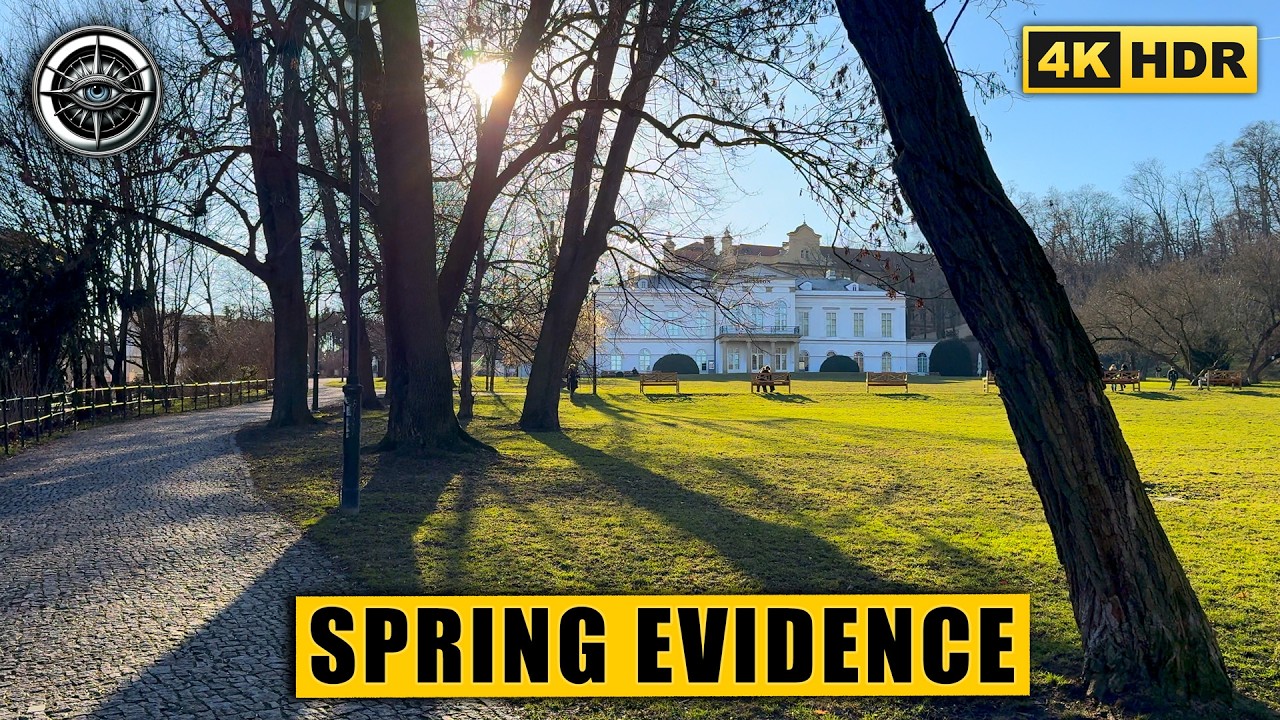
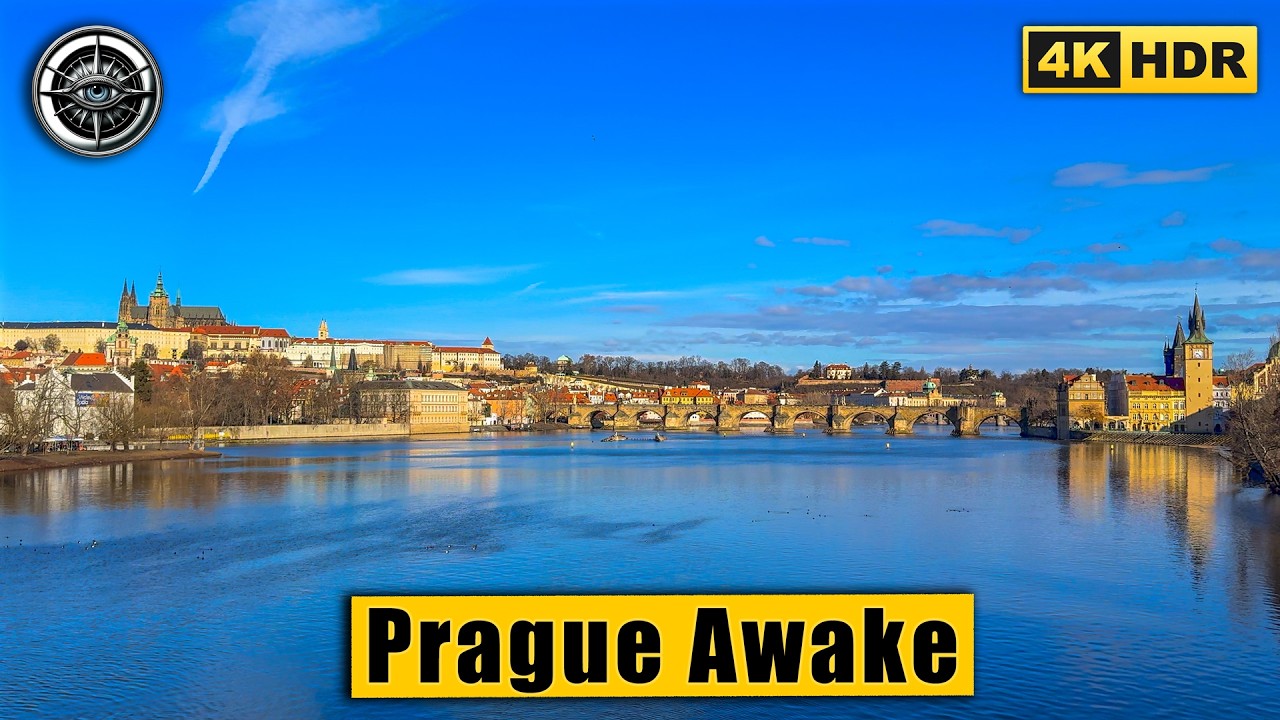
Is spring finally here? Today, February 26th, I headed to one of my favourite spots in the city to find undeniable proof. At 13°C, the atmosphere in Kinského zahrada (Kinsky Garden) has completely shifted. Join me for a sunny afternoon walk through this historic park on the slopes of Petřín Hill as we look for the first signs of the season among the ancient trees and old stone paths.
Join the membership of the channel:
/ @perceptionphilosophy
Kinský Garden (Zahrada Kinských) is a garden area of 22 hectares located on the southern and south-eastern slope of Petřín. It's separated from other Petřín gardens by the Hunger Wall, built by Charles IV. At first, there were forests and then vineyards in the Middle Ages. In the 1830s, the garden was modified in the English style. You'll find a wooden Greek-Catholic church of St. Michael and the Kinsky Summer Palace with a National Museum ethnographic exhibition in the garden.
Originally, there were forests here, followed by vineyards in the Middle Ages, mostly owned by the monastery. The vineyard's name (Paradise or V kartouzích - by the Carthusian monastery) has been well known. Later settlements and courtyards were established there. After the Thirty Years'Warr, the place was desolate. In 1828, Růžena Kinská bought the lands, and her son Rudolf Kinský founded the English-style garden here, designed by his economic director, František Höhnl. It was extended and modified in 1848, and again from 1860 to 1861, by the architect Bedřich Wünscher, who worked for the Kinsky family for 62 years. In 18,31, the construction of the classical summerhouse by Viennese architect Heinrich Koch was completed, terraimodelling and planting were carried out, and the 380 m-long tunnel to the water source of two newly created ponds with a waterfall between them was driven. Also, the carriage house called Švýcárna and ten greenhouses for tropical and subtropical plants were built. The building works in the garden were completed by RudolfKinsky's wife, Wilhelmine, after his death from a fall from a horse. At that time, the park was open to the public twice a week, whereas tickets were sold in the Kinsky Palace. A descendant of the founders wanted to parcel out the garden and sell land for the construction of a block of flats, but the City of Prague, which had bought the park in 1901, opened it to the public in 1908 and re-cultivated it. The City of Prague lent the Kinsky Summerhouse to the Ethnographic Czechoslovak Society for exhibits from the large Ethnographic Exhibition held in Prague in 1895; in this way, the Ethnographic Museum, which opened to the public in 1903, was established (see the separate document Kinsky Summerhouse). The garden was intended to be turned into a spectacular "ethnographic park," but ultimately it became only a location for some exhibits. One example is a wooden belfry from Dolní Bojanovice near Hodonín and a Baroque monument from the 18th century. – a calvary with a pyramid sundial and artistic decoration in the form of the plague column. The spear in the belly of Christ and the arrow in the body of St. Sebastian served to drop a shadow on the clock dial. Originally, the column stood in Žižkov, reportedly at the place of today's St. Prokop church, commemorating the plague epidemic.
In the lower part of the garden, an exhibition pavilion of SVÚ Mánes used to be, which was later demolished; in 1902, the famous exhibition of works by French sculptor Auguste Rodin and several others was held there. Also, the statue by Karel Dvořák, The Fourteen-Year-Old Girl, created in 1926, was there. Tod, ay it is placed in the depository in the Museum of the Capital City of Prague. Near the summerhouse, on the occasion of the seventh anniversary of the death of actress Hana Kvapilová placed her statue by Jan Štursa from 1913, under which there is the urn with her ashes. On the tenth anniversary of Carpathian Ruthenia becoming part of Czechoslovakia, the wooden Greek-Catholic church of St. Michael, built in 1750, was moved here from Medvedovce near Mukachevo. In 1939, the late-17th-century Baroque statue of Hercules was moved to the lower lake over the summerhouse from Kampa. The seal sculpture by Jan Lauda, from 1953, was placed in the upper lake. At the end of March 2010, the long, gradual reconstruction was completed.
https://goo.gl/maps/M7SR4QS4qWkqt4ME9
My second channel:
/ @driverelaxradio
Instagram:
/ perceptionphilosophy
Recorded in 4k
Perception Philosophy © 2026
February 26, 2026
Czech Republic








Информация по комментариям в разработке