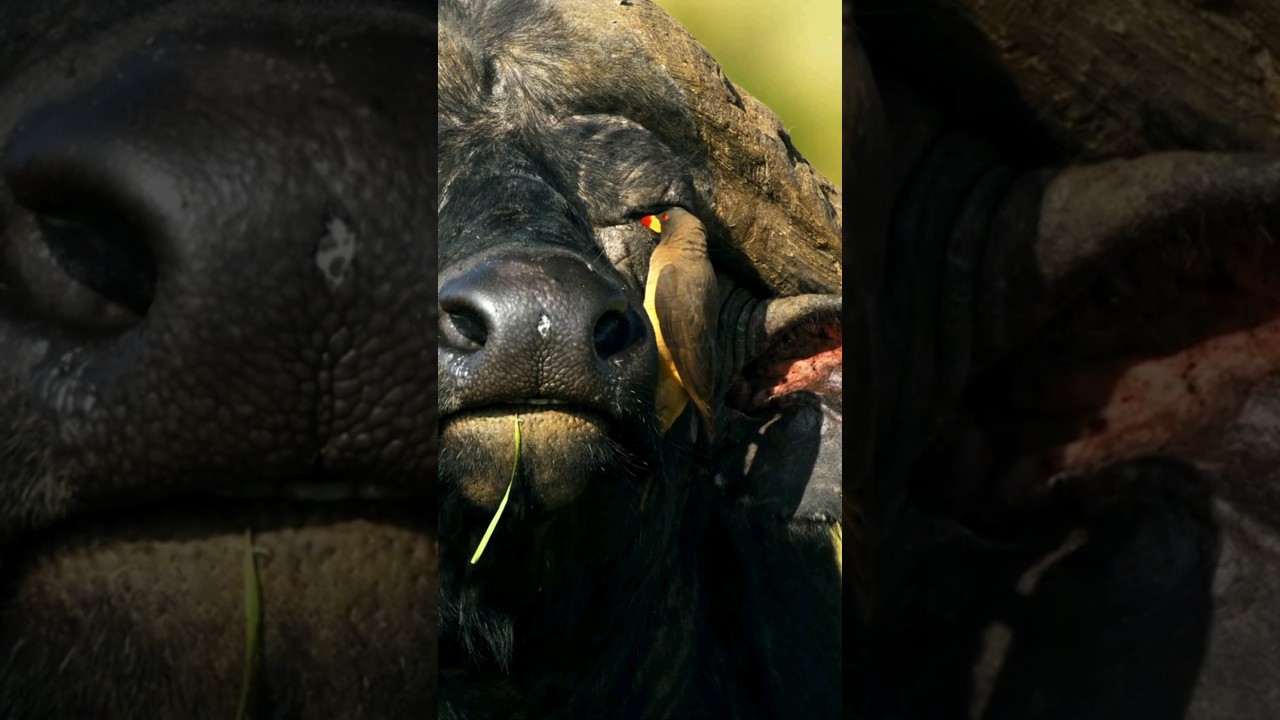
The African buffalo, scientifically known as Syncerus caffer, is a large, robust herbivore found across sub-Saharan Africa. It is one of the most successful grazers in Africa, thriving in a variety of habitats, including savannas, swamps, floodplains, and forests.
Physical Characteristics:
Size: African buffaloes are formidable in size, with males weighing between 500 to 900 kilograms (1,100 to 2,000 pounds), and females slightly smaller. They stand about 1.0 to 1.7 meters (3.3 to 5.6 feet) tall at the shoulder.
Color: Their coat is generally dark brown or black, with younger individuals often displaying a lighter, reddish-brown hue.
Horns: Both males and females have horns, which are one of the most distinctive features of the species. The horns of males are larger and more pronounced, often curving downward and then upwards, forming a broad shield known as a "boss" at the base.
Behavior:
Social Structure: African buffaloes are highly social animals, typically living in large herds that can number from a few dozen to several hundred individuals. These herds are matriarchal, with females and their offspring forming the core group, while males may form bachelor groups or remain solitary.
Diet: Their diet primarily consists of grasses, but they also consume leaves and herbs when grasses are scarce. They play a crucial role in maintaining the balance of their ecosystems by controlling grass growth through grazing.
Defense: Known for their unpredictable temperament, African buffaloes are considered dangerous due to their tendency to charge when threatened. Their large size and strength, coupled with their sharp horns, make them formidable opponents for predators like lions.
Habitat and Distribution:
African buffaloes are widely distributed across sub-Saharan Africa, from West Africa to East and Southern Africa. They prefer habitats with access to water, as they need to drink daily. They are most commonly found in savannas, woodlands, and grasslands, but they can also inhabit dense forests and floodplains.
Conservation Status:
The African buffalo is currently listed as "Least Concern" by the IUCN, but their populations are under threat due to habitat loss, hunting, and diseases like bovine tuberculosis. Despite these threats, they remain one of the most common and widespread large mammals in Africa.
Significance:
The African buffalo plays a critical role in its ecosystem as a grazer, helping to shape the landscape and support biodiversity. It also holds cultural and economic significance for many African communities, being a source of meat, hides, and, historically, a symbol of strength and resilience.

Информация по комментариям в разработке