As of March, lawmakers in 47 states had introduced 361 bills with rules that restrict voting. President Biden Calls it “Jim Crow sneaking back in,” while the GOP says the bills will prevent voter fraud. Journalists should brush up on the Constitution to cover the coming battles.
by Chris Adams, National Press Foundation
The House has passed a major voting rights bill, but more consequential action is occurring in statehouses. The 791-page “For the People Act of 2021” – H.R. 1, the first bill introduced to this 117th Congress – would eliminate partisan gerrymandering, tighten government ethics standards, require more disclosure of so-called “dark money” in elections and override new state laws that restrict voting. But while the bill passed the House on a mostly party-line vote, it will run into the Senate’s filibuster buzzsaw. That means state laws will have more effect on voting in 2022 and 2024 than anything coming from Washington.
The U.S. Constitution and its amendments limit what states can and can’t do to restrict voting. Jonathan Diaz, legal counsel for voting rights at the Campaign Legal Center, detailed how the First, 14th, 15th, 17th, 19th, 24th and 26th amendments expanded U.S. voting rights over the nation’s history, and how laws such as the Voting Rights Act of 1965 expanded them even further. State laws that now seek to roll back voting access by limiting voting hours, tightening rules for absentee voting, or removing ballot drop-boxes will need to comply with the Constitution and with those laws.
The Supreme Court in Shelby County v. Holder limited federal oversight of state voting laws. Before that 2013 decision, some states were required to submit any changes to their election laws to the Justice Department or to a federal court for pre-approval before the laws could be implemented. The reason was simple, Diaz said: “Those were jurisdictions that had shown a consistent pattern or history of racial discrimination in voting.” The Supreme Court struck down that pre-clearance review, holding that the formula for determining which states were subject to pre-clearance was unconstitutional. “There is … a pretty direct link between the Shelby County decision and the volume of voting changes that we are seeing, particularly in the covered jurisdictions,” Diaz said.
The rush is on in statehouses to lock in changes that favor the party in control before the 2022 elections. As of March, Republican state legislators had introduced 361 bills with restrictive provisions in 47 states. Of those, five have been signed into law and 55 bills in 24 states are moving through legislatures, according to the Brennan Center for Justice, which tracks such legislation. President Biden called the laws “Jim Crow sneaking back in.” Meanwhile, Democratic lawmakers are pushing bills that would make permanent many of the changes put in place to make it easier for citizens vote during the COVID-19 pandemic. Those changes – and the fierce battle between Donald Trump and Joe Biden – led to the biggest voter turnout in over a century. Diaz said the result could be voting restrictions in states that lean red and expansions in ones that lean blue.
Bills need not mention race or party to have disproportional impact on certain voters. Voting rule changes are about stacking the deck in ways that help one party, or at least hurts the opposition, Diaz said. For example, bills that limit hours of voting make it harder for shift workers, who tend to lean Democratic, to get to the polls but won’t affect older voters, who lean Republican. Other bills boost identification requirements or limit absentee voting. “These policies are not just going to affect Democratic voters,” Diaz said. “It’s going to affect voters of all political affiliations, rural voters, older voters, younger voters, voters of color. Even if it has short term gain for say, a particular candidate, I think that once we reduce election policy to ‘what is going to help my team win next time,’ that has a real lasting long-term damage on the health of our democracy as a whole.”
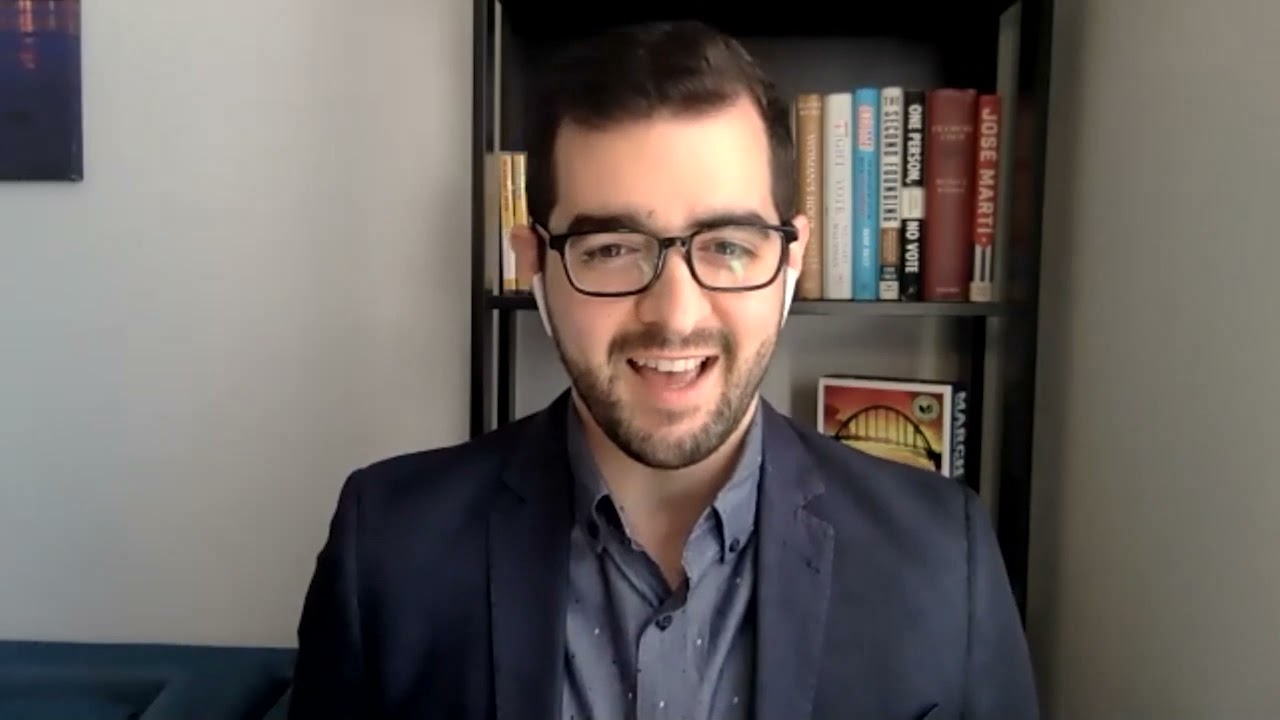
Speaker: Jonathan Diaz, Legal Counsel, Voting Rights, Campaign Legal Center
This program was funded by Arnold Ventures. NPF is solely responsible for the content.

Информация по комментариям в разработке