On this day in *1986**, **Ferdinand E. Marcos**, the long-time ruler of the **Philippines**, was **forced from power and fled into exile**, marking the end of his **two-decade dictatorship**. His ousting followed **massive protests* known as the **People Power Revolution**, a historic movement that restored democracy to the country.
Marcos had ruled the Philippines since *1965**, first as a **democratically elected president* and later as a *dictator under martial law* from **1972 to 1981**. During his rule, **political opponents were imprisoned, the press was silenced, and thousands of activists were arrested, tortured, or disappeared**. While his government promoted **economic development**, it was also plagued by **rampant corruption, human rights abuses, and the accumulation of vast wealth by the Marcos family**—much of it allegedly stolen from the nation’s treasury.
The *turning point* came in *February 1986**, after a **fraudulent presidential election**. Marcos claimed victory over **Corazon Aquino**, the widow of assassinated opposition leader **Benigno "Ninoy" Aquino Jr.**, but widespread reports of **vote-rigging and election fraud* triggered a national crisis. *Millions of Filipinos took to the streets* in a **peaceful mass uprising**, demanding Marcos step down.
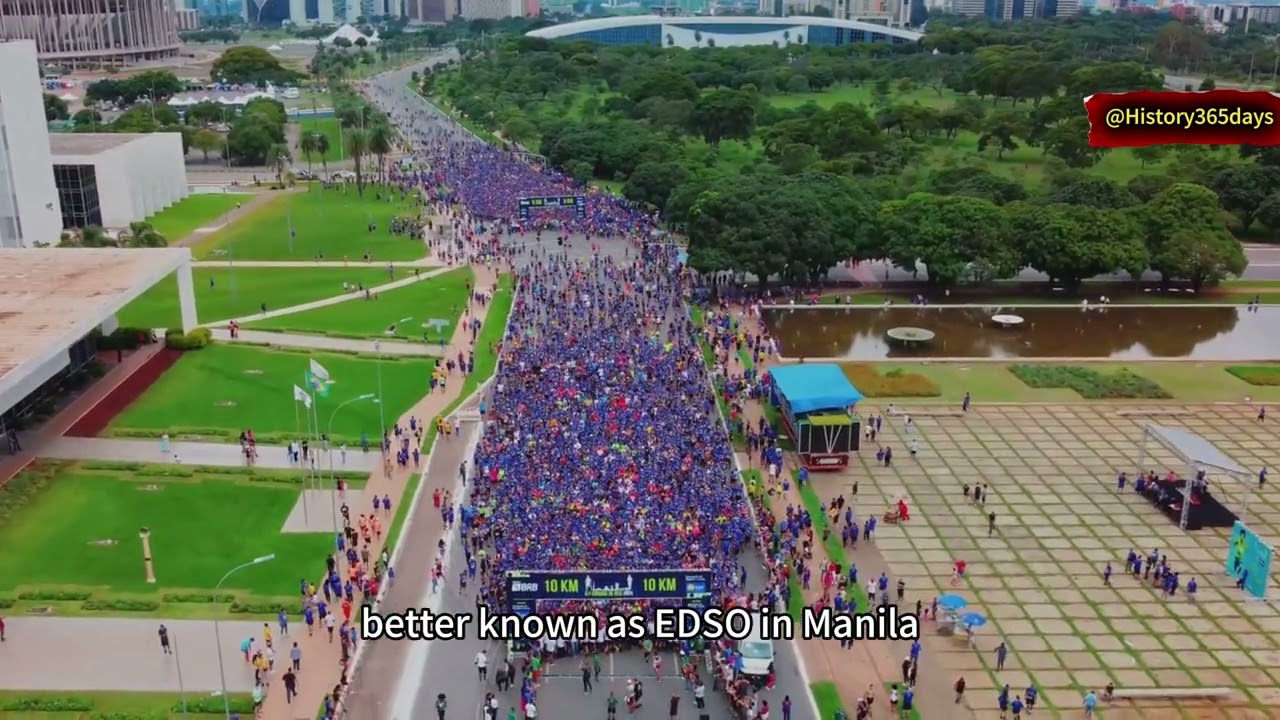
For four days, from *February 22 to 25**, Filipinos, **led by the Catholic Church, opposition leaders, and military defectors**, gathered along **Epifanio de los Santos Avenue (EDSA)* in Manila. The movement, known as the **EDSA People Power Revolution**, gained global attention as **unarmed civilians confronted tanks and soldiers**, urging them to abandon Marcos. Eventually, **key military leaders, including Defense Minister Juan Ponce Enrile and General Fidel Ramos, defected to the opposition**.
Under growing pressure from both the *Filipino people and the United States**, Marcos and his family **fled to Hawaii on February 25, 1986**, aboard a **U.S. Air Force plane**. Corazon Aquino was **sworn in as the new president**, becoming the **first female leader of the Philippines* and symbolizing the return of democracy.
The *People Power Revolution* became a *model for nonviolent resistance* worldwide, demonstrating the power of *civilian-led movements* in toppling authoritarian regimes. While Marcos *died in exile in 1989**, his legacy remained controversial, with **ongoing efforts to recover billions of dollars in stolen wealth* and debates over historical revisionism concerning his rule.
Today in History. Feb 25, 1986. The Fall of Ferdinand Marcos.
All the contents of this website are collected from the Internet. Please forgive me if there are any inaccuracies. if you find any content infringe copyright, please contact for removal.
#social history #history channel on youtube #us history #short history of #most important events in history #history story #history is now #ancient history #history knowledge #understanding history #relaxing history #government history

Информация по комментариям в разработке