The **University Grants Commission (Promotion of Equity in Higher Education Institutions) Regulations, 2026**, are a legally binding framework designed to eradicate discrimination and promote social inclusion across all higher education institutions (HEIs) in India. These regulations, which came into effect upon their publication in the official gazette on 13 January 2026, supersede the previous advisory regulations from 2012.
*1. Key Objectives and Scope*
The primary goal of these regulations is to eliminate discrimination based on **religion, race, caste, gender, place of birth, or disability**. They specifically aim to protect members of Scheduled Castes (SC), Scheduled Tribes (ST), Socially and Educationally Backward Classes (OBC), and Economically Weaker Sections (EWS). Unlike the 2012 guidelines, the 2026 regulations define caste-based discrimination to explicitly include the **OBC community**.
*2. Institutional Framework for Equity*
To ensure compliance, every HEI is mandated to establish several support and monitoring bodies:
*Equal Opportunity Centre (EOC):* This centre oversees policies for disadvantaged groups and provides academic, financial, and social guidance.
*Equity Committee:* Chaired by the Head of the Institution, this committee manages the EOC and investigates discrimination complaints. It must include representatives from SC, ST, OBC, women, and persons with disabilities.
*Equity Squads and Ambassadors:* HEIs must form mobile "Equity Squads" to maintain vigil on campus and designate "Equity Ambassadors" in every department or hostel to act as "torchbearers of equity".
*Equity Helpline:* A 24/7 helpline must be established to provide immediate assistance to stakeholders in distress.
*3. Grievance Redressal and Appeals*
The regulations set strict timelines for handling complaints:
*Investigation:* Upon receiving a complaint via the online portal, email, or helpline, the Equity Committee must meet within **24 hours**.
*Reporting:* the committee is required to submit its report to the Head of the Institution within **15 working days**.
*Action:* The Head of the Institution must initiate further action within *7 working days* and inform police authorities immediately if a criminal case is established.
*Appeal:* Anyone dissatisfied with the committee’s report can appeal to an *Ombudsperson* within 30 days.
*4. Penalties for Non-Compliance*
HEIs that fail to comply with these regulations face severe consequences, including:
Being debarred from participating in **UGC schemes**.
A ban on offering **degree programmes**, including online and distance learning.
Removal from the list of recognised institutions under Sections 2(f) and 12B of the UGC Act 1956.
*5. Ongoing Controversies*
While some view these regulations as a revolutionary step toward "full equity," several points of debate have emerged in public discourse:
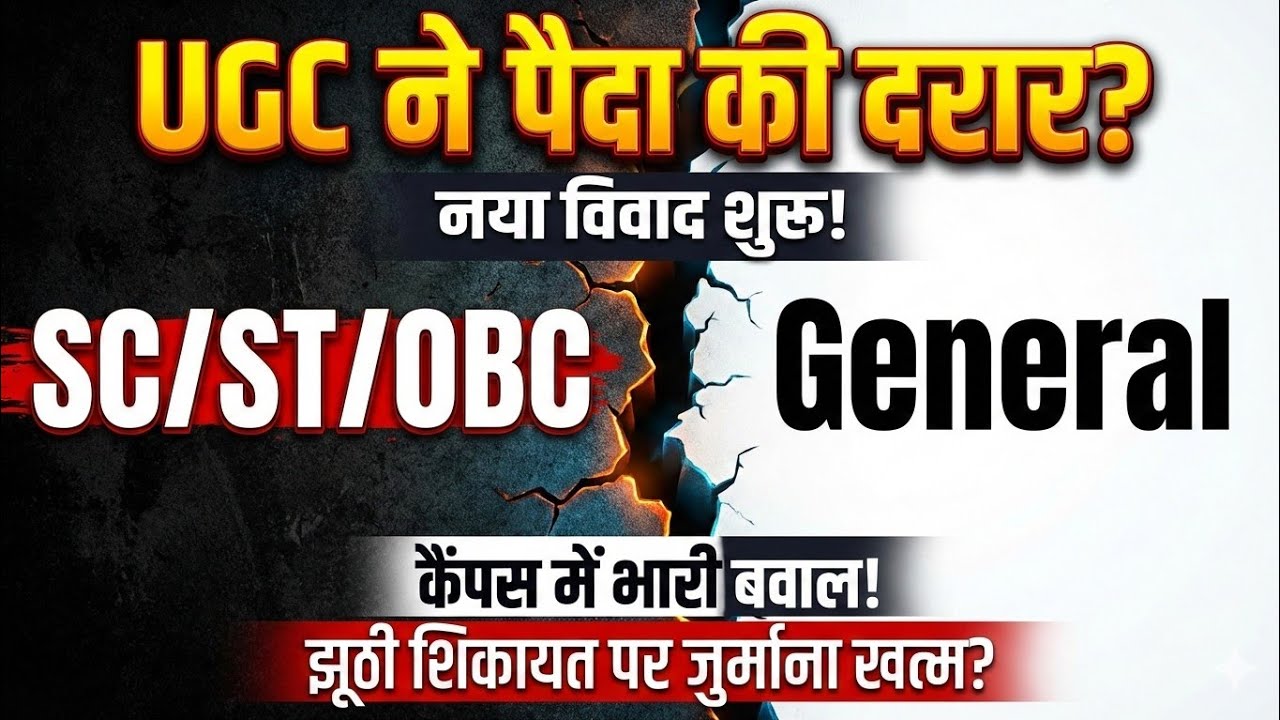
*Removal of Penalties for False Complaints:* Critics point out that while the draft regulations included fines for false accusations, this provision was **removed from the final notification**. This has led to fears among general category students regarding potential misuse of the law.
*Perceived Bias:* Some student organisations argue the rules are "one-sided," claiming they lack specific protections for general category students who might face discrimination.
*OBC Inclusion:* The inclusion of OBCs in the definition of caste-based discrimination has been described by some as a necessary move for inclusion, while others view it as a potential source of caste-based friction.
As a result of these concerns, some student groups reportedly issued a *72-hour ultimatum* to the UGC to withdraw the notification, fearing it could disrupt the campus atmosphere.

Информация по комментариям в разработке