Fire remains one of the most significant hazards in industrial environments, chemical facilities, warehouses, and process plants. Understanding the science of fire, the correct use of suppression systems, and the safe management of flammable and combustible liquids is essential for safety professionals preparing for the CSP (Certified Safety Professional) certification.
In this episode of QHSE Talks, we provide a comprehensive overview of BCSP Chapter 12 – Fire Prevention and Protection, breaking down the fundamental principles that every safety practitioner must master for the ASP and CSP examinations.
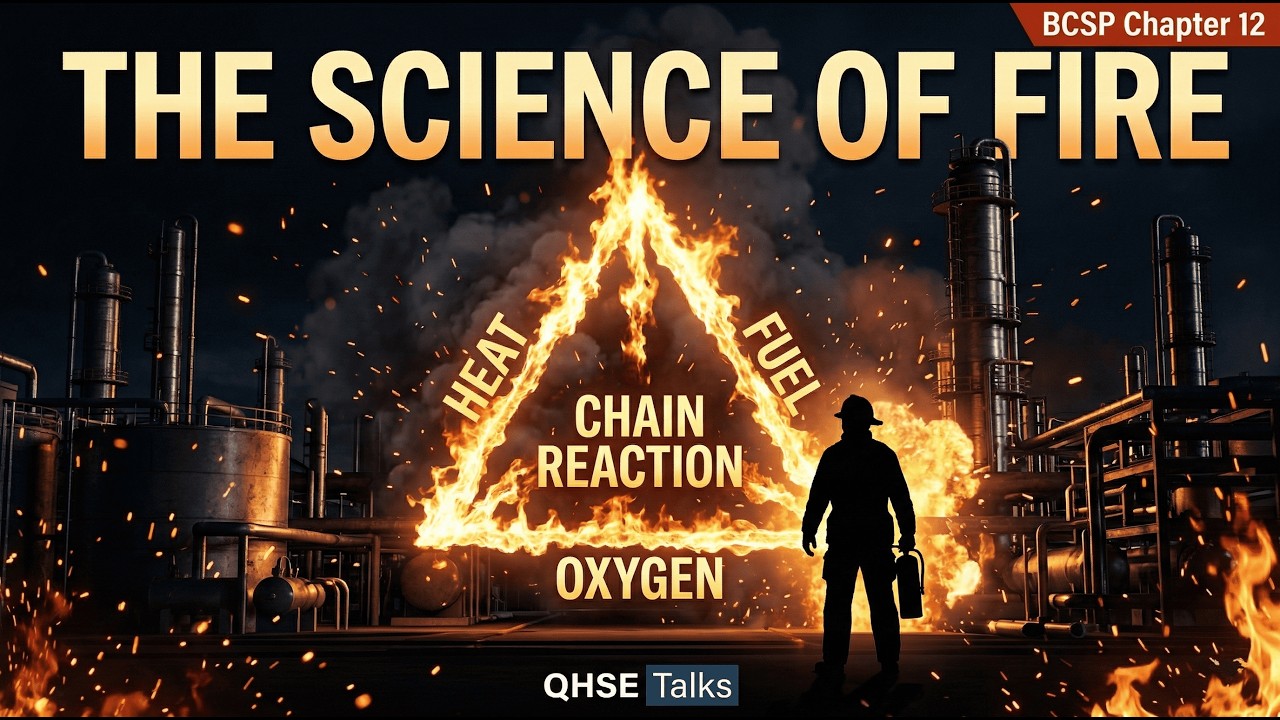
This lesson begins with the foundations of fire science, explaining how fire develops, spreads, and can be controlled. At the core of combustion is the Fire Tetrahedron, which identifies the four elements required to sustain a fire: fuel, oxygen, heat, and an uninhibited chemical chain reaction. Effective fire suppression requires removing at least one of these elements. Understanding this concept allows safety professionals to select the correct control strategy for different fire scenarios.
We also explore the three mechanisms of heat transfer that drive fire propagation in industrial settings:
• Radiation – heat transfer through electromagnetic waves without direct contact
• Convection – heat movement through circulating fluids such as air or gases
• Conduction – heat transfer through direct molecular contact in solid materials
These mechanisms explain how fires spread across equipment, structures, and confined industrial spaces.
A critical section of the chapter focuses on fire classification, which determines the appropriate suppression agent to use. Using the wrong extinguishing agent can intensify a fire rather than control it. The course explains the five standard fire classes safety professionals must recognize:
• Class A – ordinary combustibles such as wood, paper, and textiles
• Class B – flammable and combustible liquids and gases
• Class C – energized electrical equipment
• Class D – combustible metals such as magnesium or lithium
• Class K – cooking oils and fats typically found in commercial kitchens
Next, we examine portable fire extinguishers, one of the most widely used emergency response tools in occupational safety programs. Safety professionals must understand inspection, maintenance, and testing requirements to ensure extinguishers remain reliable. The chapter explains the difference between monthly visual inspections, annual maintenance checks, and hydrostatic pressure testing, which is typically required every 5 years for water and CO₂ extinguishers and up to 12 years for some dry chemical units.
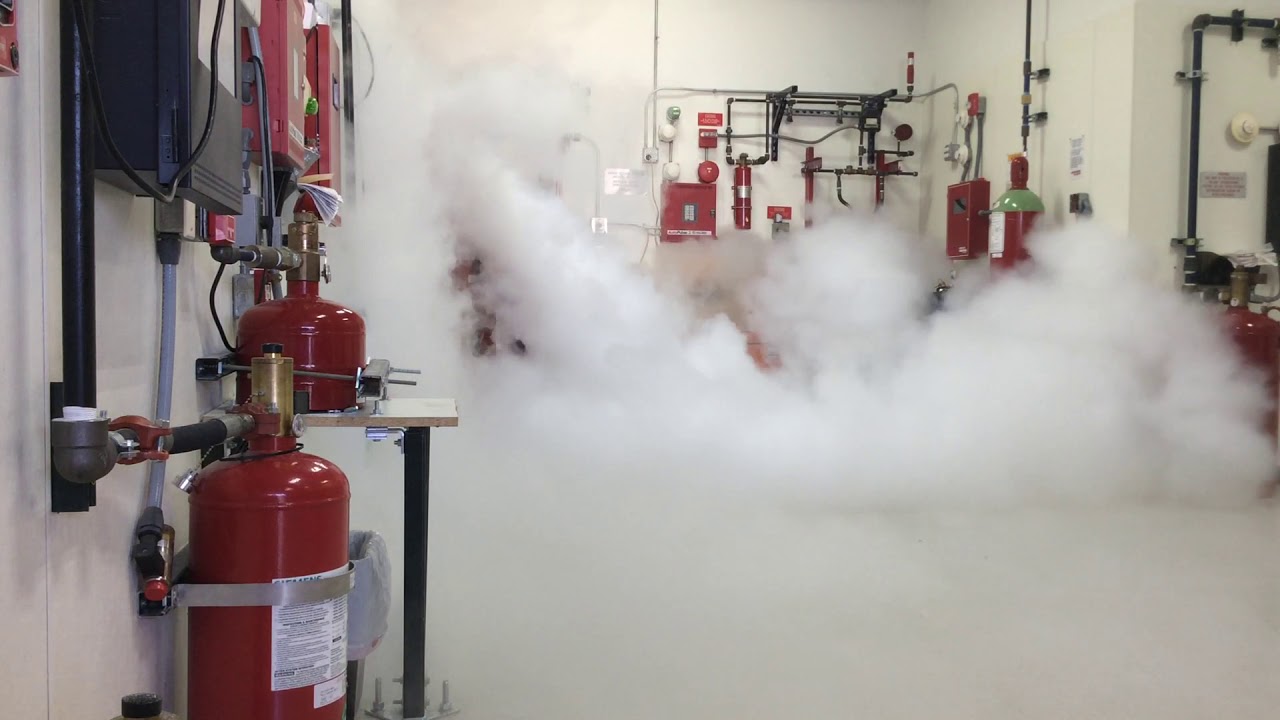
The episode also introduces fixed fire suppression systems, which provide automatic protection in industrial facilities. Key system types include:
• Wet Pipe Sprinkler Systems – the most common system, maintaining constant water pressure in the pipes
• Dry Pipe Systems – used in freezing environments where pipes contain pressurized air instead of water
• Deluge Systems – open sprinkler heads that release large volumes of water simultaneously
• Pre-Action Systems – specialized systems requiring both detection activation and sprinkler head operation, commonly used in data centers and water-sensitive environments
Understanding these systems is essential for evaluating facility fire protection design and risk management strategies.
Detection technologies also play a critical role in fire prevention programs. This lesson explains the operational principles of heat detectors, including Rate-of-Rise detectors, which respond to rapid temperature increases, and Rate-Compensation detectors, which activate at a predetermined temperature threshold. Selecting the correct detector type helps prevent false alarms while maintaining reliable early fire detection.
Another key area for CSP candidates is the safe storage and handling of hazardous liquids. The chapter explains the physical properties that influence fire behavior and ignition risk.
One of the most important thresholds is 100°F (37.8°C). Liquids with a flashpoint below this temperature are classified as flammable liquids, while those with flashpoints at or above this threshold are considered combustible liquids. This classification directly affects storage, labeling, and fire protection requirements.
We also discuss vapor density, which determines whether vapors will rise or sink in the atmosphere. Vapors with a density greater than 1.0 are heavier than air and may accumulate in low areas, creating dangerous ignition hazards.
The episode concludes with an overview of flammable liquid storage room requirements, including fire resistance ratings and spill containment features such as raised sills or depressed floors designed to prevent hazardous liquid migration.
#CSPExam
#CSPPrep
#ASPExam
#SafetyEngineering
#FirePrevention
#FireProtection
#FireSafety











Информация по комментариям в разработке