Join this channel to get access to perks:
/ @periscopefilm
Want to learn more about Periscope Film and get access to exclusive swag? Join us on Patreon. Visit / periscopefilm
Visit our website www.PeriscopeFilm.com
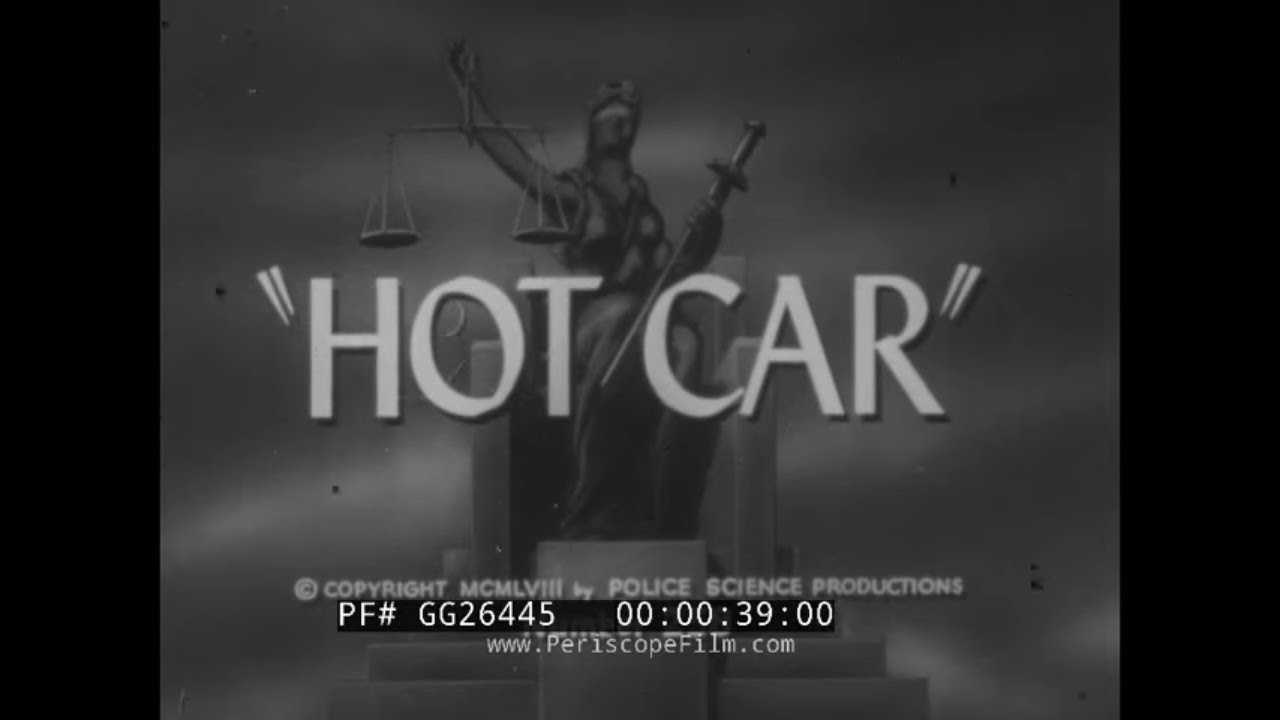
Dating to 1958 and originally "restricted" to showing to law enforcement officers, "Hot Car" was produced by a company called Police Science. Shot in Los Angeles, the film discusses the complexities of combating grand theft auto and the challenges faced by law enforcement officers in detecting and addressing car theft. It highlights the motivations behind auto theft, ranging from joyrides by juveniles to organized professional operations that alter stolen cars' identities. Officers rely on tools such as "hot sheets" to track stolen vehicles and must be vigilant for signs like altered plates, nervous drivers, and forced entry. The film details the procedures officers follow when approaching suspicious vehicles, including verifying the driver's information and inspecting the car for inconsistencies. It also emphasizes the importance of officers' familiarity with the tools and techniques used by thieves, as well as their ability to recognize even minute details to effectively recover stolen vehicles and apprehend suspects. The film underscores the ongoing, intricate nature of combating auto theft and the need for thorough, skilled enforcement.
00:00: 1958 Chevy Biscayne stolen.
1:248: Introduction to "hot cars," 1957 Chevrolet police car shown.
1:38: Difficulty in detecting stolen cars.
1:58: Auto theft growth due to more cars and better roads.
2:26: Theft motives from joyrides to chop shops.
2:50: Professional thieves alter car identities.
3:05: Engine numbers changed.
3:13: Serial numbers on plates altered.
3:29: Cars repainted to blend in.
3:39: Officers trained to spot stolen cars.
4:04 - 4:12: Importance of "hot sheets."
4:16: Updating hot sheets.
4:36: Theft for temporary use.
4:57: Nervous, careless driving by thieves.
5:26: Procedures for suspect vehicles.
6:06 - 6:14: Careful approach to vehicles.
6:13: Checking driver and vehicle inconsistencies.
7:37: Vehicle immobilization.
7:37: Verifying if vehicle is stolen.
8:06: Checking trunk contents.
8:28: Driver's consistency check.
9:02: Mileage discrepancies.
10:00: Mileage over claim.
10:18: No warrant found.
10:30: Suspect admits theft.
10:51: Detailed investigation leads to recovery.
11:01: Cars abandoned after use.
11:12: Identifying parked stolen cars.
11:17: Debris around car, license on hot sheet.
11:43: Communication for details.
12:00: Checking 1955 Chevrolet details.
12:12: Discrepancy investigation.
12:22: Careful evidence preservation.
12:31: Signs of neglect suggest theft.
13:03: Checking motor and serial numbers.
13:18: Engine number recognition.
13:39: Confirming if car listed as stolen.
14:07: Car found stolen, plates from another vehicle.
14:18: Recovery leads to further investigation.
14:29: Ongoing enforcement issues.
14:35: Continuous hot sheet updates.
15:05: Professional thieves' tactics.
15:36: Using tools to bypass locks.
16:08: Thief enters car easily, using a slim jim to pick the lock.
16:22: Starting car without keys, by putting the transmission in neutral, and using a jumpwire between the battery and the starting coil.
18:09: Stolen car blends in.
18:40: Altering license plates.
19:59: Checking for plate alterations.
20:05: Nighttime plate light sabotage.
20:20: Beyond hot sheets, look for clues.
20:33: Signs of stolen cars.
21:22: Diversion tactics by drivers.
21:26: Scrutinizing plates, initiating stops.
21:56: Suspects fleeing, emergency verification.
22:08: Reckless driving by thieves through a Los Angeles oil field.
22:46: Trapping suspect with terrain knowledge.
23:25: Detailed work thwarts thieves.
24:06: Car theft as major crime.
25:01: Understanding thief tools.
25:49: Using simple tools for theft.
26:14: Methodical theft execution, showing devices including a starting coil and jimmies that professionals use.
27:00: Need for thorough investigation.
27:55: Importance of detail recognition in enforcement.
Motion picture films don't last forever; many have already been lost or destroyed. For almost two decades, we've worked to collect, scan and preserve the world as it was captured on 35mm, 16mm and 8mm movies -- including home movies, industrial films, and other non-fiction. If you have endangered films you'd like to have scanned, or wish to donate celluloid to Periscope Film so that we can share them with the world, we'd love to hear from you. Contact us via the weblink below.
This film is part of the Periscope Film LLC archive, one of the largest historic military, transportation, and aviation stock footage collections in the USA. Entirely film backed, this material is available for licensing in 24p HD, 2k and 4k. For more information visit http://www.PeriscopeFilm.com














Информация по комментариям в разработке