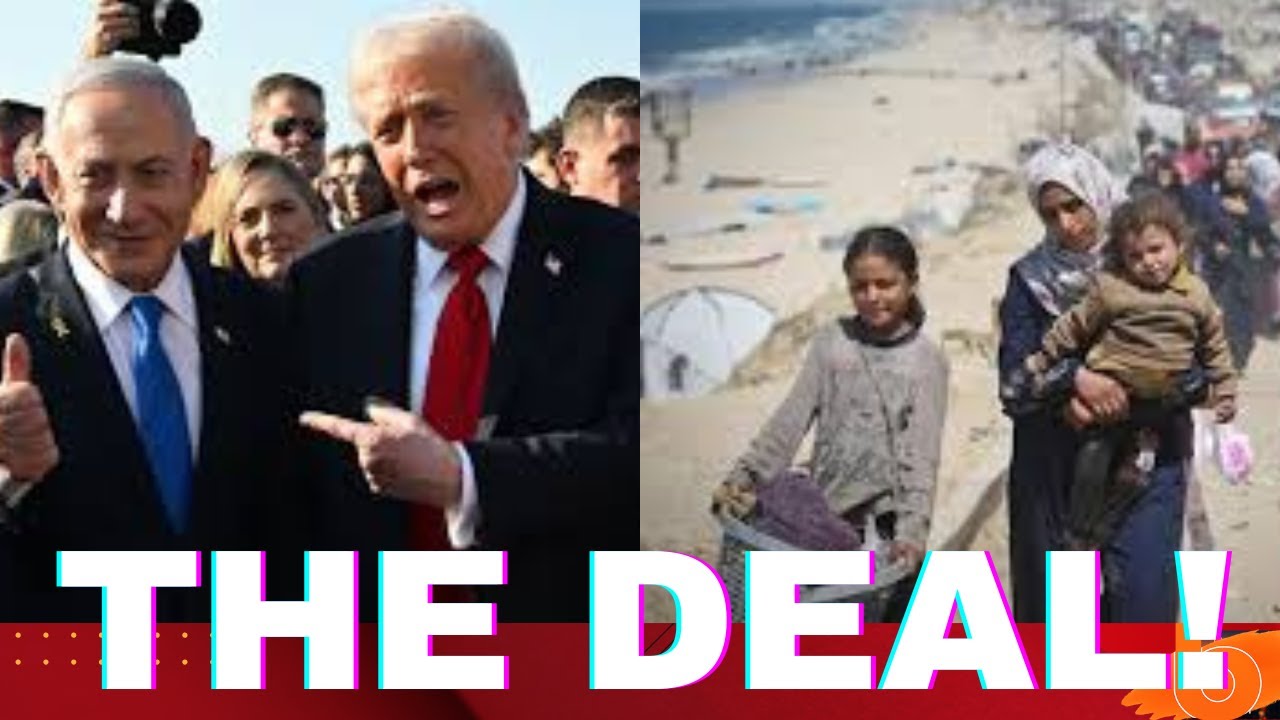
Something happened in Gaza this week that the world tried to scroll past — a brutal convergence of weather, war, and political ambition colliding in real time. As rain hammered what’s left of Gaza’s shattered neighborhoods, entire tent cities dissolved into freezing mud. Families stood ankle-deep in floodwater, holding the last possessions they own. In the middle of this humanitarian collapse, another story broke: a push for a new 20-year U.S.–Israel security agreement designed to reshape the next generation of American foreign policy.
These two scenes — the flooding of Gaza and the drafting of a decades-long military pact — sit side by side, exposing a contradiction at the heart of Western diplomacy. The humanitarian crisis in Gaza escalates while policymakers debate an agreement that would expand military cooperation, deepen defense technology partnerships, and secure long-term strategic guarantees. Analysts note this marks a major governance strain moment: public opinion is shifting, the political base is fracturing, and the old assumptions about automatic support are eroding.
This episode breaks down why these events are happening at the same time — why the Gaza flooding isn’t just a tragedy, but a symbol of institutional breakdown and global realignment. It examines how the U.S.–Israel relationship is being reshaped by geopolitical pressure, demographic change, and the growing rejection of unconditional aid among younger generations. We explore how security agreements, military assistance, and regional defense architecture intersect with humanitarian responsibility and global public trust.
In a world where footage of suffering circulates instantly, old narratives collapse faster than political leaders can reinforce them. The images from Gaza — destroyed infrastructure, displaced families, collapsing shelters — now collide with discussions in Washington about missile defense cooperation, joint defense AI, and strategic modernization. Markets and political institutions respond to these contradictions, revealing the widening gap between policy and public sentiment.
This story is larger than Gaza. It is about the shifting center of Western power. It is about how global crises, regional conflicts, and international security decisions converge at a single point. It is about whether democratic systems can maintain legitimacy when their foreign policy choices outpace their people’s moral compass. And ultimately, it is about the growing tension between humanitarian reality and geopolitical strategy — a tension that defines this policy inflection point for the United States, Israel, and the broader Middle East.
Through cinematic analysis and evidence-based commentary, this episode explores how institutional fatigue, structural pressure, and global governance challenges are reshaping the political landscape. It unpacks the long-term implications for regional stability, international law, and global security partnerships. And it asks the central question leaders keep avoiding: What happens when the consequences on the ground become louder than the politics trying to contain them?
#GazaCrisis #USIsraelDeal #MiddleEastUpdate

Информация по комментариям в разработке