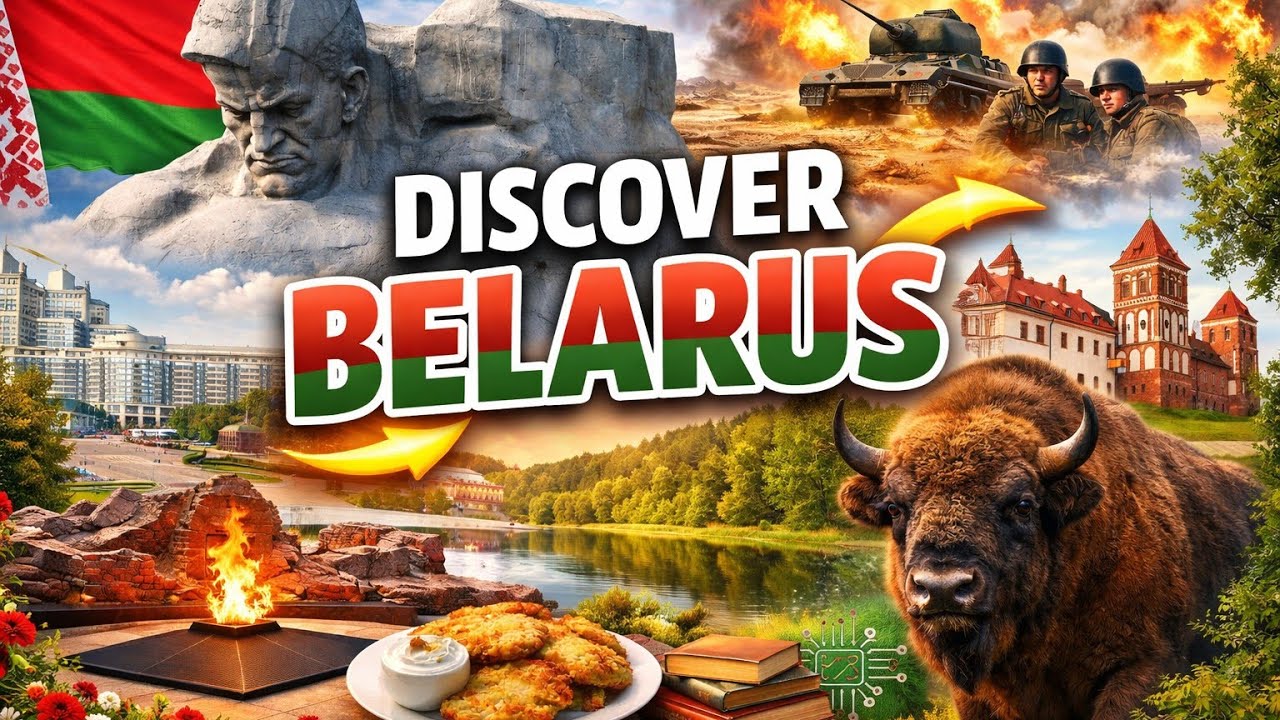
Belarus is one of Eastern Europe’s most fascinating yet often misunderstood countries, a nation where deep history, strong traditions, and vast natural beauty blend together to create a unique identity. Situated between Poland, Lithuania, Latvia, Russia, and Ukraine, Belarus has long stood at a cultural crossroads, influenced by both Western Europe and the Slavic East. Its capital, Minsk, is a striking example of resilience and renewal. Almost completely rebuilt after the devastation of World War II, Minsk today features wide boulevards, monumental architecture, green parks, and a calm, organized atmosphere that reflects the determination of its people. Walking through the city, visitors notice the blend of Soviet-era buildings and modern developments that symbolize a country balancing its past and future.
History has played a powerful role in shaping Belarus. During World War II, the nation suffered immense destruction and loss, with entire towns wiped out and millions of lives affected. Memorials and monuments across the country stand as reminders of that sacrifice and the strength that followed. In 1991, after the collapse of the Soviet Union, Belarus declared independence and began forging its own path while maintaining close ties with Russia. Its political landscape often attracts international attention, yet beyond the headlines lies a society focused on stability, education, and community life.
Nature is one of Belarus’s greatest treasures. Nearly forty percent of the country is covered in forests, making it one of the greenest nations in Europe. Vast woodlands, peaceful lakes, winding rivers, and open countryside create a serene environment rarely found in heavily industrialized regions. The ancient Belovezhskaya Pushcha forest, recognized as a UNESCO World Heritage Site, is home to the rare European bison and stands as one of the last remaining primeval forests on the continent. For nature lovers, Belarus offers quiet beauty and untouched landscapes.
Culturally, Belarus is rich in Slavic folklore, music, dance, and seasonal festivals that celebrate harvests and centuries-old traditions. Belarusian cuisine is hearty and comforting, with potatoes playing a central role in many dishes. Draniki, crispy potato pancakes served with sour cream, are a beloved national favorite. At the same time, Belarus has embraced modern innovation, developing a growing technology sector and earning recognition as an emerging IT hub in Eastern Europe.
Belarus may not be the most famous tourist destination, but it offers authenticity, resilience, and quiet strength. It is a country where history echoes through monuments, forests stretch endlessly beyond city limits, and traditions remain alive in everyday life. For those willing to explore beyond stereotypes, Belarus reveals itself as a land of endurance, culture, and surprising depth.
Thanks for watching !! Visit again!!






Информация по комментариям в разработке