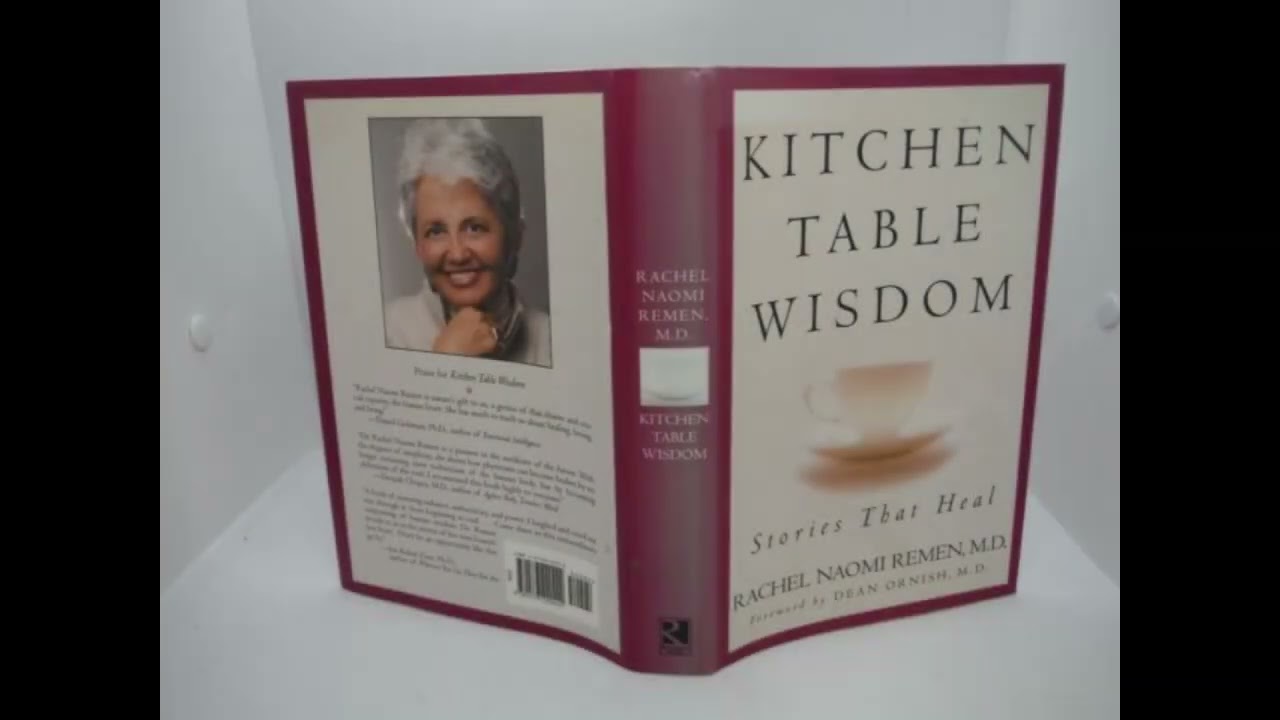
Rachel Naomi Remen’s Kitchen Table Wisdom: Stories that Heal is a profound exploration of the human experience through the lens of illness, healing, and connection. As both a physician and a storyteller, Remen weaves together personal narratives, patient experiences, and reflections that reveal the deep emotional and spiritual dimensions of medicine. The book does not function as a conventional medical guide but rather as a collection of wisdom rooted in compassion, vulnerability, and the understanding that healing extends beyond the physical. It invites readers to reconsider their perceptions of illness, suffering, and what it means to truly listen to another person’s story.
At the heart of the book is the idea that storytelling itself is a form of healing. Through her own journey of living with Crohn’s disease, Remen offers an intimate perspective on the intersection of doctor and patient. She challenges the clinical detachment often expected in medical practice, advocating instead for a holistic approach where empathy and presence are as crucial as treatment. Her stories emphasize the limitations of a purely scientific approach to healing, demonstrating that moments of connection between people can offer as much, if not more, than medical interventions alone. She underscores that healing is not synonymous with curing; one can experience profound healing even in the face of an incurable illness.
The stories within Kitchen Table Wisdom: Stories that Heal are deeply human and often reflect the strength and resilience found in moments of great vulnerability. Patients facing terminal illnesses, individuals grappling with loss, and those seeking meaning in suffering populate the pages, their experiences serving as reminders that illness is not just a physical condition but an emotional and spiritual journey. Remen’s compassionate presence in these narratives highlights the power of bearing witness to another’s pain. The simple act of listening, of truly seeing someone, emerges as one of the most powerful gifts a person can offer.
A recurring theme in the book is the notion that wisdom is often found in unexpected places—at a kitchen table, in a quiet moment with a loved one, or through the words of a patient. The kitchen table serves as a metaphor for a space of safety, warmth, and shared humanity, where stories are exchanged not for diagnosis but for connection. It is in these ordinary settings that extraordinary wisdom emerges, reinforcing the idea that healing does not belong solely to doctors but is accessible to anyone willing to listen and be present for another.
Remen’s writing is infused with a deep reverence for life and an appreciation for the mystery of existence. She challenges the notion that doctors are simply healers and patients merely recipients of care, suggesting instead that every person has something to offer in the healing process. Her reflections blur the lines between doctor and patient, reminding readers that everyone is both a giver and a receiver of wisdom. She emphasizes that illness can strip away illusions, bringing people closer to their most authentic selves and to what truly matters. In suffering, she finds the seeds of transformation, revealing that adversity often leads to profound personal growth.
The book ultimately serves as an invitation to approach life with greater compassion and openness. It suggests that healing is not a destination but a journey that unfolds in small, often imperceptible ways. The ability to sit with uncertainty, to honor another’s story without rushing to fix or solve, is a lesson that extends beyond the medical world into everyday relationships. In sharing her experiences, Remen encourages a shift from a culture obsessed with fixing problems to one that values presence and connection.
Through its deeply personal yet universal stories, Kitchen Table Wisdom: Stories that Heal reminds readers that wisdom is not found in grand pronouncements but in quiet moments of truth. Healing is as much about being seen and heard as it is about medical intervention, and in the end, it is through our shared humanity that true healing occurs.

Информация по комментариям в разработке