🥜🏋️♀️ *Almond Butter vs Peanut Butter: The Ultimate Weight Loss Showdown!* 🎯✨ Are you struggling to choose between the two nutty delights in your pantry? In this eye-opening video, we dive into the nutritional benefits of Almond Butter and Peanut Butter, comparing their calorie content, healthy fats, and proteins to determine which spread reigns supreme for weight loss! 🌱💪
Join us as we unveil expert tips on incorporating these delicious butters into your diet, share stunning recipes, and reveal surprising facts you won’t want to miss! Make the smarter choice—tune in now! Don’t forget to LIKE, SHARE, and SUBSCRIBE for more healthy eating hacks! 🍏🔥
When comparing peanut butter and almond butter in the context of weight loss, both options can be part of a healthy diet, but they have different nutritional profiles and health benefits. Here’s a breakdown to help determine which might be better for weight loss:
1. *Nutritional Profile*
*Peanut Butter*
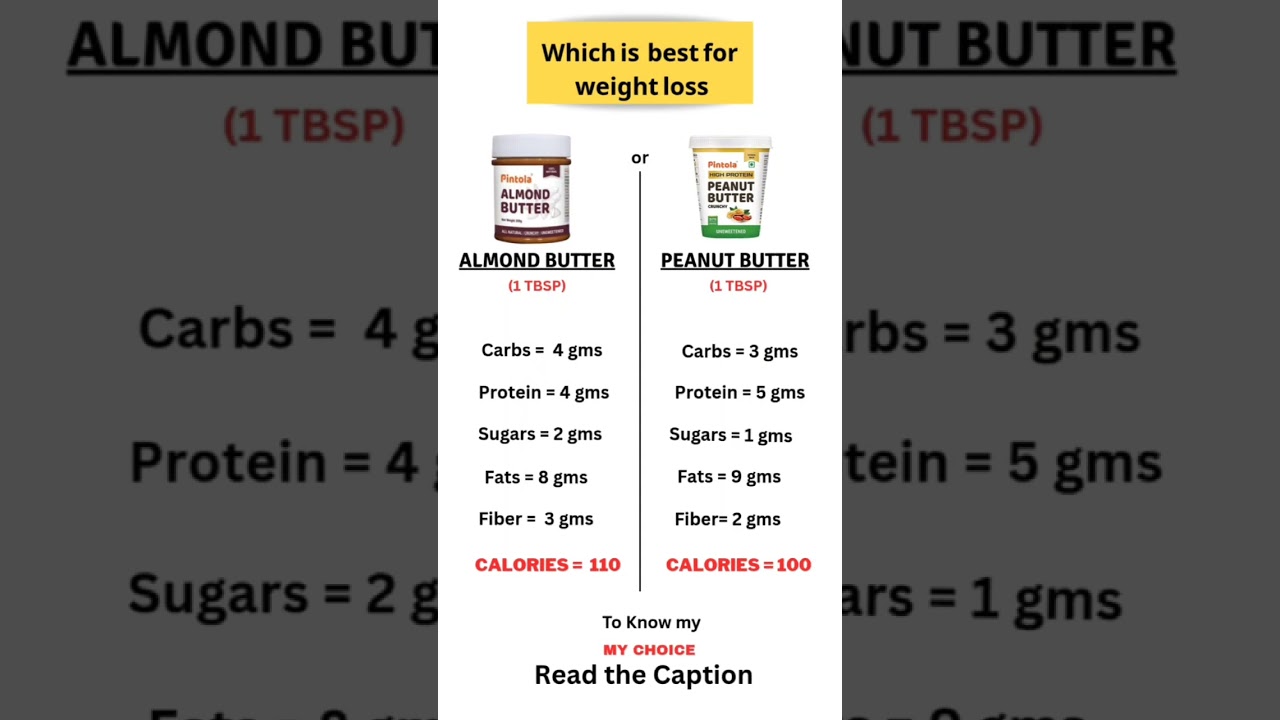
*Calories:* Generally contains about 90-100 calories per tablespoon.
*Protein:* Around 4-5 grams per tablespoon.
*Fat:* Primarily monounsaturated and polyunsaturated fats, around 8 grams per tablespoon.
*Vitamins and Minerals:* Good source of vitamin E, magnesium, and potassium.
*Almond Butter*
*Calories:* Slightly higher, usually about 98-110 calories per tablespoon.
*Protein:* Also contains about 3-4 grams per tablespoon.
*Fat:* Similar to peanut butter, with a good amount of monounsaturated fats (around 9 grams per tablespoon).
*Vitamins and Minerals:* Higher in vitamin E, calcium, and magnesium compared to peanut butter.
2. *Satiety and Fiber Content*
*Peanut Butter:* Contains some fiber (about 1-2 grams per tablespoon), which can help with satiety but is generally lower in fiber than almond butter.
*Almond Butter:* Tends to have slightly more fiber (around 1.5-3 grams per tablespoon), which can enhance feelings of fullness and promote better digestive health.
3. *Taste and Versatility*
*Peanut Butter:* Has a slightly sweeter taste and is often preferred in sweet dishes (like oatmeal and smoothies). It may be more palatable for those who enjoy a familiar flavor.
*Almond Butter:* Sometimes has a more subtle, nutty flavor and is versatile in both sweet and savory dishes. It may be a better fit for those who are looking to incorporate healthy fats into savory recipes.
4. *Potential Allergies*
*Peanut Butter:* Common allergen; many people cannot consume it.
*Almond Butter:* Also a nut but less likely to be a widespread allergen compared to peanuts, making it a safer option for some.
5. *Weight Loss Considerations*
*Portion Control:* Both nut butters are calorie-dense, so moderation is key. A small amount can add healthy fats and protein to meals, potentially aiding in satiety and preventing overeating later.
*Dietary Balance:* Depending on individual dietary needs (like calorie goals, preferences for certain micronutrients, or reactions to allergens), one might choose almond butter over peanut butter or the reverse.
Conclusion
*Best Choice for Weight Loss:*
It ultimately depends on personal preference, dietary needs, and how each butter fits into your overall diet. *Almond butter may have a slight edge due to higher fiber and vitamin E content**, which can aid in satiety and overall health. However, **peanut butter* is still a nutritious option and can absolutely support weight loss when consumed in moderation.
*Recommendation:* Choose the one you enjoy most, stick to appropriate portions, and integrate it within a balanced diet.

Информация по комментариям в разработке