Located around London and the world, these spaces are offering people a safe way to unpack their feelings about the end of life
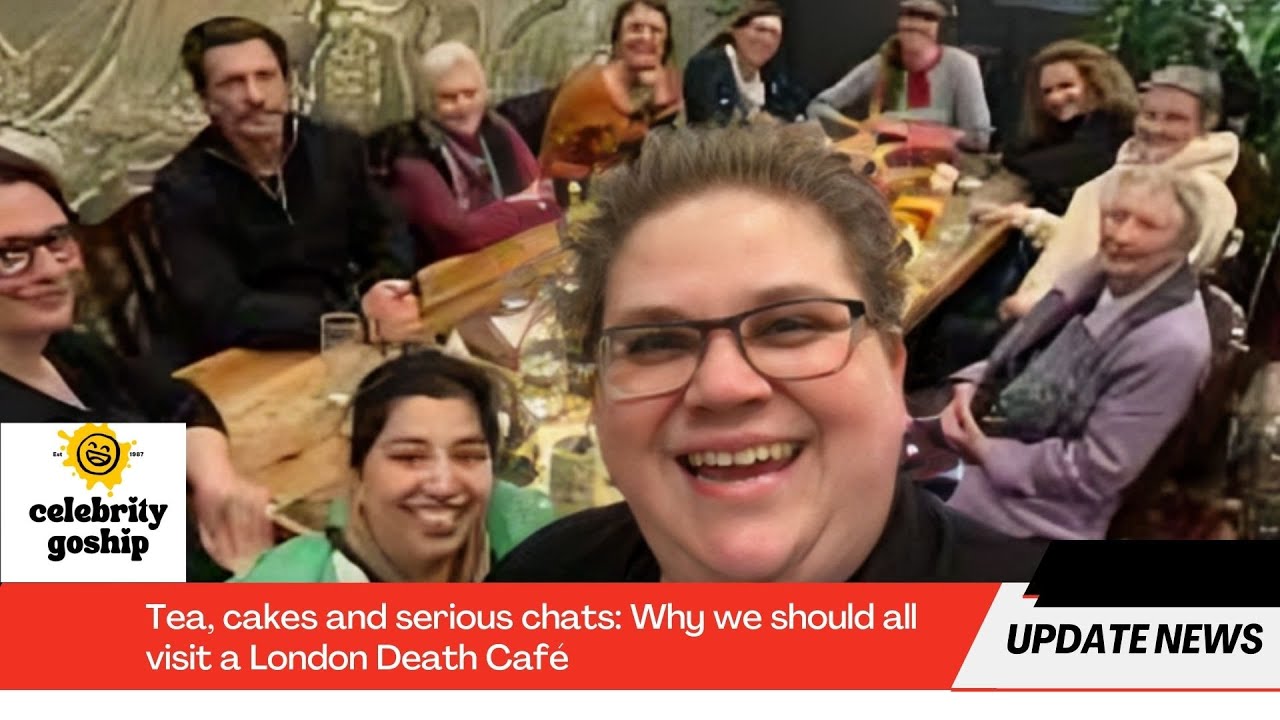
The clock is ticking. I’m sitting with seven other people in a room in the Kentish Town Community Centre – a place that, despite living in the area for four years, I hadn’t known existed until about 30 minutes previously.
On the menu: some serious existentialism.
“Welcome to our Death Café,” the organiser, Robert, says genially. “You all know why we’re here. I hope. Now, who wants to start?”
We’re here to talk about death. As bonkers as the name ‘Death Café’ sounds, its purpose is anything but light-hearted. As the name implies, the café offers a safe space for people to unpack their feelings around dying and death – something that, in our increasingly busy 21st century existences, we can feel increasingly divorced from
Though most Londoners may not have heard of them, Death Cafés have been quietly proliferating across the world for years. The modern concept was founded in 2010 by London local Jon Underwood, who took inspiration from the work of Swiss death café pioneer Bernard Crettaz (who hosted gatherings across Switzerland and France) to found his own version.
Underwood hosted cafes in Hackney until 2017, when he himself died; these days, his legacy has expanded. One search on the (now rather dated) Death Café website brings up information about hundreds of forthcoming cafés, hosted around the world: in the UK, yes, but also in the US, Poland and Argentina.
Sessions are free to join, last around two hours and are run by volunteers – most of whom have fascinating stories themselves. Robert, who runs the one in Kentish Town that I’m attending, is in his eighties and a retired doctor; he has a lovely gentle manner that belies his decades of experience.
Under his guidance, we introduce ourselves and offer some words on why we’ve come. Then we split into two groups of four and are given an egg timer. We all have five minutes to speak, uninterrupted, before there’s a general discussion on the themes raised.
At first, people don’t want to talk. But soon enough, the floodgates open and I’m hearing some of their most profound fears and feelings. Worries about their parents; about near-death experiences they themselves have had; about the fact they see death approaching and have no idea how (or no desire) to prepare for it.
Talking about dying feels both liberating and terrifying. It remains a profoundly taboo subject for many people, and no wonder – it’s not exactly the stuff of small talk.
“I think we handle death very poorly in this country,” Naomi Westerman says. An author and a playwright, she recently wrote a book called Happy Death Club, which looks at grieving and death rituals around the world, including the UK. “The reality of death is so awful and so huge. I think it's very difficult for people to wrap their heads around it.”
In the past, she says, people used to be a lot closer to death: mortality rates were higher, many people died at home, and family rather than funeral directors attended to their loved ones’ bodies.
“I think over the last couple of hundred years, death has become very sanitised. A lot of people have never seen a dead body, whereas in past times that would have been really unusual. I think it's so forbidding and scary now because it's really taboo and it's not something we have a lot a lot of contact with necessarily.”
The other thing we’ve lost in recent years, she says, is ritual. “Now that maybe the majority of the UK is secular, it's hard to [find]. Religion for thousands of years has given humanity a structure to be able to cope with death. And we need communal grief. We need ritual. If someone dies, it casts you into this wilderness where you don't know who you are.
“I think we handle death very poorly in this country,” Naomi Westerman says. An author and a playwright, she recently wrote a book called Happy Death Club, which looks at grieving and death rituals around the world, including the UK. “The reality of death is so awful and so huge. I think it's very difficult for people to wrap their heads around it.”
In the past, she says, people used to be a lot closer to death: mortality rates were higher, many people died at home, and family rather than funeral directors attended to their loved ones’ bodies.
“I think over the last couple of hundred years, death has become very sanitised. A lot of people have never seen a dead body, whereas in past times that would have been really unusual. I think it's so forbidding and scary now because it's really taboo and it's not something we have a lot a lot of contact with necessarily.”

Информация по комментариям в разработке