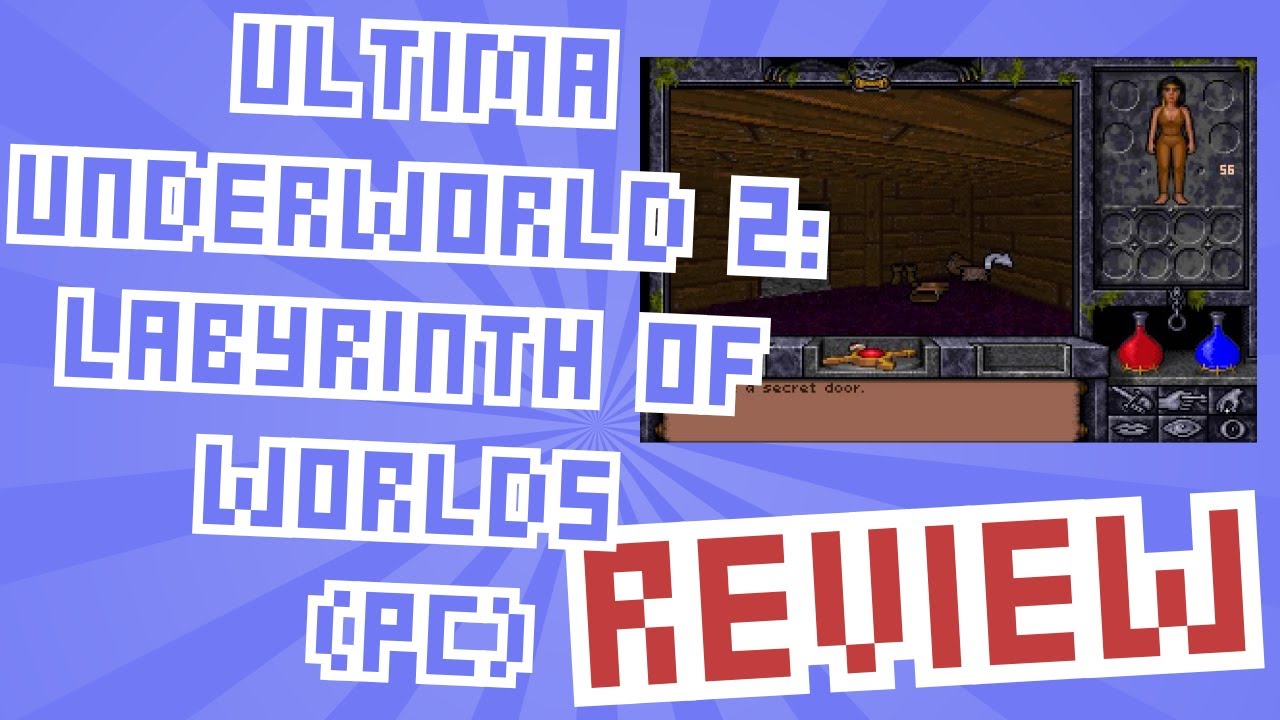
Travel back to January 1993 and step behind the blackrock dome that suddenly imprisons Castle Britannia in Ultima Underworld II: Labyrinth of Worlds, the sequel that expanded Looking Glass Technologies’ pioneering 3-D dungeon crawler into a reality-bending epic. You begin as the Avatar expecting a routine New Year’s celebration, only to discover the Guardian, Ultima’s boastful red titan, has sealed the castle inside an impenetrable crystal shell. Your escape hatch isn’t a door but a fracture in space itself: hidden portals send you hurtling into eight self-contained realms that range from a frozen cavern stalked by frost-drakes to a sky fortress suspended above endless thunder, from a deserted mage academy crackling with stray spells to a crystalline city where telepathic Xorinite beings converse in logic puzzles. Each world hides a Guardian outpost you must sabotage and a shard of blackrock you must collect before you can chip away at the prison surrounding Lord British and his increasingly anxious court.
What makes that premise sing three decades later is the sheer density of simulation packed into a 320 × 200 viewport. Movement feels shockingly modern: free mouselook, crouch-jumps, swimming strokes, levitation boots that really let you drift through vertical shafts. Physics matter; drop an apple and it bounces off a slope, hurl an oil flask and it arcs under gravity. Combat is tactile because the length of your mouse swing dictates whether a sword nicks or cleaves, while the rune-based magic system turns spellcasting into experimental linguistics, drag the glyphs for Ort Wis Bet, mutter the syllables, and a cool healing mist swirls around your armor; misplace a vowel and the spell fizzles, wasting precious mana. NPCs aren’t quest markers so much as personalities: goblin clans feud over cellblock territory inside the Prison Tower, a lonely troll in Killorn Keep just wants to fish, and spectral scholars at Scintillus Academy debate metaphysics with you before handing over their secrets.
The castle hub ties everything together. Between excursions you return to trade gossip with Sir Dupre, bake bread in the kitchen, or toss new artifacts onto the library’s identification desk. Time passes whether you’re spelunking or sleeping, letting the plot evolve organically as fellow prisoners hatch escape schemes or crack snide jokes about the Guardian’s booming taunts echoing through the halls. All of it unfolds to a MIDI score that drifts from courtly lute serenades to ominous pipe-organ drones the moment you step through a portal.
Viewed in 2025 through DOSBox or the fan-made Unity exporter, the chunky textures blur, but the game’s design still feels radical. Every problem has multiple solutions: charm a guard with a brewed love potion, or sneak through a drainage grate you noticed only because water actually obeys gravity and pooled on the floor. That freedom is why Labyrinth of Worlds became blueprint DNA for System Shock, Thief, Deus Ex and the entire immersive-sim lineage. If your channel celebrates deep cuts, forgotten tech leaps, or just unforgettable “hold-my-beer” RPG moments, like luring a frost-drake into lava, roasting the corpse for dinner, then bribing a hungry skeleton mage with the leftovers, this is footage gold. Fire up the portal, grab your rune bag, and remember: the Guardian may yell “Insects!” every five minutes, but the real victory is discovering just how many ways you can make his multiverse blink first.

Информация по комментариям в разработке