chameleon | Fun Facts About Chameleons | Body Language of a Chameleon
______________________________________________________________
Greetings, friends. (Animals channel) is a YouTube channel dedicated to providing information on the world's animals. Animal shapes, sounds, and qualities. Elephants, tigers, lions, giraffes, crocodiles, and zebras are among the wild creatures. Dogs, cats, chickens, ducks, pigs, tiger, wolves, koala, shark, coyote, pangolin, frog, gorilla, red panda, frog, glass frog, kangaroo rat
giant rat, toads, and other animals that have been tamed and raised by humans. a horse, a cow, a sheep, and a goat... We attempt to provide you with high-quality footage that is accompanied by entertaining, instructive, and informational movies.
please like share and subscribea.
______________________________________________________________
Can change color to pink, red, green, yellow, turquoise, and other colors!
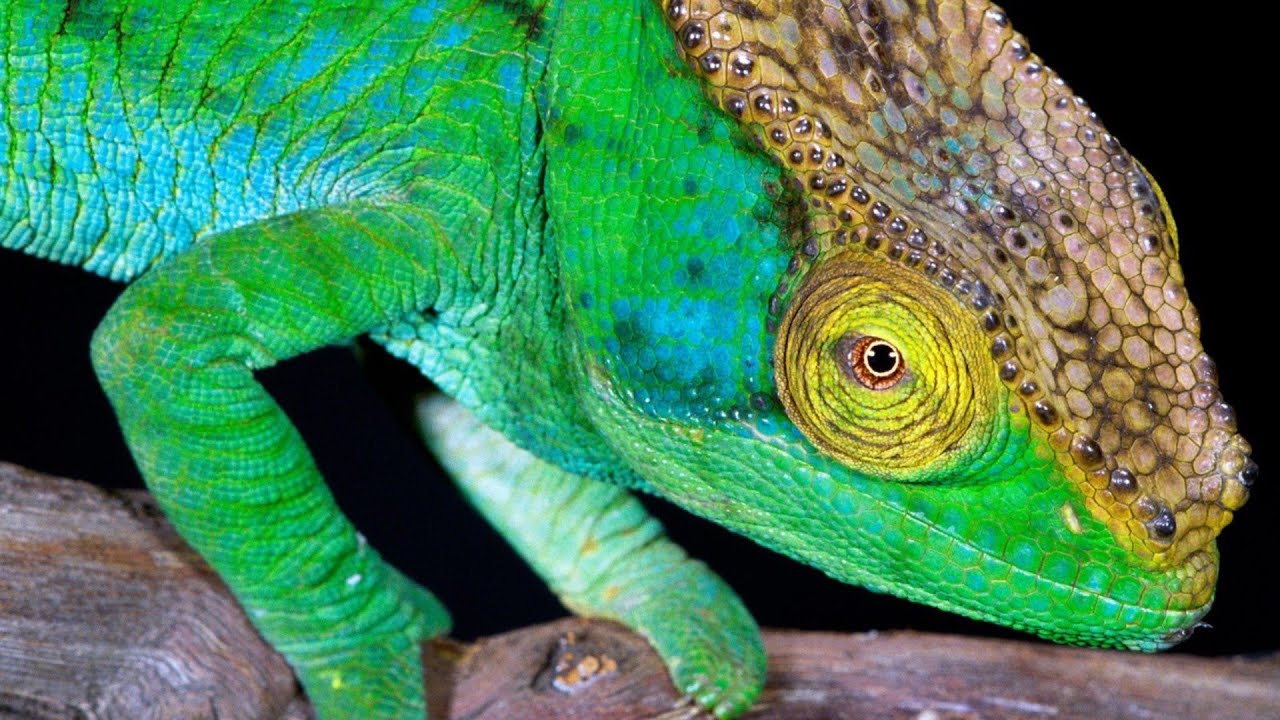
The chameleon, scientific name Chamaeleonidae, is a species of lizard.
There are over 160 species of these lizards spread across Madagascar, Spain, Africa, Asia, and Portugal.
They have large eyes, a curled tail, and some species can change the color of their skin to blend in with their surroundings as a defense mechanism from predators.
These lizards can change their skin to be pink, blue, red, orange, green, black, brown, light blue, yellow, and turquoise.
The Chameleon’s Habitat
Chameleons are animals that are found throughout jungle and desert alike, in Africa, Asia, and parts of Southern Europe, and chameleons have also been introduced to parts of North America.
Most of these lizards live in trees or in bushes.
Only a few species live on the ground under piles of leaves.
Predators of Chameleons
There are many animals that eat these lizards.
In fact, the smaller a chameleon is, the more likely it is to be eaten by a larger animal.
Some of the predators include snakes, birds, and sometimes monkeys.
Though they can blend in with their environment, they are near the bottom of the food chain.
This means there are many animals above them on the food chain that can eat them.
A Chameleon’s Defense Against Predators
A chameleon’s ability to change color to match its environment is its way of protecting itself when a predator is nearby.
If this lizard is on a branch, its skin can turn a color that is very close to the color of the branch.
Many predators may pass by without ever seeing the animal sitting quietly on the tree branch.
Body Language of a Chameleon
Chameleons are animals that communicate with one another by using their body language.
For instance, a chameleon trying to protect its territory from an intruder is likely to turn sideways.
This makes the lizard look bigger and more threatening.
A chameleon that feels threatened may open its mouth to try to scare another one away.
Chameleon Reproduction
Most species of these lizards lay eggs while a few have live babies.
The female digs a hole in the ground and lays her eggs inside it to keep them warm.
Usually, they lay around 20 eggs, but it can be more or fewer depending on the species.
It can take four months to a year for the eggs to hatch.
Jackson’s chameleon is one example of a species that has live babies.
This lizard can have from 8 to 30 live babies after being pregnant for about 6 months.
Chameleon Diet
Chameleons eat a diet that’s mostly focused on insects.
While chameleons are omnivores that will feed on vegetation such as dandelions and other vegetation, most of their prey is insects such as grasshoppers, crickets, and dragonflies.
Chameleon Conservation Status
There are some species of chameleons that are endangered.
A couple of examples include the tiger -and the Elandsberg dwarf chameleon.
These animals can become endangered for many reasons such as loss of their habitat or pollution.
Fun Facts About Chameleons
The Meaning Behind the Name
The word chameleon comes from the Greek words chamai which means on the earth and leon which means lion.
So, the word means earth lion.

Информация по комментариям в разработке