Learn From Animals Not to Be Traumatized
From the very first breath we take, life begins with struggle.
Birth itself is considered our first trauma.
As we grow, society adds more layers —
fear of judgment, fear of rejection, fear of failure, fear of what others will think.
Slowly, without realizing it, many people carry invisible emotional wounds.
Not because of one big incident…
but because of repeated stress, overthinking, and suppressed emotions.
This inspiring story explores a powerful comparison between humans and animals.
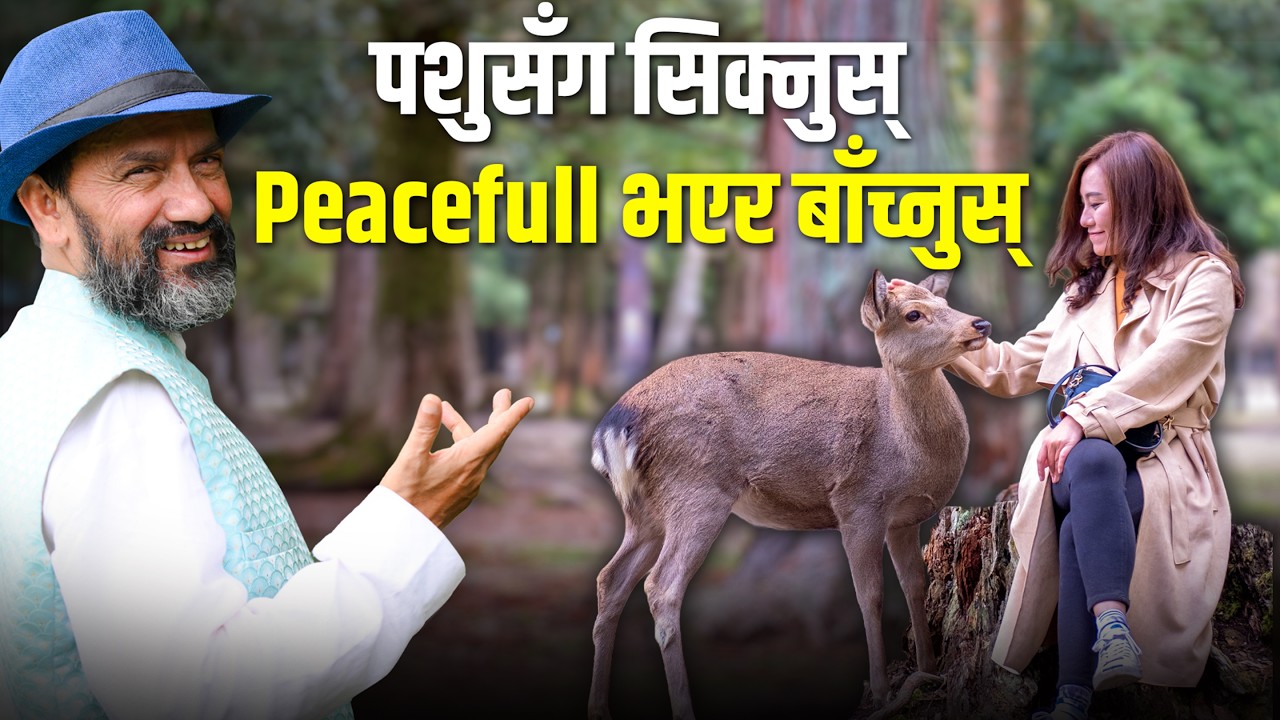
Imagine a deer in the jungle.
When it is chased by a predator and barely survives, its body reacts intensely. But once the danger is gone, something incredible happens — the deer begins to shake. This shaking process allows the nervous system to discharge the stored stress. Within minutes, the animal returns to calmness.
It does not replay the event again and again.
It does not imagine future attacks.
It does not live in fear of “what if.”
But humans are different.
If a person survives an accident or attack, the body may survive — but the mind keeps replaying the moment. The thinking continues. Fear grows. Stress stays trapped inside. Over time, this turns into anxiety, depression, and trauma.
So the question is:
Can we learn from animals?
This episode explains that trauma is not only about what happened — it is about what we continue to hold inside.
And the solution begins with the breath.
The story introduces a simple yet powerful breathing practice:
🫁 1:2 breathing ratio
Inhale gently…
Exhale twice as long.
Breathing 6–8 slow cycles per minute, for 30–40 minutes early in the morning, helps calm the nervous system, release stored stress, and allow the body to let go of emotional pain.
When the exhale is longer than the inhale, the body receives a signal of safety.
The mind slows down.
The stress response softens.
This is not about ignoring pain.
It is about releasing it.
Animals teach us something simple yet profound:
Feel it. Discharge it. Move on.
Maybe healing is not about becoming stronger than trauma —
but about learning how to let it pass through us.
सम्पूर्ण मनोक्रान्ति प्रेमी मित्रहरूलाई यस मनोक्रान्ति केन्द्रको दोस्रो अफिसियल YouTube च्यानल हार्दिक स्वागत् गर्दछ। धेरै दर्शकहरूले आफ्नो आवश्यकता अनुसारको विषयमा भिडियो बनाइदिनु पर्यो भनेर Comment गरिरहनु भएको हुँदा उहाँहरूका लागि हामीले यस च्यानललाई निर्माण गरेका छाैं। एउटै विषयको भिडियो पटक पटक upload गरिसकेको च्यानलमा upload गर्न उचित नहुने भएको हुँदा हामीले यस च्यानललाई निर्माण गरेका हौं। आशा छ यस च्यानलले यहाँहरूको जिज्ञासालाई सम्बोधन गर्नेछ ।
यदी अहिलेसम्म तपाईंहरूले यस च्यानललाई Subscribe गर्नुभएको छैन भने कृपया Subscribe गरी नजिकै रहेको घण्टी पनि दबाउनुहोस्। तपाईंको जिज्ञासालाई सम्बोधन गर्ने भिडियोहरू सबैभन्दा पहिला तपाईंले प्राप्त गर्न सक्नुहुनेछ। धन्यवाद! सबैको जय होस्!
All content included in this video including text, graphics, images, video clips, and audio clips, is the property of Manokranti Center or our associates and protected by international copyright laws. The collection, arrangement, and assembly of all content on this site is the exclusive property of Manokranti Center and protected by international copyright laws.
You may not copy, reproduce, distribute, publish, display, perform, modify, create derivative works, transmit, or in any other way exploit any part of copyrighted material without permission from Manokranti Centre.
Contact Us :
Mobile : 9840914805,9828007177
E-mail : manokrantiecospiritual@gmail.com
/ dryogivikash. .
TikTok: https://vm.tiktok.com/ZSdJkmuUp/
https://www.instagram.com/dr.yogi.vik...
#Manokranti, #Dr_Yogi_Vikashananda, #Nepali_Philosopher, #Manokranti_centre, #Eco_spiritual, #Spiritual_master,#Yoga_Darshan,#Patanjali_Yoga_Sutras,#Nepali_Motivational_Speech #HealingTrauma #LearnFromAnimals #BreathingTechnique #EmotionalHealing
#StressRelief #MindBodyConnection #AnxietyRecovery #SelfHealing
#MentalHealthAwareness #InnerPeace #Breathwork #LetGo








Информация по комментариям в разработке