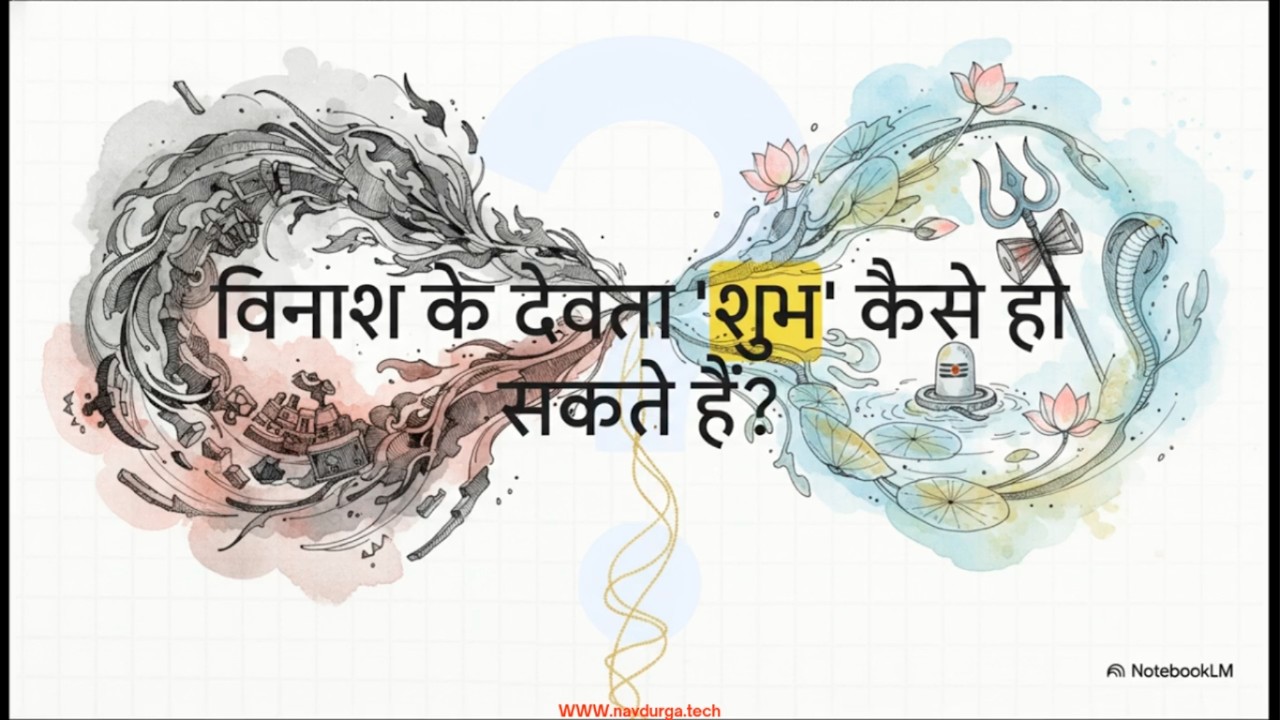
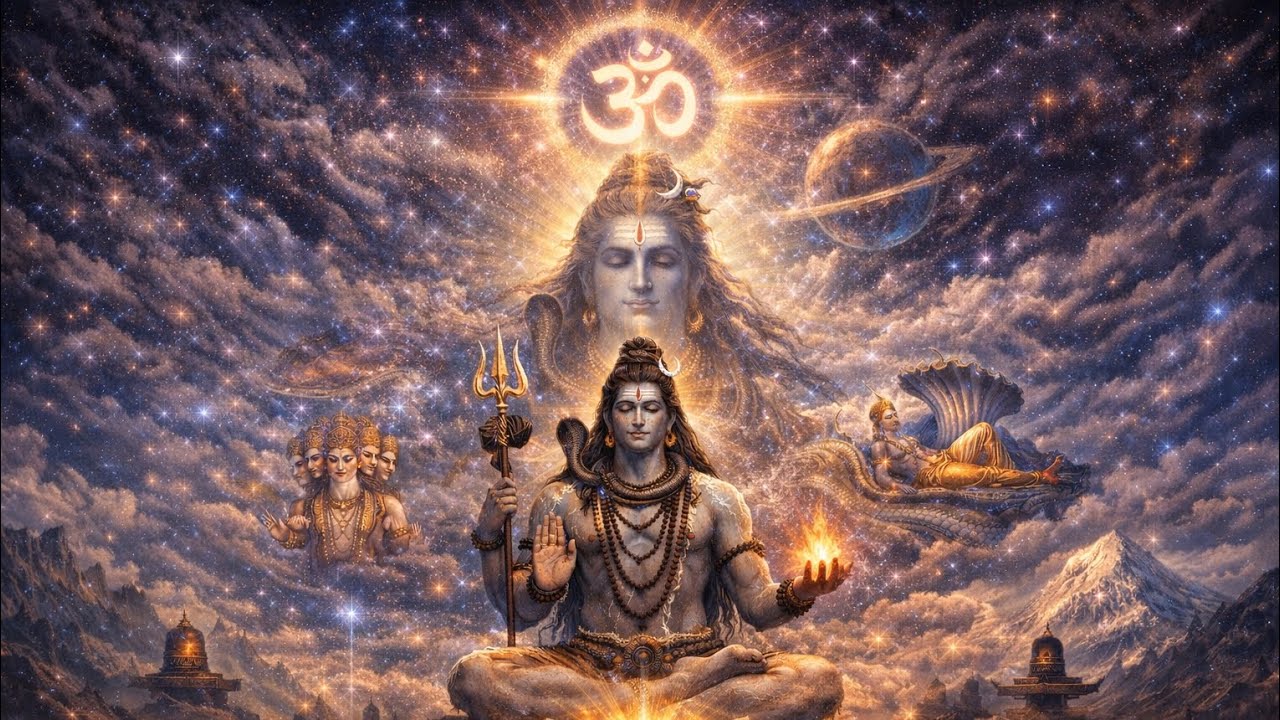
Lord Shiva is a central Hindu deity who functions as the Supreme Being within the Shaivism tradition and represents the necessary force of destruction for renewal. the sources illustrate Shiva's role as a metaphor for unified energy fields and spiritual enlightenment. This comprehensive overview connects ancient scripture, ritual practice, and contemporary philosophical interpretations of one of India's most complex gods.How does Shiva's third eye represent wisdom and destruction?
What are the spiritual and scientific significances of Mahashivratri?
How does Shiva's cosmic dance impact the universe's cycles?
How does Shiva's third eye represent inner wisdom
Representation of Inner Wisdom
The third eye is primarily regarded as the "eye of knowledge" (gyananakashu), representing higher consciousness and spiritual perception.
• Perceiving Ultimate Truth: It allows Shiva to see beyond the material world and pierce through maya (illusion) to reveal the ultimate reality.
• Self-Realization: In yogic traditions, this eye corresponds to the Ajna chakra (the brow energy center), which, when activated, enhances intuition and leads to self-realization and liberation (moksha).
• Omniscience: It grants Shiva complete awareness of the past, present, and future, underscoring his role as an all-knowing deity.
• Restoring Light: One myth describes how the third eye spontaneously emerged to restore light to the universe when Parvati playfully Shiva's other eyes, symbolizing its role in maintaining cosmic equilibrium.
Representation of Destruction
Shiva’s third eye embodies destruction not as mere annihilation, but as a necessary force for renewal and regeneration.
• Annihilating Ignorance: When opened, the eye releases a destructive fire specifically intended to dissolve evil, ego, and ignorance.
• Incinerating Desire: A prominent mythological example is the story of Kamadeva, the god of desire. When Kamadeva attempted to distract Shiva from his deep meditation with an arrow of lust, Shiva opened his third eye and reduced him to ashes. This act symbolizes the destruction of worldly desires to make way for higher spiritual wisdom.
• Transformation: Within the triad of Shiva's eyes, the third eye represents fire, which acts as the element of transformation. It discriminates between truth and falsehood, destroying the old to pave the way for creation.
Ultimately, the third eye represents a spiritual gateway; its power to destroy the "obvious" or sensory world is what allows for the birth of profound inner insight and enlightenment.
• Union of Consciousness and Energy: It commemorates the divine marriage of Shiva and Parvati, symbolizing the essential balance between masculine consciousness and feminine energy.
• Overcoming Ignorance: The night signifies Shiva’s grace in helping devotees overcome ego and ignorance, allowing them to align with his infinite energy for spiritual growth.
• Transcendence and Stillness: For ascetics, it marks the night Shiva became utterly still in deep meditation, embodying ultimate transcendence.
• Divine Manifestation: It celebrates the Lingodbhava, where Shiva appeared as an infinite pillar of light to establish his formless eternity, a manifestation worshipped for achieving moksha (liberation).
Spiritual and Scientific Context
These rituals are designed to help devotees overcome maya (illusion) and ignorance while seeking moksha (liberation). The combination of fasting, chanting, and the vigil is believed to optimize the body's physiology—blending ancient wisdom with natural planetary alignments that enhance spiritual receptivity.
Would you like me to create a set of flashcards focusing on these specific rituals and their meanings to help you remember them? I can also generate a detailed report comparing the mythological origins of these rituals. Acknowledge if you'd like me to proceed with either.
What is the meaning of the milk and honey abhishekam?
In the context of the sources, the milk and honey abhishekam is the ritual bathing of the Shiva lingam, a practice that holds deep spiritual significance during Mahashivratri.
The Meaning and Purpose of the Ritual
While the sources do not explicitly define separate symbolic meanings for milk versus honey (such as purity or sweetness), they describe the collective act of offering these substances as a means to achieve specific spiritual goals:
• Seeking Inner Awakening: The ritual is performed to seek spiritual awakening, self-realization, and the triumph of light over darkness.
• Worshipping Infinite Reality: The offerings are made to the Shiva lingam, which represents Shiva’s creative energy and his formless, infinite reality.
• Attaining Liberation: Devotees worship the lingam through these rituals with the ultimate aim of achieving moksha (liberation).
• Aligning with Divine Grace: The act serves as a tribute to Shiva’s grace in helping devotees overcome ignorance and ego. It is often performed during the jagran (nig















Информация по комментариям в разработке