India's Food Security Challenge: Imports Rise Faster Than Exports #agriculture #riceindustry
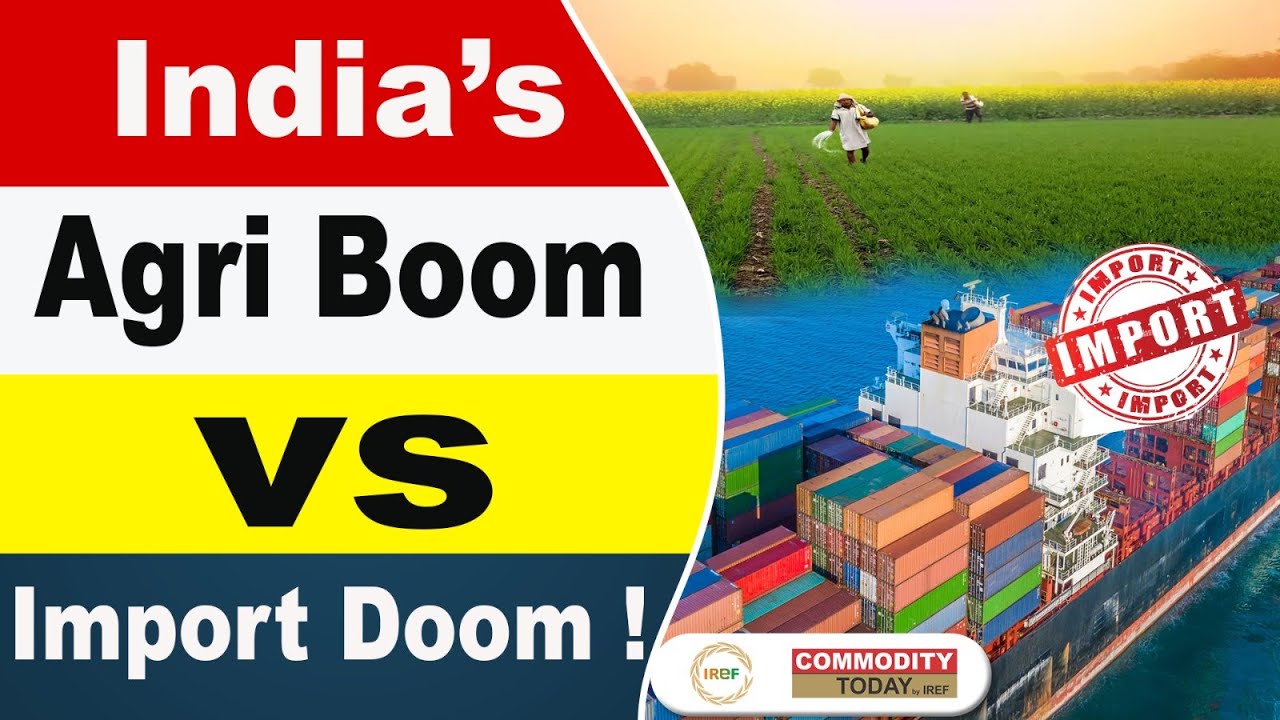
India has always depended a lot on importing edible oils and pulses from other countries. This has created pressure on India's trade balance, especially in the agriculture sector. In 2024, India's agricultural exports went up by 6.5%, but imports increased much more by 18.7%. This has caused a big rise in the country’s agri-trade deficit. Products like marine items, non-basmati rice, sugar, basmati rice, and spices together make up more than half of India’s total agricultural exports.
Agriculture is a very important part of India’s economy. It gives work to more than 45% of people in the country and adds about 18% to India’s GDP. Since India has the world’s largest population around 1.42 billion people, it is very important to have food security and self-sufficiency. Unlike rich countries, most of India's food production is used within the country to feed its large population.
However, Indian agriculture still faces many problems. Farms are small and scattered, the weather is often unpredictable, productivity is low, and the market system doesn’t work well. Still, India is the top producer of many things like milk, pulses, jute, sugarcane, rice, and cotton. India has made great progress from being a food importer to becoming the world’s biggest rice exporter with 40% of the global market share. Agro-exports have grown from $7.5 billion in 2000-01 to $53.1 billion in 2022-23, even though the government has sometimes restricted exports.
But now, there are new challenges. Global prices of food and farm goods are going down. The World Bank says food prices may fall by 7% in 2025 and another 1% in 2026. This means Indian agriculture must become more competitive.
Rich countries are also making trade harder by putting tough rules on quality, pesticides, and sustainability. It’s also important to explore new export markets, especially with changing global politics. India must also improve crop productivity, use less harmful chemicals, move towards organic farming, and save water. New technologies, AI, and better farming methods must be adopted. The government’s One District One Product (ODOP) plan needs better execution so that local strengths can be used in the best way.
State and central governments should work together to support farmers and exporters through helpful schemes. They should not work in isolation. When India signs new trade agreements, it must make sure that it gets proper access to foreign markets and that non-tariff barriers are clearly understood.
India must be alert, as countries like the USA, EU, Australia, and New Zealand are very interested in selling products to India's huge market. The recent US tariff policies have made trade even more confusing. For example, at one point, Indian rice became cheaper due to US tariffs on other countries, but then those tariffs were removed. This makes global trade very unstable.
So, India’s government, export agencies, and businesses must closely watch global changes, keep updating their strategies, and make smart decisions to grow agro-exports and support farmers.
Watch More
• Award-Winning Agri Reform in Tamil Nadu #a...
• Northwest India Sees 31% More Rain Than Av...
• Govt Approves Moong & Urad Purchase at MSP...
• वैश्विक चुनौतियों के बावजूद भारत ने 50312 ...
• West Asia Conflict HALTS Basmati Exports t...
• SCO के साझा बयान पर रक्षा मंत्री राजनाथ सि...
• Pakistan Holds Ground as India Returns to ...
• दिल्ली में बनेगा व्यापारी कल्याण बोर्ड , ह...
• After Punjab, Will Haryana Ban Harmful Pes...
• बिहार के कतरनी चावल के दिवाने हुए विदेशी #...
• बासमती चावल में खतरनाक कीटनाशकों पर प्रतिब...
• ईरान को निर्यात किया जाने वाला 1 लाख टन बा...
Website: https://iref.net/
👉 Follow us on social media for more updates:
Facebook: / indianriceexporterfederation
Instagram: / indianriceexportersfederation
X (Twitter) https://x.com/IrefIndia
LinkedIn: / indianriceexportersfederation

Информация по комментариям в разработке