The Light of Wisdom and Compassion: The Story Behind "The Eight Great Auspicious Praises"
I. Origin
In late 19th century Derge, Tibet, the great master Jamyang Khyentse Wangpo looked upon the young scholar Mipham and said: "The Nyingma teachings need you to write, to elucidate, to let the profound Dharma spread."
Years later, Mipham Rinpoche's attention turned to an ancient sutra—the Eight Great Auspicious Sutra, where the Buddha taught the names of eight Buddhas in the eastern direction. Hearing these names brings protection from harm, freedom from nightmares, and safety in battle.
The sutra had been transmitted for a thousand years, but its prose form was difficult to recite. Mipham Rinpoche envisioned arranging these blessed names into verse, making them accessible for daily practice.
II. Manifestation Amidst Illness
At that time, Mipham Rinpoche was afflicted by persistent illness, too weak for extensive writing. Yet perhaps this very fragility deepened his understanding of beings' need for protection on the path.
In his brief commentary, he humbly wrote: "Due to my illness which has not improved, I am unable to compose an extensive commentary." These few words reveal a great adept's compassion—offering benefit even while unwell.
He wove the eight Buddhas' names into verse. But his wisdom saw further: beyond the Buddhas, there are Bodhisattvas, goddesses, and protectors, all sources of auspiciousness.
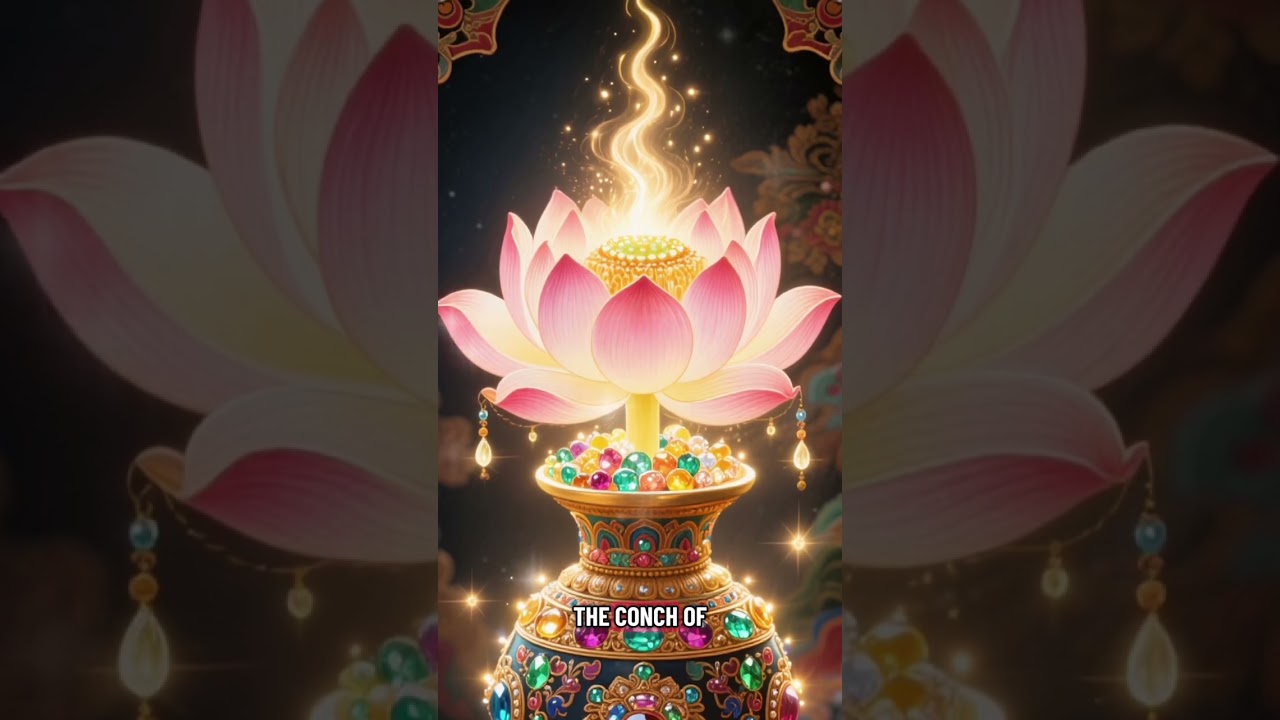
Thus he added the eight great Bodhisattvas—Mañjughoṣa, Vajrapāṇi, Avalokiteśvara, and others—each holding distinct attributes. Then the eight goddesses, bearing the eight auspicious symbols: parasol, golden fish, treasure vase, lotus, conch, endless knot, victorious banner, and golden wheel. Finally, the eight worldly protectors—Brahmā, Indra, the four great kings, and others.
When these thirty-two noble beings—eight Buddhas, eight Bodhisattvas, eight Goddesses, eight Protectors—were perfectly woven into a single hymn, Mipham Rinpoche had completed his expression of "perfect auspiciousness."
III. Completion and Promise
On April 18, 1896, under special astrological signs, the hymn was perfectly composed.
At its end, he wrote:
"If recited upon waking, all aims that day will be accomplished.
If recited before sleep, you will see good dreams.
If recited during disputes, you will gain total victory.
If recited before any undertaking, your wishes will be fulfilled.
If recited constantly, you will attain long life, merit, and ultimate benefit."
These are not exaggerations—the Buddha himself proclaimed that reciting these names surpasses countless eons of offering to Pratyekabuddhas.
IV. Transmission
The hymn spread rapidly across all Tibetan schools. Mipham Rinpoche's disciples spanned every lineage—Kathok Situ, Shechen Gyaltsap, Dzogchen Rinpoche, Dilgo Khyentse Rinpoche, and others.
In the 21st century, Khenpo Sodargye encourages: "On the first day of the new year, recite this upon waking." In 2016, an English translation was published, allowing Western practitioners to share its benefit.
V. Conclusion
Today, countless practitioners softly recite:
"Nang zé nam da ri gyin lün drub chok, Tra shi chok gi yang né ye bar ye..."
The Sanskrit syllables flow, traversing a hundred years.
This hymn, composed by Mipham Rinpoche in illness, remains an eternal lamp. It reminds us: auspiciousness is not luck sought outside, but the union of our awakening with the blessings of enlightened beings.
May all who see this attain great auspiciousness.










![[Full Album] SAMSARA 5: 6 Sacred Buddhist Scriptures (38min Epic K-Gugak & Deep Meditation)](https://i.ytimg.com/vi/6m0RxSEAVrM/maxresdefault.jpg)

Информация по комментариям в разработке