A new war on cartels explodes as the Trump administration greenlights military strikes. With fentanyl pouring across the border, is unilateral action the only answer to Mexico's inaction? We expose the ideological battle raging from our southern border to the halls of the United Nations, pitting American patriotism against the "false flag of globalism".
Tonight on BESTCast News, a dramatic escalation at America’s southern border. The long-running seize-and-apprehend policy for narco-traffickers is over. In its place: direct military action. Secretary of State Marco Rubio confirms a U.S. strike killed 11 members of the Tren de Aragua cartel, vowing, "We're not going to sit back anymore". This marks a significant policy shift, with Rubio stating that the only way to stop the cartels is when "you blow them up". The administration asserts that narco-terrorist organizations, trafficking not just drugs but also people and arms, pose a direct and immediate threat to the national security of the United States.
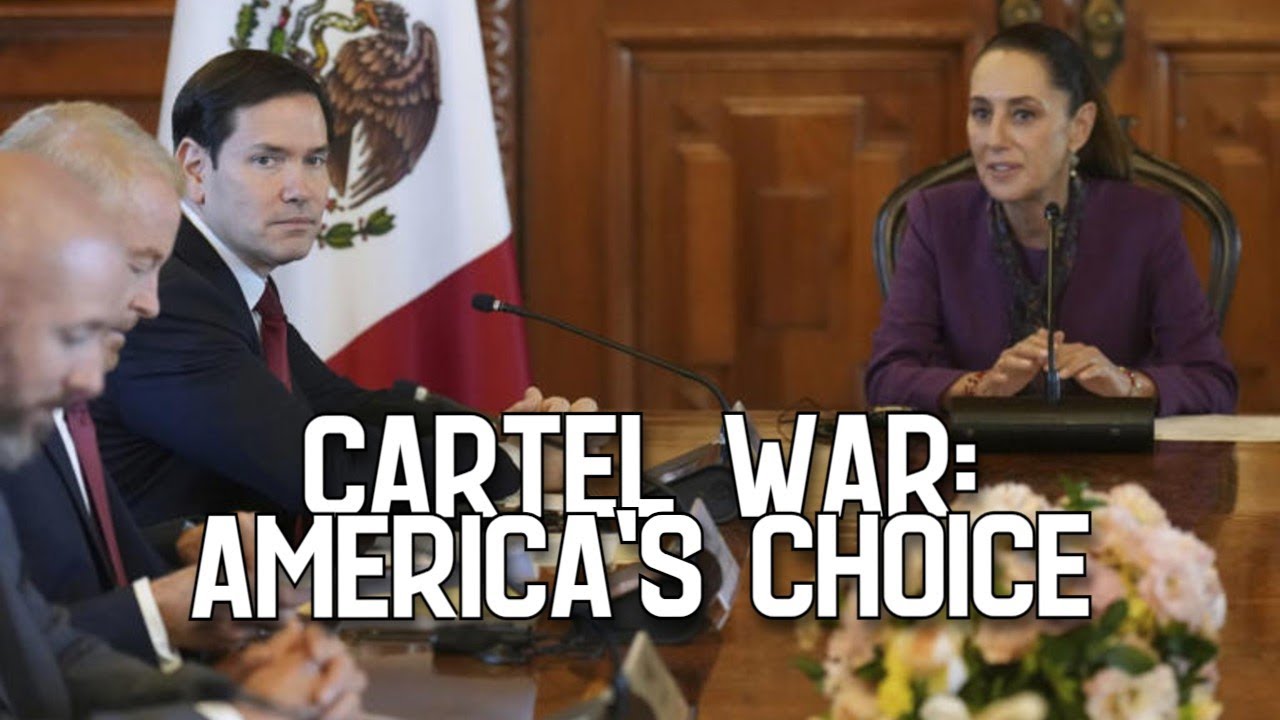
This new offensive comes as The Heritage Foundation reports that Mexican drug cartels represent a rapidly increasing threat, fueled by the Chinese Communist Party, which is actively funding and deploying fentanyl into the United States. With over 100,000 overdose deaths annually, the crisis is seen as eclipsing the U.S. casualties from the Vietnam War. Complicating matters is the Mexican government itself, which critics say has granted cartels "expanded operating freedom" and has become an unreliable partner. President Sheinbaum has pushed back, stating it’s "not true" she is afraid to confront the cartels, but she has also fiercely defended Mexico’s sovereignty and preference for non-intervention.
The Trump Administration maintains that the president’s authority as commander in chief allows for the use of military force to protect U.S. territory from foreign incursion, unconstrained by the Posse Comitatus Act. While joint action with Mexico is the ideal, sources state unilateral U.S. military action on Mexican territory may be necessary to prompt cooperation or contain the threat.
But is this new aggressive posture the right one? The beltway consensus, articulated for decades and echoed by the Cato Institute, calls the entire war on drugs a "catastrophic policy failure". They argue that prohibition defies basic economics, driving up prices and empowering violent criminal gangs. Their analysis describes U.S. strategy as a "grotesque game of 'whack-a-mole,'" where pressure in one region simply causes the cartels to pop up in another—from Colombia to Mexico, and then into Central America. Their solution? Abandon prohibition and treat drug use as a public health issue, pointing to Portugal’s decriminalization as a model that led to less crime and consumption.
This clash over border policy reveals a much deeper ideological war being waged over America's place in the world. On one side are the "sovereigntists," who argue for patriotism over globalism. This viewpoint, outlined in The Heritage Foundation’s analysis, is deeply skeptical of transnational institutions like the United Nations, which are described as remote, bureaucratic, and unaccountable. For conservatives, the ultimate test of legitimacy for U.S. actions is the U.S. Constitution, not a "temporary majority of the Security Council". The Trump doctrine is presented as a return to a historical tradition emphasizing national interests, military strength, and the primacy of American sovereignty, rejecting the "false flag of globalism".
On the other side are the "post-sovereigntists" or "transnational progressives," who seek to place evolving international law above the sovereignty of nation-states. This view was articulated by the Obama administration, which declared a willingness to bind American power to international laws and institutions, arguing that "giving up freedom of action" enhances security in the long run.
From lethal strikes in the Caribbean to fierce debates at the UN, the fundamental question remains the same: will America be governed by its own people according to its own constitution, or will it cede authority to unelected global bodies? The answer to that question is being decided right now.

Информация по комментариям в разработке