Download Link - https://kukufm.sng.link/Apksi/hpfh/r_...
Coupon code -SCM50
( Coupon valid for first 250 users)
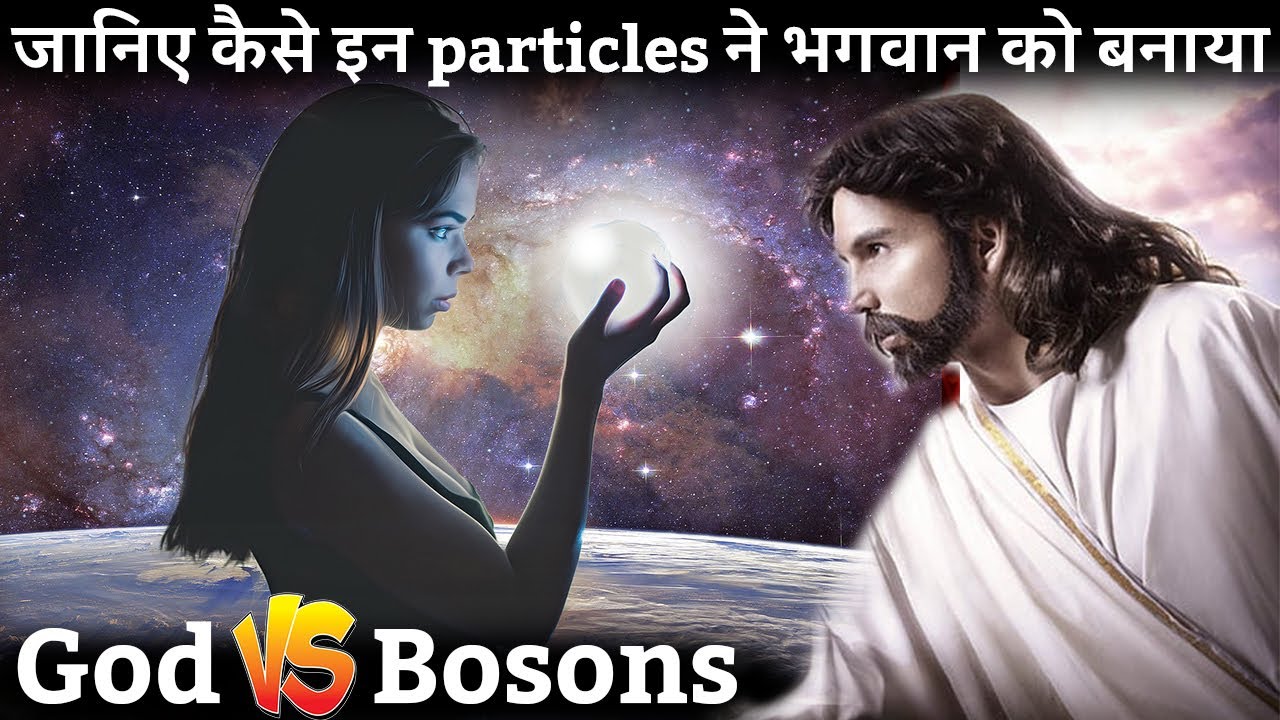
In particle physics, a boson is a type of particle that obeys the rules of Bose-Einstein statistics. These bosons also have a quantum spin with contains an integer value, such as 0, 1, -1, -2, 2, etc. (By comparison, there are other types of particles, called fermions, that have a half-integer spin, such as 1/2, -1/2, -3/2, and so on.)
What's So Special About a Boson?
Bosons are sometimes called force particles, because it is the bosons that control the interaction of physical forces, such as electromagnetism and possibly even gravity itself.
The name boson comes from the surname of Indian physicist Satyendra Nath Bose, a brilliant physicist from the early twentieth century who worked with Albert Einstein to develop a method of analysis called Bose-Einstein statistics. In an effort to fully understand Planck's law (the thermodynamics equilibrium equation that came out of Max Planck's work on the blackbody radiation problem), Bose first proposed the method in a 1924 paper trying to analyze the behavior of photons. He sent the paper to Einstein, who was able to get it published ... and then went on to extend Bose's reasoning beyond mere photons, but also to apply to matter particles.
One of the most dramatic effects of Bose-Einstein statistics is the prediction that bosons can overlap and coexist with other bosons. Fermions, on the other hand, cannot do this, because they follow the Pauli Exclusion Principle (chemists focus primarily on the way the Pauli Exclusion Principle impacts the behavior of electrons in orbit around an atomic nucleus.) Because of this, it is possible for photons to become a laser and some matter is able to form the exotic state of a Bose-Einstein condensate.
Fundamental Bosons
According to the Standard Model of quantum physics, there are a number of fundamental bosons, which are not made up of smaller particles. This includes the basic gauge bosons, the particles that mediate the fundamental forces of physics (except for gravity, which we'll get to in a moment). These four gauge bosons have spin 1 and have all been experimentally observed:
Photon - Known as the particle of light, photons carry all electromagnetic energy and act as the gauge boson that mediates the force of electromagnetic interactions.
Gluon - Gluons mediate the interactions of the strong nuclear force, which binds together quarks to form protons and neutrons and also holds the protons and neutrons together within an atom's nucleus.
W Boson - One of the two gauge bosons involved in mediating the weak nuclear force.
Z Boson - One of the two gauge bosons involved in mediating the weak nuclear force.
In addition to the above, there are other fundamental bosons predicted, but without clear experimental confirmation (yet):
Higgs Boson - According to the Standard Model, the Higgs Boson is the particle that gives rise to all mass. On July 4, 2012, scientists at the Large Hadron Collider announced that they had good reason to believe they'd found evidence of the Higgs Boson. Further research is ongoing in an attempt to get better information about the particle's exact properties. The particle is predicted to have a quantum spin value of 0, which is why it is classified as a boson.
Graviton - The graviton is a theoretical particle which has not yet been experimentally detected. Since the other fundamental forces - electromagnetism, strong nuclear force, and weak nuclear force - are all explained in terms of a gauge boson that mediates the force, it was only natural to attempt to use the same mechanism to explain gravity. The resulting theoretical particle is the graviton, which is predicted to have a quantum spin value of 2.
Bosonic Superpartners - Under the theory of supersymmetry, every fermion would have a so-far-undetected bosonic counterpart. Since there are 12 fundamental fermions, this would suggest that - if supersymmetry is true - there are another 12 fundamental bosons that have not yet been detected, presumably because they are highly unstable and have decayed into other forms.
Now to know more watch this entire video till the end.
Thanks for watching..
Social accounts link
Instagram- / scienceandmyths
Facebook Page- / scienceandmyths
जानिए कैसे इन particles ने भगवान को बनाया Boson Vs God particle | standard model of particle physics
FAIR-USE COPYRIGHT DISCLAIMER This video is meant for Educational/Inspirational purpose only. We do not own any copyrights, all the rights go to their respective owners. The sole purpose of this video is to inspire, empower and educate the viewers.


![Вселенная против компьютеров [Veritasium]](https://i.ytimg.com/vi/jOTM9T59IX4/maxresdefault.jpg)

![Что, если рядом с Землёй взорвётся звезда? [Veritasium]](https://i.ytimg.com/vi/4pB02tWNIQY/maxresdefault.jpg)







Информация по комментариям в разработке