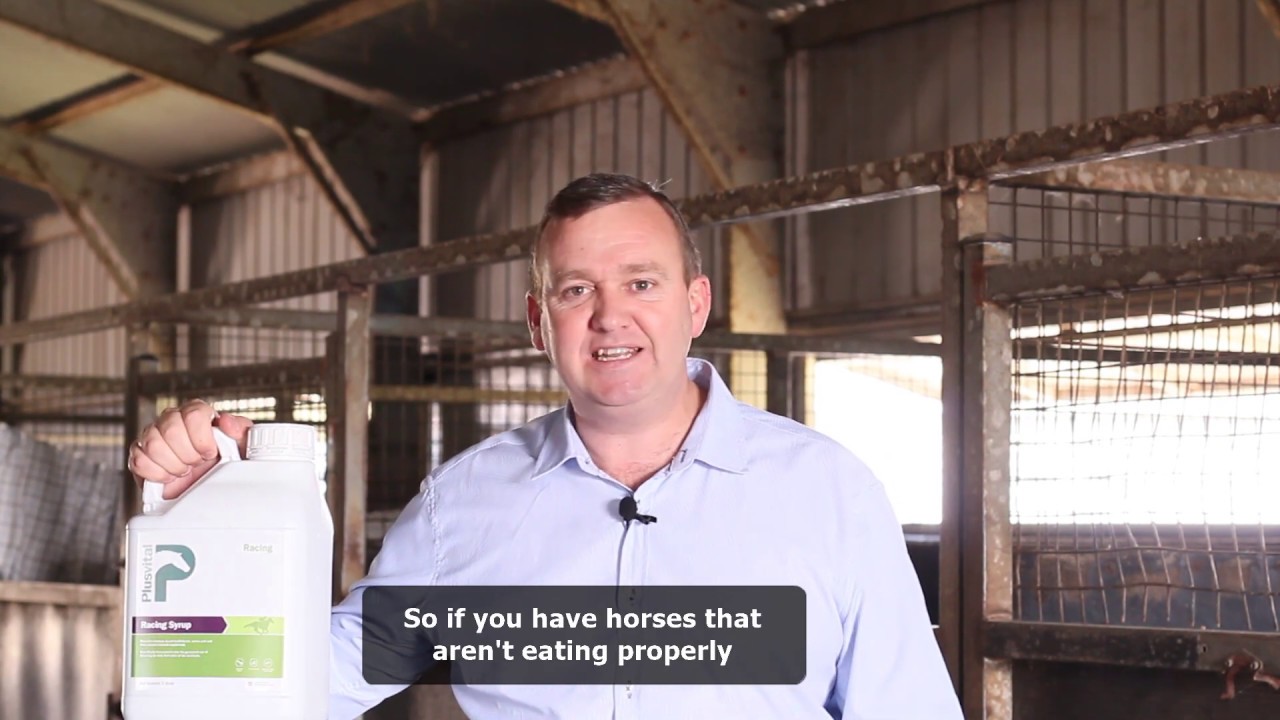
Plusvital Racing Syrup is a Palatable molasses-based multivitamin, amino acid and trace element balancer supplement.
Read more: https://www.amacron.com.au/products/p...
Plusvital Racing Syrup is scientifically formulated to take the guesswork out of balancing the daily feed ration of the racehorse. The original Plusvital Racing Syrup product, first introduced in 1975, has been recently reformulated to reflect current scientific thinking.
Our revised formulation now contains 30 key vitamins, minerals, trace elements and amino acids that play a vital role in equine nutrition.
The intensive modern training programmes of racehorses require a diet that provides all the key nutrients to combat the stress and to maximise the horse’s athletic potential.
While some of these nutrients come from the normal feed, additional supplementation may be required to meet recommended guidelines. Plusvital Racing Syrup is now one of the most complete multinutrient equine supplements available on the market.
SUMMARY OF KEY FEATURES
30 vitamins, minerals, trace elements and amino acids
Meets and exceeds NRC recommendations.
Increased Vitamin E to reduce oxidative stress
Selenium to neutralise free radicals and support the immune system
Branched Chain Amino Acids and Threonine to support muscle recovery
Zinc and Biotin to support growth of healthy hoof and hair
KEY INGREDIENTS
Per 60ml dose:
Vitamins: Vitamin A 40,000 IU, Vitamin D3 5,200 IU, Vitamin E 1,000 mg, Vitamin B1 62.5 mg, Vitamin B2 60 mg, Vitamin B6, Vitamin B12, Vitamin C 300 mg, Pantothenic Acid 50 mg, Folic Acid 15 mg, Niacin 120 mg, Biotin 1 mg, Choline Chloride 120 mg. Trace Elements: E1 Iron 90 mg, E2 Iodine 3 mg, E4 Copper 80 mg, E5 Manganese 100 mg, E6 Zinc 150 mg, Selenium 0.25 mg. Amino Acids: Lysine 500 mg, Methionine 500 mg, Threonine 144 mg. Branched Chain Amino Acids: Leucine 96 mg, IsoLeucine 48 mg, Valine 48 mg. Minerals: Calcium 180 mg, Phosphorous 18 mg, Sodium 924 mg, Potassium 504 mg, Magnesium 294 mg.
Key Ingredient Detail
Vitamins
VITAMIN A AND VITAMIN D are included for their role in supporting bone growth and maintenance. Vitamin D in particular manages the levels of CALCIUM in the horse by regulating its absorption and excretion.
VITAMIN E is the most well-known antioxidant for horses and is important for normal function of the muscular, immune and neurologic systems.
Horses may be at risk from free radical build-up due to the increased workload in training, racing and competition. Vitamin E is normally derived from the horse’s diet, particularly from fresh forages. However, supplementation may be required where the feed is not providing sufficient quantities.
VITAMIN C is an anti-oxidant that works with Vitamin E to reduce free radicals. Normally, it is produced in sufficient quantities given the presence of the enzyme, L-gulonolactone oxidase, in the liver. That said, horses under stress from training and competition may have depleted plasma levels of Vitamin C and supplementation may be required to support their immune function. Other functions where Vitamin C is needed include bone strength, antihistamine control, collagen synthesis as well as hormone synthesis.
B VITAMINS are a range of compounds including Thiamine (B1), Riboflavin (B2), Niacin (B3), Pantothenic Acid (B5), Pyridoxine (B6), Folic Acid (B9) and Cyanocobalamin (B12) that play a range of important roles in a horse’s body including food metabolism and energy production, support of the nervous system as well as cell reproduction and growth. In particular, they are important for healthy red blood cell production. Typically, B vitamins are produced by flora in the horse’s intestine or from fresh forage. However, horses that are under stress from exercise or the demands of performance may benefit from B vitamin supplementation.
CHOLINE CHLORIDE is used by the body for a host of vital functions. Classified as a vitamin of the B complex. The principal function of this vitamin is to contribute methyl chemical groups to various cellular processes. Essential for building and maintaining the structure of cells. Also has a role in fat metabolism within the liver promoting utilisation and transport of fats and preventing their accumulation in the liver.
Feeding Instructions:
Add 60ml to the feed daily.

Информация по комментариям в разработке