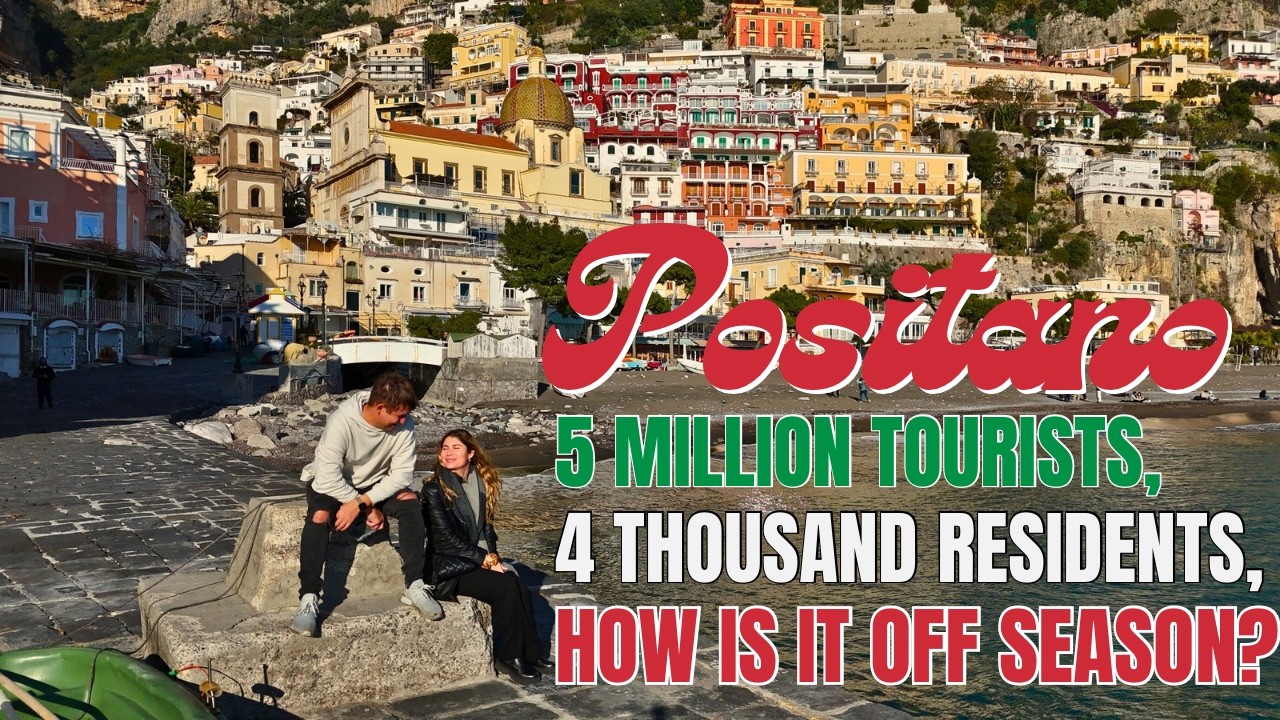
What is the Amalfi Coast like with no crowds? 🇮🇹✨ In this video, we visit Positano from Naples during the off-peak season — and it felt like we had the entire town to ourselves.
Positano is usually packed with tourists, beach clubs, and long restaurant lines. But visiting in the quieter months was a completely different experience. With most restaurants closed and very few people around, we were able to wander the pastel streets in total peace, take in the dramatic cliffside views, and truly appreciate the beauty of the Amalfi Coast without the chaos.
We explore the nearly empty beaches, stroll through silent alleyways, admire the iconic stacked houses, and soak in those panoramic Mediterranean views — all without the summer crowds. While many businesses were closed, we honestly enjoyed every second of having this world-famous destination almost entirely to ourselves.
But Positano isn’t just beautiful — it has a fascinating history that stretches back thousands of years.
Long before it became a luxury travel hotspot, Positano was part of the powerful Maritime Republic of Amalfi during the Middle Ages. Its strategic location along the Tyrrhenian Sea made it an important trading port between the 9th and 12th centuries. Merchant ships once sailed from here carrying spices, silk, and precious goods across the Mediterranean.
Even earlier, during Roman times, wealthy Romans built seaside villas along this coastline. In fact, archaeological discoveries beneath the Church of Santa Maria Assunta have revealed the remains of an ancient Roman villa buried during the eruption of Mount Vesuvius in 79 AD — the same eruption that destroyed Pompeii and Herculaneum. Positano has literally been layered in history.
The iconic dome of the Church of Santa Maria Assunta, covered in colorful majolica tiles, is one of the town’s most recognizable landmarks. Inside, you’ll find a 13th-century Byzantine icon of the Black Madonna. According to local legend, pirates once stole the icon and attempted to sail away. During a storm, they heard a voice whisper “Posa, posa!” (meaning “set me down”), prompting them to return the icon to shore — and the town became known as Positano.
For centuries after its maritime peak, Positano fell into decline. By the 19th century, much of the population emigrated in search of work. It wasn’t until the 1950s that Positano experienced a revival, when artists, writers, and celebrities began discovering its dramatic beauty. One of the first to bring international attention to the town was author John Steinbeck, who described Positano as a “dream place” that isn’t quite real when you’re there and becomes beckoningly real after you’ve gone.
Fun facts about Positano:
• The town is built vertically — you’re almost always walking up or down stairs. There are more staircases than roads!
• The famous “Positano fashion” style (flowy linen dresses, sandals, and lightweight fabrics) became popular in the 1960s when local tailors created resort wear for visitors.
• The colorful houses weren’t originally designed for aesthetics — fishermen painted their homes in bright colors so they could recognize them from the sea.
• Positano’s Spiaggia Grande beach offers one of the most photographed views in all of Italy.
• The lemons grown along the Amalfi Coast are some of the largest in the country and are used to make traditional limoncello.
Visiting off-peak gave us the chance to imagine what Positano may have felt like decades ago — before mass tourism. Quiet mornings, echoing church bells, empty viewpoints, and waves crashing against the shore. Even with many restaurants closed, the town’s charm and history were more than enough.
In this video, we share:
• What Positano is really like off season
• What’s open (and what’s not)
• How to get there from Naples
• The pros and cons of visiting in the quieter months
• Why off-peak travel might be the best way to experience this iconic Amalfi Coast town
If you’re planning a trip to Italy and wondering whether visiting Positano outside of peak season is worth it — this video is for you. Sometimes fewer crowds mean a deeper connection to a place, its history, and its atmosphere.
Would you visit the Amalfi Coast when it’s peaceful and empty, or do you prefer the lively summer buzz? Let us know in the comments!
Don’t forget to like, subscribe, and follow along for more Italy travel adventures 🇮🇹✨
#Positano #AmalfiCoast #Naples #ItalyTravel #OffSeasonTravel #WinterInItaly #TravelVlog #SouthernItaly #QuietTravel #ExploreItaly





![Прогулка по Сорренто, Италия 🇮🇹 | Самый Красивый Город на Амальфитанском Побережье [4K UHD]](https://i.ytimg.com/vi/1PjjTSmmock/maxresdefault.jpg)


![10 ЛУЧШИХ МЕСТ ИТАЛИИ, КОТОРЫЕ НУЖНО УВИДЕТЬ ПРИ ЖИЗНИ [РЕЙТИНГ]](https://i.ytimg.com/vi/U5Bf7AF-3Yk/maxresdefault.jpg)


Информация по комментариям в разработке