#agriculture #farming #farmer #farmlife
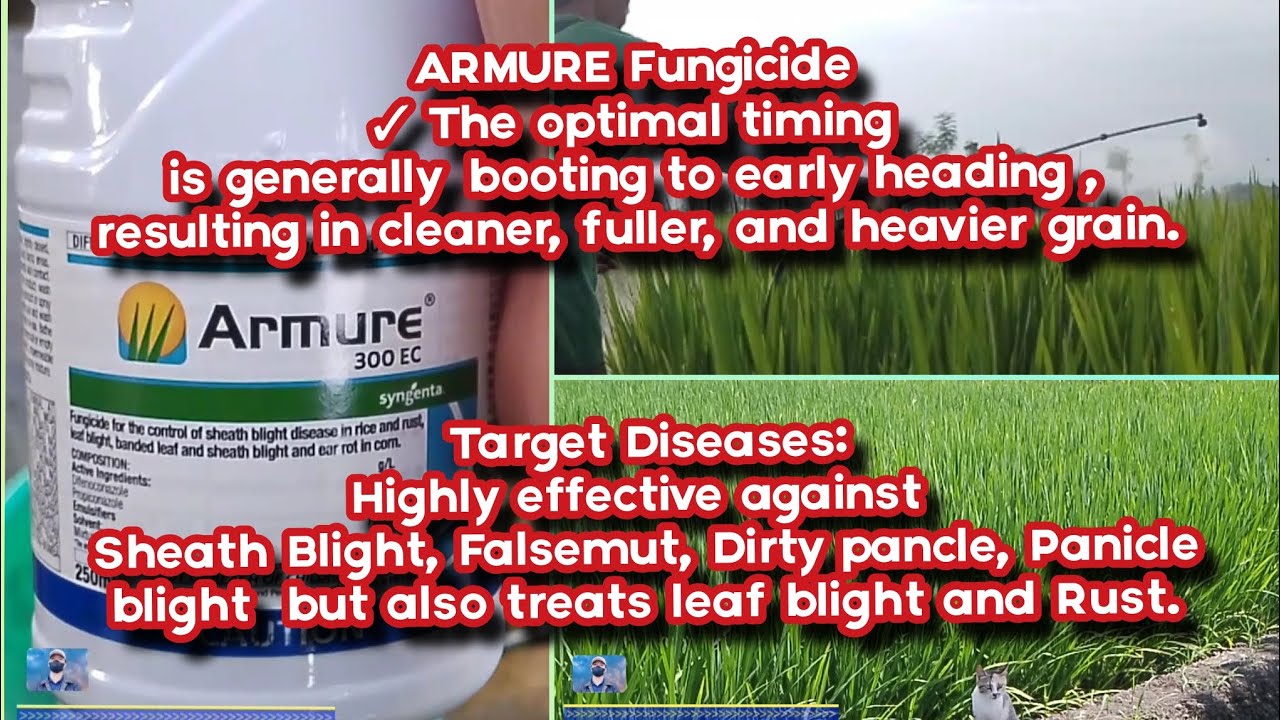
✓ Applying fungicides to hybrid rice during the booting to panicle exertion (heading) stage is highly effective for controlling false smut, panicle blight, dirty panicle, and sheath blight. This critical timing helps ensure cleaner grains, heavier grain weight, and significantly higher yields by preventing disease-related yield losses of up to 50–90%.
Why Timing Matters: Booting to Panicle Exertion
Preventative Protection: Fungicides applied at the late boot stage are most effective for managing kernel and false smut, as the disease starts infecting the panicle before it fully emerges.
Maximum Yield Gain: Applying fungicides at panicle exertion can increase yield by 29% or more compared to untreated controls.
Disease Focus:
False/Kernel Smut: Best controlled at mid-boot stage.
Sheath Blight & Blast: Best controlled at early panicle exertion.
Recommended Fungicide Types (Booting to Heading)
To manage multiple diseases simultaneously, systemic fungicides with broad-spectrum activity are recommended, often applied in two sprays (one at booting, one at heading):
Triazoles: Propiconazole (e.g., Tilt) is highly effective against smuts.
Strobilurins: Azoxystrobin (e.g., Seltima) provides strong protection against dirty panicle and blast.
Combinations: Fluopyram + tebuconazole or Difenoconazole + propiconazole are highly effective against dirty panicle (up to 60% reduction) and increase yield.
Specific Control: Tricyclazole is recommended for neck blast, while Propiconazole is preferred for false smut.
Impact on Grain Quality and Weight
Cleaner Grains: By controlling dirty panicle (caused by complex fungi like Curvularia lunata and Fusarium), grain discoloration is significantly reduced.
Heavier Grains: Preventing sheath blight and neck blast keeps the panicle healthy, allowing for proper translocation of nutrients to the grains, resulting in heavier, higher-quality, and more marketable rice.
Best Practices for Application
Scout Fields: Look for leaf blast or sheath blight symptoms before application.
Weather Considerations: Apply during calm weather, avoiding rain immediately after application.
Correct Timing: Do not wait until the panicle is fully out; the best results are when the boot is just opening.
Spray Volume: Ensure thorough coverage of the entire plant, especially the flag leaves, during the spray.
✓ Ensuring the compatibility of fungicide and insecticide mixtures is crucial in hybrid rice farming because it directly impacts crop protection efficacy, cost-efficiency, and plant health. Because hybrid rice is a high-input, high-yield crop, Simultaneous management of pests and diseases is necessary to protect investment and maximize yields.
Key Reasons Why Compatibility is Important:
Avoids Physical and Chemical Incompatibility: Incompatible mixtures can cause clogging of spray nozzles, foaming, and lumping (sedimentation), which prevents even application.
Maintains Efficacy: Using compatible products ensures that both the insecticide and fungicide retain their ability to kill pests (e.g., brown planthopper, stem borer) and control diseases (e.g., sheath blight). Incompatible mixes can lead to chemical reactions that reduce the effectiveness of one or both products.
Prevents Phytotoxicity (Plant Damage): Incompatible pesticides can cause harmful reactions on the rice crop, such as leaf yellowing, burning, or necrosis (tissue death), which directly reduces yield potential.
Saves Costs and Time: Tank-mixing compatible products allows farmers to control multiple pests and diseases in a single application, saving on labor and fuel costs.
Protects High-Value Investment: Hybrid rice is often more sensitive to management inputs. Correct mixtures, such as combining Chlorantraniliprole with specific fungicides, have been shown to be effective and safe, avoiding the need for multiple, expensive separate applications.
Proper Practices for Mixing:
Jar Test: Always conduct a small-scale jar test to check for physical compatibility (clumping, separation) before mixing in the main tank.
Order of Mixing: Follow the recommended order (e.g., wettable powders first, then emulsifiable concentrates) to avoid separation.
Check Labels: Consult product labels for compatibility information, as some fungicides and insecticides can interact negatively.
Using compatible mixtures ensures that both the pesticide and fungicide function optimally, maintaining high, healthy yields in hybrid rice production.
✓ Armure 300 EC is a systemic fungicide, containing a combination of Difenoconazole and Propiconazole, that provides excellent control against sheath blight in hybrid rice, leading to healthier, greener plants with fuller, cleaner, and heavier grains. It offers both preventive and curative action, significantly increasing grain weight and improving overall yield quality.
















Информация по комментариям в разработке