Story Credit: Brady Halls, A Current Affair, CH9 Sydney Australia.
Its the end of an Empire, for half a Century a tiny enclave has remained fiercely independent from the rest of Australia.
The Principality of Hutt River, often referred to by its former name, the Hutt River Province, was an unrecognised micronation in Australia. The principality claimed to be an independent sovereign state founded on 21 April 1970.
The territory is located 517 km (354 mi) north of Perth, near the town of Northampton in the state of Western Australia. It had an area of 75 square kilometres (29 sq mi), making it larger than several independent countries.
It was not recognised as a country by the Australian Government nor any other national government, and the High Court of Australia and Supreme Court of Western Australia rejected submissions arguing that it was not subject to Australian laws.
The principality was a regional tourist attraction until it announced it was closed to tourists after 31 January 2020. It issued its own currency, stamps and passports (which are not recognised by the Australian government or any other government).
The micronation was founded on 21 April 1970 when Leonard Casley declared his farm to be an independent country, the Hutt River Province. He attempted to secede from Australia over a dispute concerning wheat production quotas.
A few years later, Casley began styling himself as "Prince Leonard" and granting family members royal titles, although he did not include the word "principality" in the official name until 2006.
In February 2017, at the age of 91 and after ruling for 45 years, Casley abdicated the throne in favour of his youngest son, Prince Graeme.Prince Leonard died on 13 February 2019.
In December 2019 the principality announced that it would close its borders and cease its external government services as of 31 January 2020, until further notice. On 3 August 2020 the principality formally dissolved.
**HISTORY **
Leonard Casley (28 August 1925 – 13 February 2019)declared the principality an independent province in 1970 in response to a dispute with the government of Western Australia over what the Casley family considered draconian wheat production quotas.
The Casley farm had around 4,000 hectares (9,900 acres) of wheat ready to harvest when the quotas were issued, which allowed Casley to sell only 1,647 bushels or approximately 40 hectares (99 acres). Initially, the five families who owned farms at Hutt River banded together to fight the quota, and Casley lodged a protest with the Governor of Western Australia, Sir Douglas Kendrew. The governor did not assist.
Casley lodged a court claim in tort against the governor for A$52 million in the hope the claim would force a revision of the quota. Casley also claimed he made a successful court claim using the law of unjust enrichment to successfully seize government land surrounding his farm which he hoped would increase his wheat quota.
Two weeks later, Casley claimed the government introduced a bill into Parliament to "resume" his and the other families' lands under compulsory acquisition laws. At this point, Casley claimed that international law allowed them to secede and declare independence from the Commonwealth of Australia.
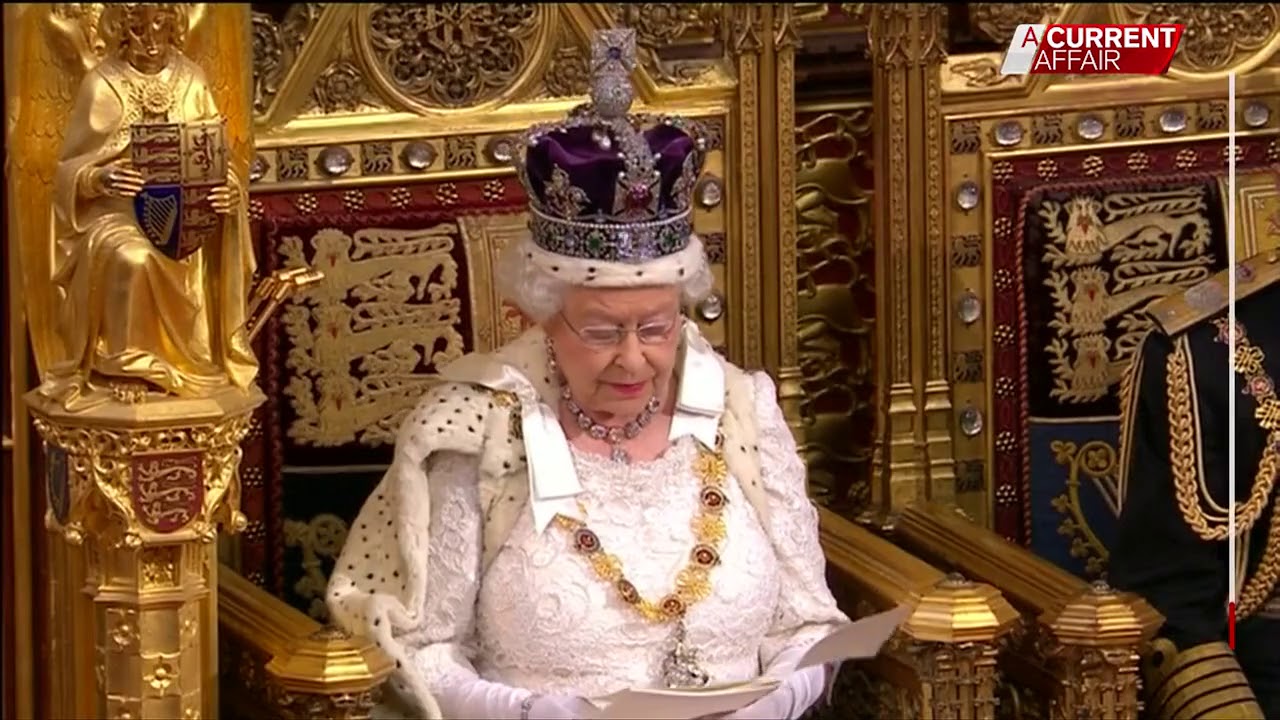
Casley said that he nonetheless remains loyal to Queen Elizabeth II. From this time on Casley asserted that the Principality had successfully seceded from Australia.
At about this time, Prince Leonard claimed that in correspondence with the governor-general's office, Casley was on one occasion inadvertently addressed as the "Administrator of the Hutt River Province". Casley claimed that this constitutes legally binding recognition of the principality.
At about this time, Leonard Casley styled himself "His Majesty Prince Leonard I of Hutt". Casley did this because he believed it would enable him to take advantage of the British Treason Act of 1495, which provides that the de facto king of a nation cannot be guilty of treason in relation to any act against the lawful king and that anyone who interfered with that monarch's duties could be charged with treason. No government or legal scholar has ever accepted this legal theory of Prince Leonard's.
Prince Leonard said that he continued to sell his wheat in open defiance of the quota. Casley believed that under Australian law the federal government had two years to respond to Casley's declaration of sovereignty. Casley says the failure to respond gave the province "de facto autonomy" on 21 April 1972, but that the Western Australian government can still dispute the secession.
On 15 February 1977, despite Prince Leonard's claims to sovereignty, he was successfully prosecuted for failing to comply with requirements to furnish the Australian Taxation Office (ATO).
**MORE INFO HERE**
https://en.wikipedia.org/wiki/Princip...

Информация по комментариям в разработке