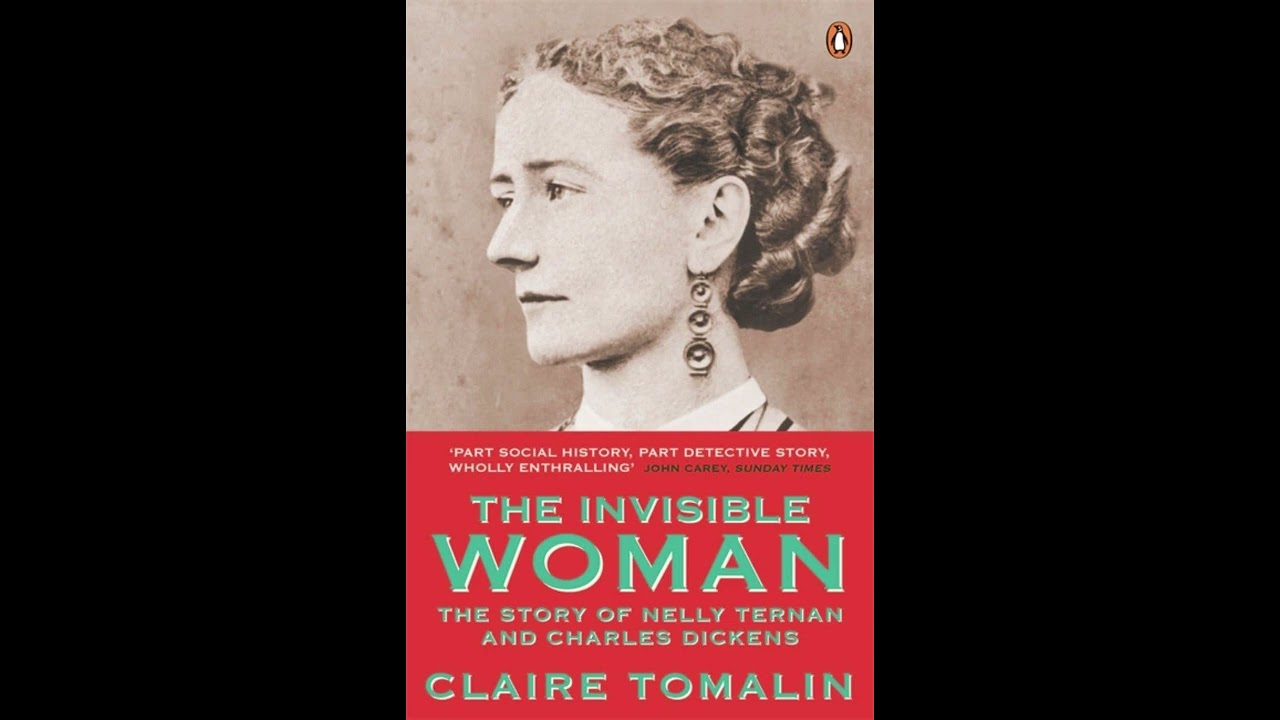
The Invisible Woman explores the life of Nelly Ternan, a young actress who became the secret companion of Charles Dickens. Claire Tomalin reconstructs Nelly’s life from the fragments left behind, highlighting the hidden sacrifices and struggles of a woman overshadowed by one of the most famous literary figures of the nineteenth century. The book paints a vivid picture of Victorian society, where respectability and morality were paramount, and a woman’s reputation could be easily destroyed. Nelly, who met Dickens when she was only eighteen, became central to his later years, yet remained largely invisible in official records and biographies.
Tomalin meticulously pieces together the details of Nelly’s early life, her family of actresses, and the realities of a theatrical career in the nineteenth century. The stage offered a precarious existence, especially for women, as it was both a source of independence and a profession viewed with suspicion. Her mother and sisters were also performers, but it was Nelly who caught the attention of Dickens, leading to a connection that would alter the course of her life. Despite Dickens’s public image as a devoted family man, his relationship with Nelly led him to separate from his wife and create a parallel existence away from the scrutiny of Victorian society.
Through careful research, Tomalin explores the complexities of Dickens’s actions and the consequences for Nelly. Dickens, already at the height of his literary career, went to great lengths to keep their relationship hidden, using coded letters, clandestine meetings, and even elaborate deceptions. The burden of secrecy placed enormous pressure on Nelly, who had to navigate a world in which she was neither fully acknowledged nor completely erased. Tomalin does not reduce her to a mere victim but presents her as a woman of resilience and intelligence, capable of shaping her own fate within the limited options available to her.
The biography also delves into the broader themes of female agency, societal hypocrisy, and the tension between personal desire and public expectation. Nelly’s story, while deeply personal, reflects the constraints placed upon women of her time. Victorian ideals dictated that a woman’s virtue was her most valuable asset, and any deviation from the norm could lead to complete social exile. Tomalin highlights how Nelly, despite her connection to Dickens, had to reinvent herself repeatedly to avoid scandal. After Dickens’s death, she married George Wharton Robinson and constructed a new identity, one that obscured much of her past.
The Invisible Woman challenges the traditional portrayal of Dickens as solely a benevolent genius, offering a more nuanced view of his personal life. Tomalin does not diminish his literary achievements but provides a more balanced perspective on the man behind the celebrated novels. Dickens’s control over his public image ensured that Nelly remained in the shadows, but this biography brings her back into focus, allowing her voice to emerge from history’s margins.
Tomalin’s writing is both scholarly and engaging, drawing the reader into the intricacies of Nelly’s hidden life. She employs a detective-like approach, using letters, diaries, and other archival materials to reconstruct events and motivations. While much about Nelly remains uncertain due to the deliberate erasure of evidence, Tomalin carefully presents plausible interpretations rather than speculation. The book is not just about Nelly but also about the nature of historical silence—how some lives are deliberately obscured while others are meticulously recorded.
In bringing Nelly’s story to light, The Invisible Woman offers a poignant reflection on the cost of secrecy and the resilience required to navigate a world that seeks to render certain lives invisible. Tomalin restores dignity and depth to a figure long dismissed as a footnote in Dickens’s biography, ensuring that Nelly Ternan is remembered not just as a hidden mistress but as a woman who endured, adapted, and ultimately reclaimed her place in history.

Информация по комментариям в разработке