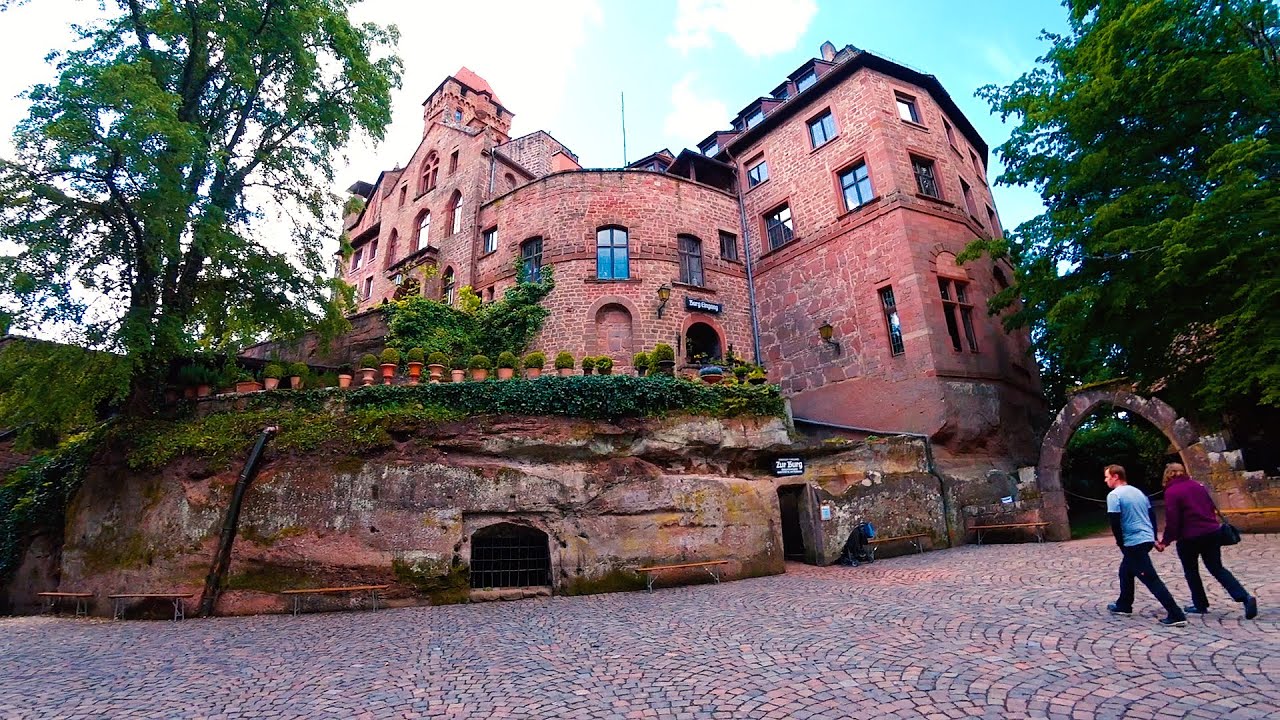
ERLENBACH, GERMANY: Castle Berwartstein is located in the Palatinate Forest in Germany. It was built somewhen before the 1100s an is a complex building. We visited this interesting castle in May 2020 on a Sunday trip.
In this video, I visit Castle Berwartstein in the Palatinate Forest of southwestern Germany. Unlike many ruins scattered across the region, Berwartstein is unique because it is one of the few castles in the Palatinate that has been partially restored and is still standing proudly today. With its dramatic location, carved sandstone foundations, and rich history, Berwartstein is one of the most fascinating fortresses in the Wasgau region.
The origins of Burg Berwartstein go back to the 12th century. Like many castles in the Palatinate Forest, it was built directly into the red sandstone cliffs that dominate the landscape. Much of its structure is carved straight into the rock, with stairways, cisterns, and chambers still visible today. This combination of natural stone and medieval architecture makes Berwartstein both a stronghold and a work of art in harmony with its environment.
Over the centuries, Berwartstein became one of the most important castles of the area. In the late Middle Ages, it was associated with the famous knight Hans von Trotha, also known as “Hans Trapp.” He became notorious for his power and conflicts with the bishop of Speyer. Legends grew around him, portraying him as both a feared robber knight and a figure of folklore. Today, Hans von Trotha remains one of the most colorful personalities tied to the history of Berwartstein, adding a mythical layer to the site.
The castle itself is impressive not only because of its size but also because of its location. Perched high above the village of Erlenbach, it commands sweeping views over the Palatinate Forest. From its towers and walls, you can look across valleys and wooded hills, seeing exactly why this site was chosen for defense and control. Its position made it a nearly impregnable fortress, and its history reflects centuries of battles, sieges, and survival.
Unlike many castles in the Palatinate that were destroyed during the wars of the 17th century, Berwartstein was carefully preserved and eventually restored in the 19th and 20th centuries. Today, it is open to visitors and even has parts that are furnished, giving a rare glimpse into what life in a medieval fortress may have looked like. Walking through its halls, climbing its towers, and exploring the carved rock chambers, you get a sense of both the harshness and the sophistication of castle life.
The surroundings of Berwartstein also add to its charm. The castle is part of a larger network of fortresses in the Palatinate and northern Vosges, many of which now lie in ruins. Hiking trails connect Berwartstein with nearby castles and rock formations, making it an excellent stop for those who enjoy combining history with nature.
This video captures the impression of visiting Castle Berwartstein in Germany: the dramatic sandstone foundations, the restored towers, the stories of Hans von Trotha, and the breathtaking views across the Palatinate Forest. It is not a detailed guide but an overview of the history, atmosphere, and uniqueness of this remarkable fortress.
For travelers, Berwartstein is one of the highlights of the Palatinate Forest. It offers a rare opportunity to explore a castle that is not just a ruin but still stands as a living monument of medieval history. Whether you come for the legends, the architecture, or the surrounding landscape, Berwartstein is a destination that combines heritage, myth, and adventure in a way few other castles in the region can.

Информация по комментариям в разработке