Hidden in plain sight, woven like golden thread through the sacred pages of the Holy Writ, the story of the Black race is not one of absence, but of presence—purposeful, powerful, and prophetic. The Bible is not a Western book, though the world has tried to frame it as such; it is a Middle Eastern and African book, born in lands where sun-kissed skin is the norm, and where God walked among men in desert sands and olive groves.
From the dawn of humanity in Eden, believed by many scholars to rest in the region of Northeast Africa—where four rivers flowed from the cradle of civilization—the presence of the Black race begins. Genesis 2:13 speaks of the land of Cush, a name later tied to Nubia, Ethiopia, and Sudan, the descendants of Ham’s son Cush, who gave birth to a lineage of mighty men and kingdoms.
Moses married a Cushite woman (Numbers 12:1), a Black woman of noble stature, and God defended her honor against the tongues of the envious. This was no minor footnote—this was a divine rebuke of racial prejudice, as the Lord struck Miriam with leprosy for her complaint. The message was clear: God sees no shame in African blood.
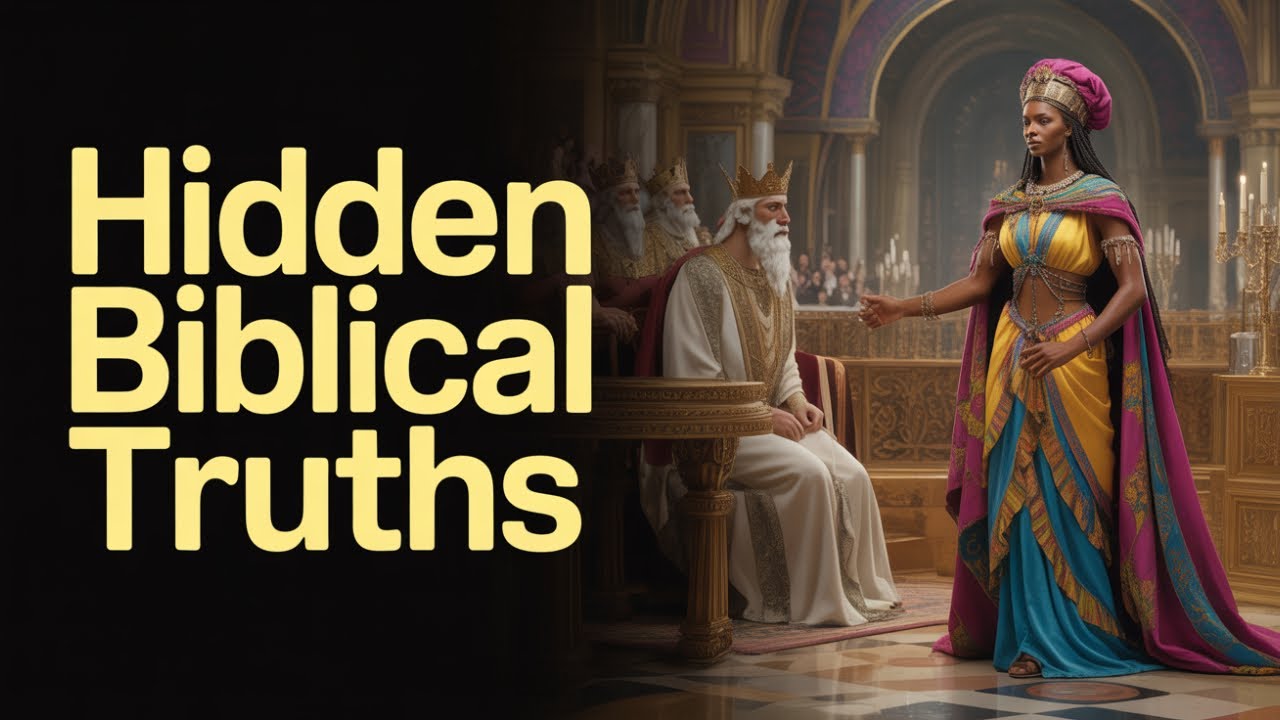
In the days of the prophets and kings, Ethiopia and Egypt were not foreign nations in the margins—they were central players in God’s unfolding plan. The Queen of Sheba, wise and regal, came from the south to test Solomon’s wisdom and left with more than treasure—she left a testimony. Zephaniah, a prophet of royal and Cushite lineage, stood with authority in the courts of Judah, reminding us that Black voices prophesied alongside Israel’s greatest.
And when the burden of the Cross was placed upon the Savior, and He collapsed beneath its weight, a man of Cyrene—Simon, a Black man—was chosen to carry it (Mark 15:21). What a holy, mysterious providence: the only man Scripture records as sharing the weight of Christ’s cross was a man from Africa. His legacy carried the Cross, and through him, the Gospel seed would journey south and bloom in African soil.
In Acts 8, the Ethiopian eunuch—a high official under Queen Candace—was baptized by Philip after reading the scroll of Isaiah. From Africa to Jerusalem, then back again with the Gospel in his heart, this man became one of the first recorded converts to Christ from outside Israel’s borders.
Throughout Scripture, the nations of Cush, Egypt, Libya, and Sheba are not cursed outcasts—they are called, redeemed, and remembered. Psalm 68:31 declares, "Princes shall come out of Egypt; Ethiopia shall soon stretch out her hands unto God.” This is prophecy, not poetry alone—it is the outstretched hand of the Black race reaching heavenward, called to praise the King of Kings.
The truth is this: the Black race is not forgotten in the Word of God. It is foundational. It is noble. It is royal. From Ham to Cush, from Sheba to Cyrene, from prophets to priests, from the cradle of Eden to the Kingdom of Heaven, the sons and daughters of Africa are there—etched into the eternal narrative.
Let no one rewrite what God has written. The truth of the Black race is not one of shame, but of divine design. It is the story of resilience, of leadership, of dignity, of redemption. And in Christ, as in the beginning, we are all one people—redeemed by blood, lifted by grace, and bound for glory.

Информация по комментариям в разработке